Best overall format: a child-focused consultation with an astrologer who avoids fixed predictions. Best for a keepsake: a written natal-chart interpretation. Best for self-guided exploration: a chart calculator with explanatory resources. The best birth chart reading for babies in 2026 helps you explore symbolism without deciding who your child must become.
- The best birth chart reading for babies uses verified birth details and avoids fixed labels.
- Choose a child-focused consultation for questions, or a written natal chart for a keepsake.
- Jahben suits parents seeking personal spiritual guidance, not medical advice or developmental assessment.
- A baby’s birth chart is a symbolic interpretation, not an evidence-based prediction of personality.
Why this matters
A newborn cannot agree with an interpretation, challenge a label, or explain what feels wrong. That puts the responsibility on you and the reader. A useful consultation leaves room for your child to grow; a poor one turns an astrological description into a family expectation.
Astrology is not a scientifically validated method for predicting a baby’s personality, health, intelligence, or future. You can still enjoy it as a spiritual practice or family keepsake. Keep those purposes separate from decisions about care.
For broader selection criteria, see the guide to birth chart reading services. This 2026 shortlist ranks reading formats by purpose rather than treating every spiritual service as a newborn specialist.
What makes the best birth chart reading for babies?
Use these criteria before choosing a reader or report:
- Birth-data handling: The reader asks for the actual birth date, recorded time, and birthplace, and explains uncertainty rather than filling gaps with guesses.
- Child-centered language: The interpretation describes symbolic themes without assigning permanent character flaws, diagnoses, or inevitable outcomes.
- Clear scope: You know whether you are requesting natal astrology, parent-focused guidance, a keepsake, or a combination of spiritual systems.
- Useful explanation: The reader connects interpretations to chart placements instead of delivering disconnected personality statements.
- Questions and boundaries: You understand how questions work, what the reading covers, and which subjects the reader will not address.
- Privacy: You can ask how the child’s birth details are stored, shared, and removed before submitting them.
Choose the format for your purpose, then evaluate the individual reader. A personalized label alone does not establish expertise in working with parents or interpreting children’s charts.
Baby birth chart reading options at a glance
| Reading format | Best for | What to look for | Key limitation |
|---|---|---|---|
| Child-focused astrologer consultation | Discussing a baby’s chart with questions | Explanations and non-deterministic language | Quality depends on the individual reader |
| Written natal-chart interpretation | Keeping a birth-chart memento | Clear placement explanations and readable structure | Follow-up is not inherent to a written format |
| Parent–child chart consultation | Reflecting on your own parenting perspective | Separate discussion of each chart | Compatibility language can become a fixed family story |
| Self-guided natal chart | Learning chart vocabulary yourself | Transparent settings and explanatory resources | You must interpret and connect the information |
| Jahben personal spiritual reading | A parent’s questions about life direction | Email or live guidance using spiritual systems | Not equivalent to a dedicated newborn natal-chart consultation |
These are different services, not interchangeable versions of the same answer. Ask what is included before treating a general psychic reading, an automated chart, and a natal consultation as equivalent.
1. Child-focused consultation: best for asking chart questions
A child-focused astrology consultation is the strongest format when you want someone to explain a baby’s natal chart and respond to your questions. Look for a reader who discusses symbolic possibilities rather than announcing a finished personality. The conversation should make the interpretation easier to understand, not harder to question.
Ask the reader to distinguish chart calculation from interpretation. Birth details determine the calculated positions within the chosen system; claims about temperament remain astrological interpretations. Those are different kinds of information.
Child-focused consultation pros:
- Lets you ask what an unfamiliar placement means.
- Gives you a chance to challenge rigid or frightening language.
- Supports discussion of uncertainty in the recorded birth time.
- Keeps the consultation focused on the child’s chart rather than unrelated predictions.
Child-focused consultation cons:
- The format does not establish the reader’s qualifications or judgment.
- Spoken explanations are harder to revisit without agreed notes or a recording.
- An authoritative delivery can make symbolic claims sound like established facts.
Best for: Parents who want explanation and dialogue rather than a decorative chart alone.
Verdict: Buy only after confirming the reader’s approach to children, uncertainty, and privacy.
2. Written natal interpretation: best for a family keepsake
A written natal-chart interpretation gives you something to read slowly and preserve. Choose a report that explains the chart’s symbolism in ordinary language rather than presenting long lists of disconnected traits. Treat it as a snapshot of an interpretation, not a script for your baby’s life.
For a baby born in 2026, a natal report should center the actual birth moment. A forecast about the rest of 2026 serves a different purpose and is not a substitute for explaining the birth chart.
Before ordering, ask whether the writing is individually prepared, generated from standard placement text, or combines both. That distinction helps you understand the deliverable without assuming that a longer report is more personal.
Written natal interpretation pros:
- Gives you a readable object to revisit.
- Allows you to consider the language without an immediate response.
- Works as a spiritual keepsake when you keep its claims in perspective.
Written natal interpretation cons:
- A document does not automatically include questions or revisions.
- Separate placement descriptions can contradict each other without explanation.
- Permanent wording can encourage permanent labels.
Best for: Parents who want a written memento and prefer reading at their own pace.
Verdict: Buy for reflection and preservation, not proof of future traits.
3. Parent–child consultation: best for reflecting on your role
A parent–child astrology consultation compares chart symbolism associated with the parent and child. Its most responsible use is examining your own expectations, reactions, and assumptions. Do not use it to decide whether you and your baby are naturally compatible.
Ask the reader to keep adult relationship language out of the consultation. A baby is not responsible for managing a parent’s emotional needs, resolving a supposed karmic lesson, or fulfilling a chart-based role.
Useful questions stay with the adult: What assumptions am I bringing to parenting? Which descriptions am I taking too literally? How can I remain curious when my child behaves differently from an interpretation?
Parent–child consultation pros:
- Makes your perspective part of the discussion.
- Creates space to examine expectations instead of labeling the baby alone.
- Gives spiritually interested parents a shared topic for reflection.
Parent–child consultation cons:
- Compatibility claims can encourage favoritism or anxiety.
- Chart comparisons are not assessments of attachment or parenting ability.
- The consultation becomes unhelpful when it assigns blame to the child.
Best for: Parents interested in reflecting on themselves through astrological symbolism.
Verdict: Buy only when the reader keeps responsibility with the adult.
4. Self-guided natal chart: best for learning the basics
A natal-chart calculator displays astrological positions from the birth details you enter. Explanatory resources can help you learn what the symbols mean. This is a learning route, not the equivalent of a personal consultation.
Within standard Western astrology, the zodiac has 12 signs spanning 360 degrees, and a natal chart uses 12 houses. Signs, houses, and planetary positions serve different roles in the interpretation. A dense-looking chart does not explain those relationships by itself.
Start with the Sun, Moon, and rising sign rather than trying to interpret every symbol at once. The guide to calculating the Sun, Moon, and rising sign explains that starting point.
Self-guided natal chart pros:
- Helps you learn the chart’s vocabulary.
- Lets you inspect the birth details and calculation settings.
- Separates obtaining a chart from accepting a reader’s interpretation.
Self-guided natal chart cons:
- You must connect the separate descriptions yourself.
- Incorrect entries produce a chart for the wrong birth details.
- Searching isolated placements can lead to alarming interpretations without context.
Best for: Parents who enjoy learning astrology and do not need personalized guidance.
Verdict: Hold off on elaborate interpretations until you understand the basic chart.
5. Jahben personal reading: best for the parent’s spiritual questions
Jahben offers personal spiritual readings by email or live session, with practices including astrology, tarot, and numerology. The relevant fit here is the adult seeking guidance about life direction and becoming a parent. A parent-focused spiritual reading is different from a dedicated interpretation of a newborn’s natal chart.
Jahben is best for parents seeking personal spiritual guidance, not an assessment of their baby’s development. Keep your question centered on your own experience rather than asking a reader to define your child’s future.
For context on that adult-focused purpose, read about psychic guidance for new parents. If you want natal astrology specifically, ask whether that scope fits the session before choosing it.
Jahben personal reading pros:
- Offers email and live formats.
- Provides a route for adult spiritual questions.
- Includes several named spiritual practices rather than astrology alone.
Jahben personal reading cons:
- General spiritual guidance is not the same as newborn-chart specialization.
- Multiple systems require a clear agreement about which question each addresses.
- A spiritual reading does not replace clinical support or pediatric care.
Best for: Parents who want to explore their own life transition through spiritual guidance.
Verdict: Buy for the parent’s question; hold if your sole goal is a baby-specific natal report.
Prepare the birth details before choosing a reading
You need 3 birth details for a standard natal chart: the actual date, the recorded time, and the birthplace. Use the recorded local time and let the calculation method account for the location and time zone. Do not substitute the due date or a remembered approximation without identifying it as uncertain.
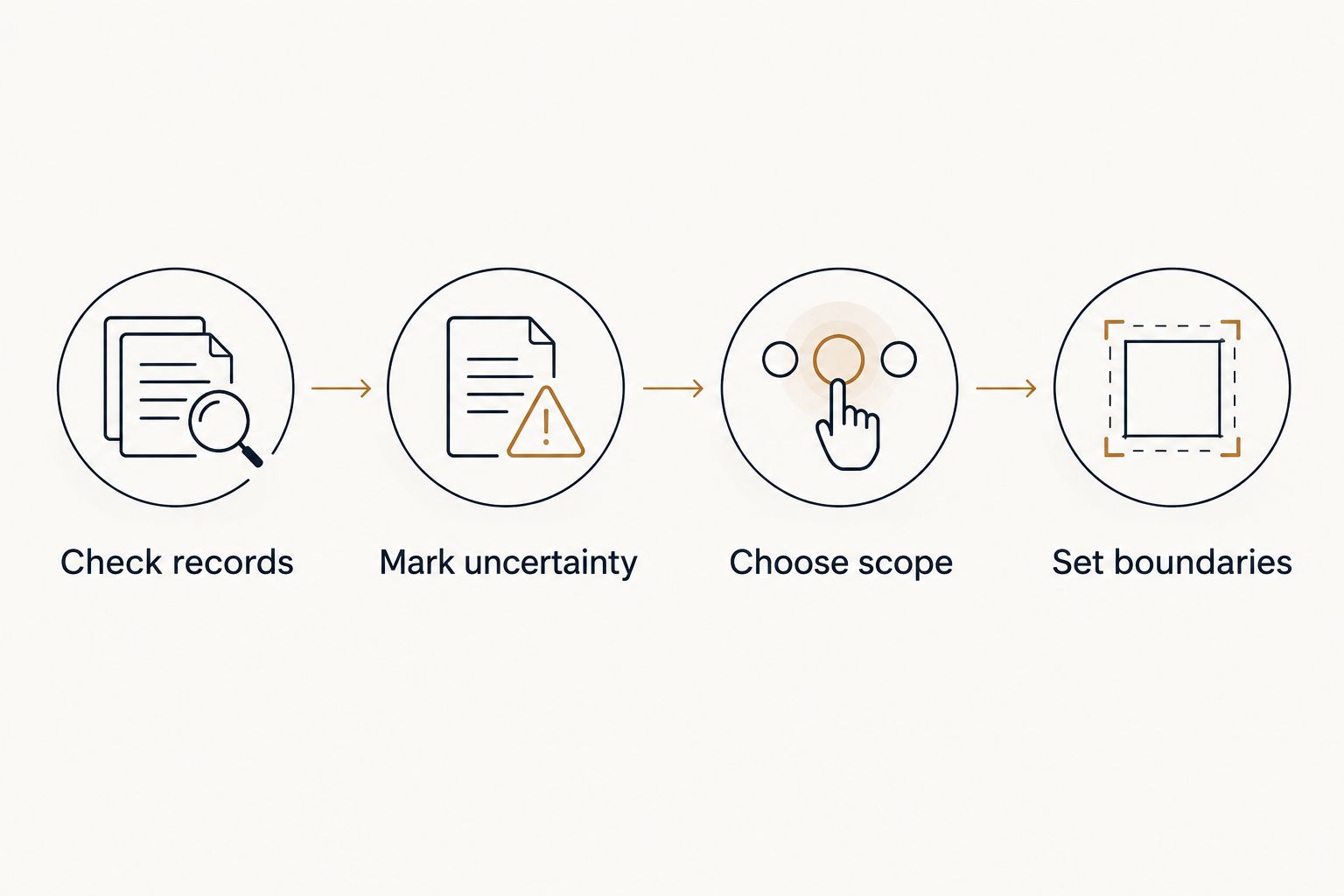
Use this sequence when arranging a baby birth chart reading in 2026:
- Check records: Confirm the date, time, and location against the birth record.
- Mark uncertainty: Identify estimates clearly instead of presenting them as exact.
- Choose scope: Decide whether you want a keepsake, chart explanation, or parent-focused reflection.
- Set boundaries: Exclude health predictions, fixed developmental labels, and guaranteed outcomes.
An uncertain time affects how confidently an astrologer can discuss the rising sign and houses. A responsible reader identifies that limitation. Guessing a time to produce a complete-looking chart does not resolve it.
Share only the information needed for the agreed reading. A reader needs birth details to calculate a chart; that does not automatically justify receiving an unredacted document containing unrelated personal information.
How these reading formats are ranked
The ranking prioritizes explanation, child-centered boundaries, scope, and your ability to question the interpretation. A child-focused consultation comes first because it directly matches the request to discuss a baby’s chart. Written reports, parent–child consultations, and self-guided charts serve narrower purposes.
Jahben belongs in the parent-guidance category rather than being presented as a verified newborn-chart specialist. These are purpose-based recommendations, not claims of measured accuracy or a ranking based on firsthand service testing.
Which baby birth chart reading should you choose?
For most undecided parents, start with a child-focused astrologer who explains the chart without making fixed predictions. Choose a written interpretation instead when your main purpose is preserving a keepsake. Choose self-guided exploration when you want to learn before requesting personal interpretation.
For a 2026 newborn, the best decision is not the reading with the boldest claims. It is the format that matches your question and lets your child remain a person rather than a prediction.
Skip any reading that claims to diagnose illness, determine intelligence, guarantee a career, or identify an unavoidable tragedy. Do not change medical care, feeding, sleep practices, or birth timing because of an astrological interpretation. Take health and development questions to your child’s clinician.
FAQ
What’s the best birth chart reading for babies in 2026?
The best-fit format is a child-focused astrology consultation that explains symbolism, handles uncertain birth details openly, and avoids fixed predictions. Choose a written interpretation instead if your main purpose is a family keepsake.
What information do I need for my baby’s birth chart?
You need the actual birth date, recorded birth time, and birthplace. Tell the reader when any detail is uncertain rather than substituting a guess.
Can a birth chart predict my baby’s personality or health?
A birth chart is not a scientifically validated predictor of personality or health. Use astrology for spiritual reflection, and ask a qualified clinician about health or developmental concerns.
Can I get a baby birth chart without the birth time?
You can explore some astrological placements without an exact birth time, but the rising sign and houses remain uncertain. A responsible interpretation identifies those limits rather than inventing a complete chart.
Is a written baby birth chart better than a live consultation?
A written chart is better suited to a keepsake, while a consultation is better suited to questions and explanation. Ask separately about follow-up, notes, or recordings instead of assuming they are included.
Is Jahben a fit for new parents seeking spiritual guidance?
Jahben offers personal spiritual readings in email and live formats for adults seeking guidance. Confirm the scope before requesting a newborn natal-chart interpretation, and keep medical questions with your child’s clinician.
Should I choose a delivery date based on astrology?
Do not choose or change a delivery date based on astrology. Your obstetric team should guide birth-timing decisions using medical considerations.
One last thing
Before saving a baby’s chart interpretation, remove language you would not want repeated to your child as a fact. Words such as difficult, destined, or unlucky can become a family story even when they began as symbolism.
Write your own note beside the report: what you actually observed, what you enjoyed, and which claims you chose not to adopt. Let the keepsake record your curiosity, not define your child.
Related guides
Ready for your own reading?
Astrology, numerology, and tarot brought together into one clear, written answer about your love, career, or timing.
Book a Personal Reading Get Your Free Report