College students’ tarot reading is a reflective practice using card symbolism to clarify choices about studies, relationships, and life direction. This 2026 guide shows you how to ask focused questions, use a simple spread, and turn an interpretation into action without treating cards as evidence about grades or your future.
- Tarot reading for college students works best as reflection, not a prediction of exam results or another person’s feelings.
- Start with a three-card spread for academic choices, relationship boundaries, or career questions.
- Jahben offers personal tarot readings for students who want an advisor’s interpretation rather than reading alone.
- Keep academic advising, financial decisions, and mental health care separate from spiritual guidance.
Why tarot reading matters for college students
College decisions overlap. Changing your major affects your schedule; taking an internship affects your income; a difficult relationship affects where you spend your attention. Tarot gives you a structure for examining those connections, but it does not establish which outcome will happen.
The practical distinction is between reflection and verification. A spread can prompt you to question why you keep avoiding a class. Your degree audit and academic advisor establish whether dropping that class delays graduation.
Use tarot to examine your response to a decision, then verify the decision’s consequences outside the reading. If you are new to cards, start with how to read a tarot card spread for beginners before attempting a large layout.
For your 2026 semester planning, keep the scope narrow: one situation, one question, one next move. You do not need a complete account of your life every time you sit down with a deck.
How to use tarot during college
1. Define the decision before drawing cards
Start with a notebook, not a purchase. Describe the situation in plain language, then separate what you know from what you fear. That distinction keeps an interpretation from becoming a substitute for missing information.
Suppose you are deciding whether to leave a student organization. You know the meeting schedule and your responsibilities. You do not necessarily know whether other members will resent your departure, and a card cannot verify their private reactions.
Choose a question that leaves you responsible for the answer. Ask what deserves attention rather than what fate has already decided.
- Write the decision in one sentence.
- List the facts you can verify.
- Name the assumption causing the most uncertainty.
- Record the actual deadline for your choice.
- Identify the campus office or person who can confirm requirements.
2. Ask questions that return control to you
Write your own prompts before asking anyone else to interpret them. Open questions keep attention on your choices; prediction requests ask a reading to establish something it cannot reliably verify.
Replace a question about passing an exam with a question about your preparation. Replace a question about whether someone secretly loves you with a question about the behavior you are accepting. The revised question gives you something to examine and act on.
For choosing a major in 2026, ask what you value about each route before asking which route feels spiritually significant. Course requirements, financial commitments, and your willingness to do the work remain part of the decision.
- Academic direction: What am I overlooking about this major?
- Exam preparation: Which study habit needs my attention?
- Dating: What boundary would make this situation clearer?
- Friendship: What part of this conflict can I address directly?
- Career: What do I need to learn before accepting this internship?
3. Use a small spread with assigned positions
Try a three-card spread before adding more cards. Assign each position a purpose before shuffling so you are not changing the question to fit an appealing interpretation. A notebook and a deck you already have are enough to begin.
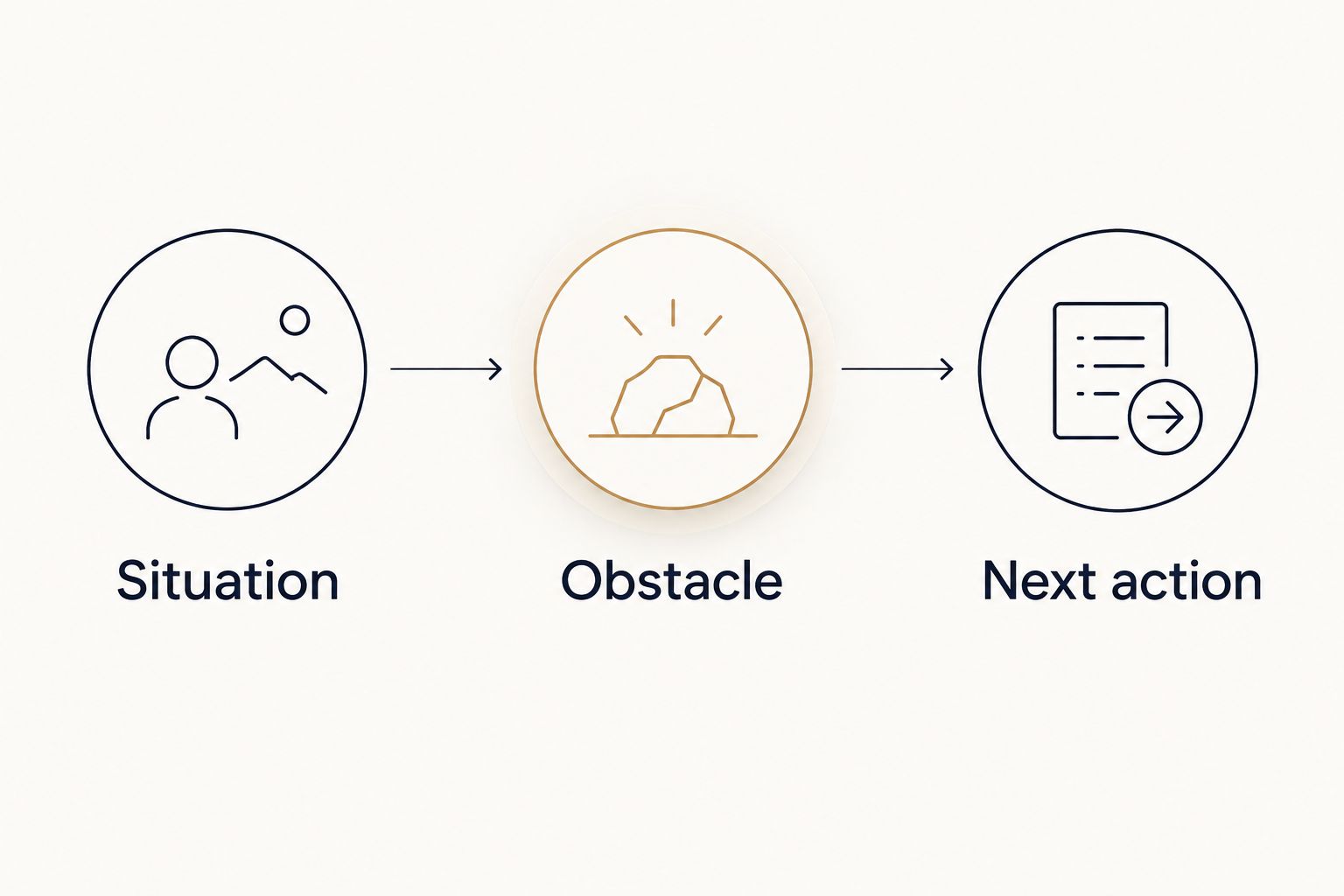
Use these positions: Situation, Obstacle, and Next action. Read each card through its assigned position rather than treating every image as a separate prediction. Finish with a sentence describing what you will do outside the reading.
If interpreting alone leaves you stuck, Jahben offers personal tarot readings as an alternative to working through the cards yourself. An advisor’s interpretation adds another perspective; it does not turn symbolism into verified information.
- Situation: Describe the issue without predicting its outcome.
- Obstacle: Identify a habit, tension, or missing piece of information.
- Next action: Choose a practical response within your control.
- Summary: Write what the spread prompted you to reconsider.
4. Interpret symbols without making them verdicts
Write your first interpretation, then write an alternative. This exercise makes room for uncertainty without requiring another draw. Ask whether the interpretation connects to something you actually know about your situation.
The Fool, for example, traditionally connects with beginnings and stepping into the unknown. In a question about studying abroad, that symbolism can prompt reflection on curiosity and preparation. It does not prove that travel is safe, that funding will arrive, or that an application will succeed.
Likewise, the Death card traditionally represents endings and transformation; drawing it is not evidence that someone will die. A frightening image is not a factual warning. Stop the session if interpreting the cards starts to feel threatening rather than reflective.
- Describe the image before assigning a meaning.
- Compare the traditional meaning with your question.
- Write an alternative interpretation.
- Separate symbolic associations from factual claims.
- Reject interpretations that require certainty about someone else’s thoughts.
5. Match the format to your question and limits
Before arranging a personal reading, try writing the question and answering it without cards. If you already know what you need to do, another interpretation is optional. Spiritual guidance should not become a prerequisite for sending an email or making an appointment.
Jahben is best for students seeking personal tarot guidance rather than a self-guided reading. The practice offers email and live readings, so your format choice should reflect whether you prefer a written response or a conversation.
Neither format guarantees a correct prediction. For your 2026 planning, choose based on how you want to communicate, what you want addressed, and whether a personal reading fits your discretionary spending.
- Choose self-reading when you want to practice interpreting symbolism.
- Choose email when you prefer to formulate the question in writing.
- Choose a live session when you prefer a conversation.
- Confirm the scope and follow-up arrangements before committing.
- Keep tuition, housing, food, and other essentials outside your reading budget.
6. Turn the interpretation into a testable action
After the spread, close the deck and write an action plan. Give yourself a short working session, such as 10 minutes, to connect the interpretation to something observable. This is a suggested limit, not a special tarot requirement.
A reading about feeling trapped in your major does not require an immediate transfer. Your next move might be attending office hours, reviewing a different department’s requirements, or talking with a student doing that coursework. Each action produces information the cards cannot supply.
When you cannot distinguish your own priorities from family expectations, self-discovery questions keep the reflection focused on your values rather than a predicted outcome. Answer them in your own words before asking an advisor to interpret the situation.
Make the action small enough to complete, but specific enough to evaluate. Reconsidering your career is not a task. Asking the career center about an internship requirement is.
- Name the insight without presenting it as a fact.
- Choose one action you control.
- Set a practical deadline, such as within 48 hours.
- Identify what information the action should produce.
- Record what would make you reconsider your interpretation.
7. Review what happened before reading again
Keep the original question, interpretation, and action together. Revisit the entry after you have taken the action or received relevant information. Review is more useful than repeatedly asking the same question while nothing has changed.
For your 2026 semester journal, distinguish emotional resonance from accuracy. An interpretation can feel meaningful without correctly describing an external event. Record both the parts that fit and the parts that did not.
Do not create a rule that every decision needs another reading. If you feel unable to choose without drawing cards, pause the practice and speak with someone you trust. For persistent distress or disruption to daily life, contact campus counseling or a qualified mental health professional.
- Keep the original wording of your question.
- Record the cards and their assigned positions.
- Note the action you actually completed.
- Compare the interpretation with observable events.
- Leave contradictions in the journal instead of rewriting them.
Compare your options for student tarot guidance
The best format is the one that fits your question without taking over your decision. Self-reading offers control over pace, while personal readings add another person’s interpretation. Neither replaces academic or professional advice.
| Option | Best for | Key limitation |
|---|---|---|
| Self-guided tarot | Learning symbolism privately | You interpret your own emotionally charged question |
| Email reading | Preparing a focused written question | It is not a real-time conversation |
| Live reading | Discussing a question aloud | You need time and privacy to participate |
| Journaling without cards | Examining values directly | It does not include tarot interpretation |
| Campus advising | Confirming academic requirements | It serves a different purpose from spiritual reflection |
Jahben tarot readings offer personal spiritual guidance through email or live sessions. The limitation remains the same across formats: an interpretation cannot confirm exam scores, admissions decisions, another person’s consent, or a future employer’s choice.
Choose campus advising first when the answer depends on policy. Choose reflection when the unresolved issue is what matters to you, what you are avoiding, or which conversation you need to have.
Common mistakes college students make with tarot
Treating a card as an academic decision
A difficult spread is not a reason to miss an exam, abandon an application, or withdraw from a required course. Those actions have consequences governed by your institution’s rules, not the reading.
Check the policy before changing the plan. Bring questions about withdrawal, prerequisites, and academic standing to the relevant campus office.
Reading a crush instead of discussing the relationship
A spread cannot establish someone’s private feelings, exclusivity, or consent. Asking repeatedly whether a person likes you does not replace an honest conversation or attention to their behavior.
Focus the reading on your boundaries and expectations. If the relationship remains unclear, ask directly rather than treating symbolism as an answer on the other person’s behalf.
Redrawing until the answer feels reassuring
Changing cards because you dislike the first interpretation changes the exercise into a search for reassurance. Stop and name the answer you were hoping to receive. That reaction itself deserves reflection.
Return to the practical question: what information or conversation would actually reduce the uncertainty? Take that step before deciding whether another reading has a purpose.
Spending essential funds on repeated readings
A reading belongs within discretionary spending, not money set aside for college necessities. Set your limit before you feel pressured or upset. You do not owe a reader another session because an interpretation feels unfinished.
Reject pressure to purchase additional spiritual work to prevent a threatened disaster. Fear is not evidence that another service is necessary.
Letting a 2026 reading override new facts
An earlier interpretation does not outrank a changed deadline, a revised offer, or something a person tells you directly. Update your decision when the facts change. You are not obligated to preserve a reading’s storyline.
Use your journal to document the change rather than forcing events to fit the original account. Your responsibility is to the decision, not to defending the spread.
FAQ
What’s the best tarot reading for college students who are beginners?
A small, clearly defined spread is a practical starting point for college students who are beginners. Try three cards assigned to situation, obstacle, and next action, then write down a response you control.
Can tarot tell me whether I’ll pass an exam?
Tarot cannot reliably establish whether you will pass an exam. Use a reading to reflect on preparation or avoidance, and use coursework, practice results, and instructor feedback to assess academic progress.
Should I use tarot to choose my college major?
Use tarot to explore your priorities, not to make the final choice for you. Compare degree requirements, your interest in the coursework, financial implications, and advice from your academic department.
Is an email tarot reading better than a live session for students?
An email reading suits a student who prefers writing, while a live session suits a student who prefers conversation. Neither format guarantees accurate predictions; confirm what the session includes before choosing.
Can I read tarot for myself without booking anyone?
Yes, you can practice tarot for yourself without booking a reader. Assign the spread positions beforehand, record your interpretation, and separate symbolic meaning from verified facts.
How often should a college student get a tarot reading?
You do not need a fixed tarot schedule. Revisit a question after taking action or receiving new information, rather than repeating it until a different answer appears.
Can tarot help when I’m overwhelmed by college?
Tarot can serve as a reflective activity, but it is not treatment for anxiety or other mental health conditions. If distress affects your daily life, contact campus counseling or a qualified mental health professional.
One last thing
Before drawing a card, write the answer you hope to get and the answer you fear. Keep both visible. That simple record helps you notice when you are interpreting the spread to protect a preferred outcome.
The most useful result is not a promise that everything will work out. It is a clearer question and a next step you can take without asking the cards again.
Related guides
- Tarot reading for choosing a college or major
- How to journal after a tarot reading for deeper insight
Ready for your own reading?
Astrology, numerology, and tarot brought together into one clear, written answer about your love, career, or timing.
Book a Personal Reading Get Your Free Report