IVF journey tarot reading is a reflective practice for people facing fertility and surrogacy decisions, with the aim of clarifying what to ask, discuss, or do next. In 2026, a tarot reading for IVF journey decisions can help you name a fear or a priority; it cannot predict treatment success, confirm a pregnancy, or speak for a surrogate.
- A tarot reading for IVF journey decisions is best used to clarify questions, not predict medical outcomes.
- Jahben tarot readings are best for people seeking personal clarity alongside, not instead of, fertility care.
- For surrogacy decisions, keep the surrogate's wishes and independent choices outside the reach of your cards.
- Use a short spread to identify one question for your care team and one conversation for your family.
Why this matters
An IVF or surrogacy decision rarely stays in one category. A treatment question can bring up money, grief, partnership, privacy, and uncertainty at the same time. Tarot gives you a way to separate those concerns so you can bring the right question to the right person.
The boundary is firm: cards are not clinical evidence or a substitute for informed consent. Your fertility team handles treatment options and medical timing. Qualified legal professionals handle agreements and legal rights. You, your partner if applicable, and any prospective surrogate each speak for your own needs. If you want a broader starting point for the emotional side of family planning, read tarot reading for pregnancy and family planning questions.
In 2026, the useful question is not whether a card promises the result you want. It is whether the reading helps you make a clearer, more respectful decision with the people involved.
Why tarot matters for people considering IVF or surrogacy
Fertility decisions include facts you can verify and feelings you need to understand. A medical appointment can answer questions about your individual care, but it does not decide what level of uncertainty you feel able to carry. Tarot can help you put that personal question into words before the appointment.
Surrogacy adds another person's autonomy. A card drawn about your hopes does not reveal a prospective surrogate's private thoughts or establish what they will agree to. A responsible reading keeps the focus on your conduct: what you need to disclose, what you need to ask, and where you must wait for the other person's answer.
A reading also gives a couple or support person a shared prompt without forcing agreement. You can describe what a card brings up for you while leaving room for someone else to feel differently. That distinction matters when one person wants an immediate next step and the other needs time.
Jahben tarot readings are best for people who want to examine their own choices without treating symbolism as a medical forecast. The limitation is just as important: no reader can determine an embryo's viability, a treatment result, or another person's consent from tarot.
How to use tarot for IVF and surrogate journey decisions
Separate medical facts from personal needs
Start on paper, before you shuffle. Draw 2 columns: one for questions that need evidence from a care team, and one for feelings or values you want to explore. Put treatment eligibility, test results, medication, and scheduling questions in the medical column. Put readiness, grief, support, and boundaries in the personal column.
This prevents a vague question from absorbing everything at once. If you write that you are afraid to try again, ask whether you need medical information, emotional support, a conversation with your partner, or some combination of those. A card can prompt that distinction; it cannot supply the missing clinical answer.
- Write the decision in a single sentence.
- Record what your care team has actually told you.
- List the facts you still need to confirm.
- Name the feeling attached to each unknown.
- Take clinical questions to your fertility team.
Choose a question you can act on
Ask what you need to understand, not what fate has decided. What support would help me evaluate the next step? What am I avoiding asking at my appointment? What boundary do I need to state before agreeing to a plan? These questions leave you with something you can do.
A yes-or-no question about pregnancy asks tarot to perform a medical test. A question about a surrogate's hidden intentions asks it to override that person's voice. Neither gives you a sound basis for a decision. If a question names someone else, rewrite it around what you need to communicate or confirm directly.
- Replace outcome predictions with questions about your next action.
- Ask what information is missing from the decision.
- Keep a prospective surrogate's private feelings out of the reading.
- Choose one question per spread.
- Set aside questions that only a clinician or legal professional can answer.
Use a small spread to find your next conversation
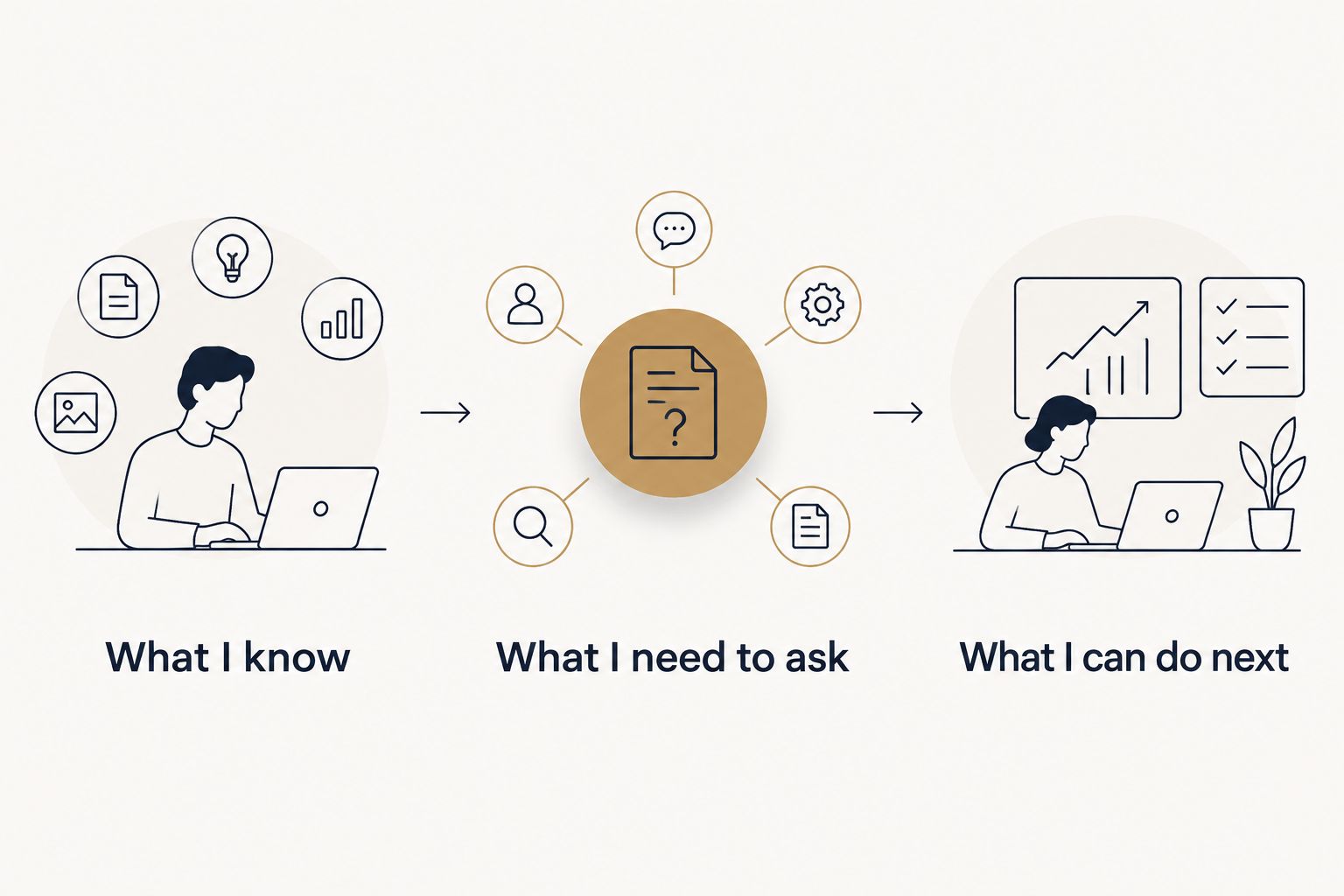
Try 3 cards with distinct jobs: what I know, what I need to ask, and what I can do next. Write your interpretation before looking up a card meaning. Then check whether the proposed action is within your control. If it is not, revise the action rather than drawing repeatedly for a different answer.
For an introduction to the layout, use this three-card tarot spread for clarity. In a 2026 IVF decision, the middle card works best as a prompt for a real question, not as a prediction about the next treatment step.
- Label each card position before drawing.
- Write your first response in plain language.
- Turn the middle card into a question for the right person.
- Make the last card an action you control.
- Stop the spread if it increases distress instead of clarity.
A useful reading ends with a conversation you can have. That might be with your care team about an unclear instruction, with your partner about support, or with a prospective surrogate about a preference they are willing to discuss. The cards do not conduct that conversation for you.
Keep surrogate autonomy in the room
If surrogacy is part of your journey, draw a clear line between your decision and another person's. You can explore how prepared you are to listen, what expectations you need to disclose, and which questions belong in a direct conversation. You cannot use a reading to claim a surrogate will consent, feel a certain way, or make a particular choice.
This matters even before a match or agreement. Imagining a shared journey is different from having a shared decision. Keep the language of the reading anchored in your own responsibilities, and seek independent professional guidance for legal and medical matters.
- Ask what you need to communicate clearly.
- Identify expectations that require explicit discussion.
- Leave room for the surrogate's independent answer.
- Keep private medical information out of casual readings.
- Refer agreement questions to qualified legal professionals.
Discuss the reading without turning it into a vote
If you share a reading with a partner, say what the cards brought up for you rather than what the cards say your partner must do. Try naming one feeling, one unanswered question, and one request for support. Then ask how they see the decision. Agreement is not the measure of whether the conversation worked; understanding each other's position is.
The same restraint applies when family members have strong opinions. A reading can help you decide what to share and what to keep private. It does not give anyone authority over your treatment or your relationship with a surrogate.
- State your interpretation as your own perspective.
- Ask your partner for their interpretation without correcting it.
- Agree on which facts still need checking.
- Set a boundary around advice you did not request.
- Pause if the conversation becomes a demand for certainty.
Bring uncertainty back to the right source
After the reading, make 2 short lists: what needs a professional answer and what needs a personal choice. Send treatment questions to your care team. Take legal questions about surrogacy to a qualified professional. Keep values questions for reflection and discussion with the people affected.
Jahben's tarot practice fits the reflection list, not the medical or legal lists. If you prefer to think through your question with a reader rather than interpreting cards alone, describe the decision and the boundary you want respected. Ask for clarity about your response to uncertainty, not a guarantee about an outcome.
- Save the exact question you will ask your care team.
- Note which choices depend on new information.
- Write down any boundary you need to communicate.
- Decide who should be part of each conversation.
- Revisit your notes when a decision actually changes.
Compare your options for an IVF journey reading
Each option has a different job. Choose the one that matches the question in front of you; do not ask one source to do another's work.
| Option | Best for | Cost details | Key limitation |
|---|---|---|---|
| Self-guided tarot spread | Naming feelings and drafting questions privately | No reader required | You can mistake a hoped-for answer for an interpretation |
| Jahben tarot reading | Discussing your own uncertainty with a spiritual advisor | Check current details with Jahben | Cannot predict medical outcomes or establish another person's consent |
| Fertility care team | Understanding your individual medical options | Confirm with your provider | Does not decide your personal values for you |
| Qualified surrogacy legal counsel | Understanding agreements and legal responsibilities | Confirm with the professional | Does not resolve emotional uncertainty |
A self-guided spread gives you privacy and control, but it is easier to keep pulling cards until you see reassurance. A reader adds an outside interpretation, yet that interpretation still has no clinical authority. Professional advice answers questions within its field; it should not be replaced by symbolism. In 2026, the strongest approach is to keep those roles separate.
Common mistakes in IVF and surrogacy tarot readings
Asking whether IVF will work. The answer requires medical information and remains uncertain even when you understand your care plan. Ask what support or information you need for the next decision instead.
Treating a card as a surrogate's answer. Only the person involved can state their wishes. Use tarot to prepare for a respectful conversation, then listen to what they actually say.
Reading every difficult card as a warning. A troubling image can surface an existing fear without forecasting an event. Write down the fear, check whether it points to a question or boundary, and stop there.
Repeating the same spread until it feels reassuring. Repetition can make the choice harder to see. Keep your first notes, take a break, and return when you have new information or a genuinely different question.
Letting spiritual timing overrule care instructions. A meaningful date can matter to you personally. It does not replace guidance from your fertility team or the choices of other people involved.
FAQ
Can a tarot reading predict whether IVF will work?
No. A tarot reading cannot predict an IVF outcome or replace information from your fertility team. Use it to clarify your questions and priorities.
What is the best tarot question to ask during an IVF journey?
Ask what information or support you need for your next decision. That question leads to an action you control instead of asking cards for a medical forecast.
Can tarot tell me whether a surrogate is right for us?
No. Tarot cannot establish a prospective surrogate's wishes, consent, or suitability. Discuss expectations directly and seek qualified medical and legal guidance for matters in those fields.
Should I do a tarot reading before an IVF appointment?
A reading before an appointment can help you organize personal questions. Bring clinical questions to your care team and let their advice, not the cards, guide medical decisions.
Is a personal tarot reading better than reading my own cards?
A personal reading offers another interpretation; reading your own cards gives you more privacy and control. Neither option can confirm a medical outcome, so choose based on the kind of reflection you need.
How many cards should I use for an IVF decision?
A 3-card spread is enough to examine what you know, what you need to ask, and what you can do next. Keep each position focused on a question within your control.
Can I use tarot to choose the timing of a fertility treatment?
Do not use tarot to replace treatment timing advice from your care team. You can use a reading to explore how you feel about the plan and what you need clarified before proceeding.
One last thing
The most useful result of a 2026 tarot reading for IVF journey decisions can be a question, not an answer. If your notes leave you with one clear question for your clinician and one honest conversation with the people involved, the reading has done its job. Jahben tarot readings belong beside those conversations, never in place of them.
Related guides
- Psychic reading for pregnancy and fertility timing
- How to journal after a tarot reading
- How to ask good questions in an email psychic reading
Ready for your own reading?
Astrology, numerology, and tarot brought together into one clear, written answer about your love, career, or timing.
Book a Personal Reading Get Your Free Report