Best overall in 2026: the Rider–Waite–Smith Tarot. Best for familiar imagery with a contemporary cast: Modern Witch Tarot. Best for reading from numbers and suits: Tarot de Marseille. The best tarot deck for readings is the one whose images and structure you can interpret consistently, not one that promises certainty.
- The Rider–Waite–Smith Tarot is the best tarot deck for readings when you want illustrated cards and a clear starting point.
- Modern Witch Tarot suits readers who want contemporary imagery built on familiar Rider–Waite–Smith scenes.
- Tarot de Marseille rewards readers who want to work with numbers, suits and card relationships rather than illustrated scenes.
- No deck guarantees an accurate prediction; define your question, read the spread consistently and record what you notice.
Why this matters
A beautiful deck can still be difficult to read. If the pictures do not give you enough to work with, every question sends you back to a guidebook. If they suggest too much, you can lose track of what the question actually asked.
In 2026, choose a deck by how you plan to use it: learning card meanings, reading for another person, exploring a relationship or making sense of a decision. For a starting point, how to interpret the Fool tarot card in a reading shows why a card's meaning depends on its position and the question, not just its printed name.
Accuracy in tarot means a reading that stays grounded in the question and produces an interpretation you can examine. It does not mean that the artwork can verify a future event. Your choice of deck matters because it affects how readily you can connect a card to the question in front of you.
What makes the best tarot deck for readings?
Judge each deck on these criteria before looking at the rankings:
- Readable images: Can you describe what is happening on a card before consulting a guidebook? Illustrated scenes give a new reader more immediate material than numbered suit cards.
- Learnable structure: Can you tell how the major and minor arcana relate? A standard tarot deck has 78 cards: 22 major arcana and 56 minor arcana.
- Consistent symbolism: Do recurring visual details help you build interpretations across a spread, or do they send you in conflicting directions?
- Fit for your questions: A deck that helps you describe choices and relationships is more useful for those questions than one you chose solely for its cover art.
- Your reading method: If you prefer visual stories, pick illustrated minor arcana. If you prefer suit patterns and number associations, pip cards deserve a closer look.
The best choice is not the deck with the most symbols. It is the one you can return to when a card first seems unclear. In 2026, start with the way you actually read rather than an idea of how a tarot reader ought to read.
The best tarot decks at a glance
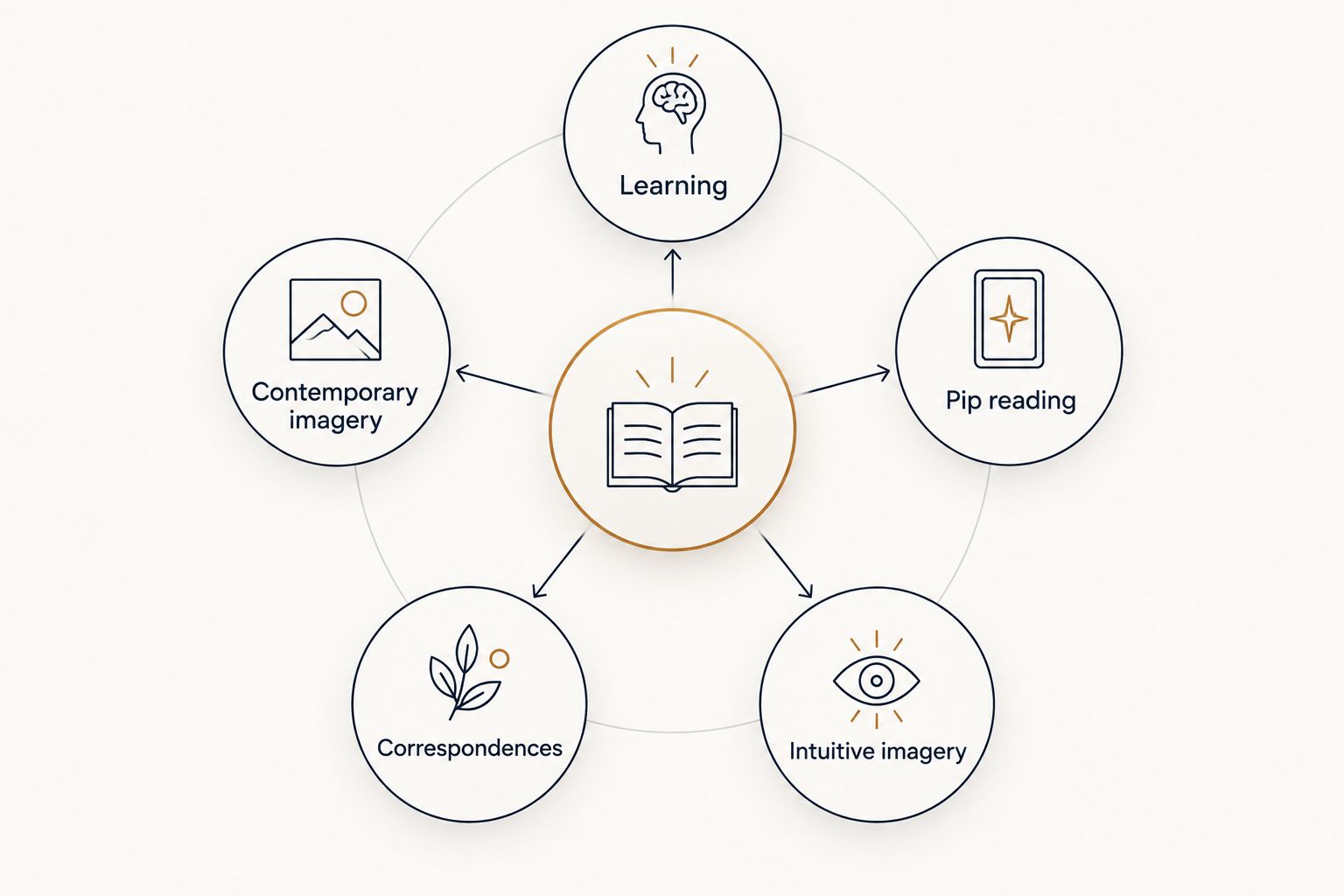
| Deck | Best for | Standout feature | Key limitation |
|---|---|---|---|
| Rider–Waite–Smith Tarot | Learning a repeatable reading method | Illustrated minor arcana | Familiar imagery may not feel personally engaging |
| Modern Witch Tarot | Contemporary imagery | Rider–Waite–Smith-inspired scenes | Less suitable if you want a different card system |
| Tarot de Marseille | Pip reading | Numbered suit cards | Requires more work with suits and numbers |
| Thoth Tarot | Correspondences | Dense symbolic system | Steep learning curve |
| The Wild Unknown Tarot | Intuitive imagery | Animal and nature-focused art | Abstract scenes can slow literal interpretation |
The table separates reading styles, not levels of supernatural accuracy. An illustrated card can make a conversation easier to start; a pip card can leave more room for your own associations. Neither removes the need to ask a precise question.
1. Rider–Waite–Smith Tarot: best tarot deck for learning a repeatable method
Best for: Learning a repeatable reading method. The Rider–Waite–Smith Tarot pairs named major arcana with illustrated minor arcana. That gives you visual material to describe across a spread, including cards from the numbered suits. If you want one deck for study and regular practice in 2026, start here.
The advantage is not that the deck supplies a correct answer. It is that you can compare what you see on the card with an established interpretation, then decide how either relates to your question. That makes it easier to notice when you are reading the image and when you are projecting a preferred outcome onto it.
Rider–Waite–Smith Tarot pros:
- Illustrated minor arcana provide scenes to discuss rather than numbers alone.
- A consistent visual system helps you compare cards within a spread.
- Its structure gives you a clear starting point for learning major and minor arcana.
Rider–Waite–Smith Tarot cons:
- Its imagery will not connect with every reader.
- Familiar card meanings can tempt you to recite definitions instead of reading the question.
Read a 3-card spread as a connected answer, not 3 separate fortunes. If the middle card seems out of place, check its position before changing its meaning to fit your first impression. Verdict: Buy if you want a first deck that helps you build an interpretation you can explain.
2. Modern Witch Tarot: best for contemporary imagery
Best for: Contemporary imagery. Modern Witch Tarot uses recognizable Rider–Waite–Smith-inspired compositions with a contemporary visual approach. It suits a reader who wants familiar scenes without choosing the original artwork as a daily reading companion.
That familiarity is also the limitation. If you want to learn a different approach to suits, numbers or card relationships, this is a change in imagery rather than a clean break from the Rider–Waite–Smith framework. Check whether the pictures prompt your own observations before treating a familiar composition as an automatic answer.
Modern Witch Tarot pros:
- Contemporary imagery gives you another way into familiar scenes.
- Illustrated minor arcana support image-led interpretation.
- Readers who know Rider–Waite–Smith can compare corresponding cards.
Modern Witch Tarot cons:
- It is not the strongest choice for learning pip-card reading.
- Familiar compositions can encourage you to import meanings without checking the new artwork.
For a love question in 2026, describe what each card shows before you decide what another person feels. The images can help you name a pattern; they cannot confirm someone else's private thoughts. Verdict: Buy if the original Rider–Waite–Smith structure makes sense to you but its imagery does not.
3. Tarot de Marseille: best for reading numbers and suits
Best for: Pip reading. Tarot de Marseille gives you a different task in the minor arcana: read numbered suit cards without relying on fully illustrated scenes. You work with the number, suit, position and neighboring cards to form an interpretation.
This approach rewards attention. It also asks more of a beginner who expects each card to show a ready-made situation. If you already like finding patterns across a spread, that spare visual language can help you focus on how the cards relate rather than on a single dramatic picture.
Tarot de Marseille pros:
- Numbered suit cards encourage you to read relationships across the spread.
- Sparse scenes leave room to test an interpretation against the question.
- The contrast with illustrated decks helps you identify your preferred method.
Tarot de Marseille cons:
- Pip cards offer fewer scene-based cues for a new reader.
- You need a working approach to suits and numbers to avoid vague readings.
In 2026, do not pick Marseille because it looks more traditional. Pick it because you want to practice building meaning from structure. Verdict: Hold until you know whether pip reading interests you; buy when it does.
4. Thoth Tarot: best for studying correspondences
Best for: Correspondences. Thoth Tarot is a symbol-dense deck associated with Aleister Crowley and Lady Frieda Harris. It appeals to readers who want to study how symbolic systems connect within a tarot reading, rather than start with a plain description of a scene.
The trade-off is attention. You can spend so much time unpacking a symbol that you lose the client's question. Keep the question and card position visible as you read. A correspondence is useful when it clarifies your interpretation, not when it becomes a detour from it.
Thoth Tarot pros:
- Dense symbolism gives experienced readers material to study.
- Its approach offers a distinct alternative to scene-led reading.
- It suits deliberate, research-oriented practice.
Thoth Tarot cons:
- The symbolic density can overwhelm a first reading.
- Studying correspondences can distract from a direct answer.
For 2026 readings about career or timing, state the practical question before exploring the symbolism. If you cannot explain how an association changes the answer, leave it out. Verdict: Hold for a beginner; buy if you already want to study this system.
5. The Wild Unknown Tarot: best for intuitive imagery
Best for: Intuitive imagery. The Wild Unknown Tarot uses animal and nature-focused illustrations. Its images invite observation without always giving you a literal human scene to describe. That makes it a distinct choice for a reader who likes to begin with what an image evokes.
The same openness can be a problem when someone wants a direct, plainly explained reading. Name what you see first, then tie that observation to the question. If the link is not clear, avoid turning a striking image into a confident prediction.
The Wild Unknown Tarot pros:
- Nature-focused art supports visual reflection.
- Less literal scenes invite you to examine your first association.
- It offers a different reading experience from human-centered illustrated decks.
The Wild Unknown Tarot cons:
- Abstract imagery can slow a direct interpretation.
- An association that feels strong to you still needs to make sense in context.
For a 2026 daily pull, record what you noticed before checking an established meaning. Compare the 2 later rather than treating either as unquestionable. Verdict: Buy if intuitive image work is already how you prefer to read; otherwise, hold.
How these decks were ranked
This ranking prioritizes readable images, a learnable structure and the ability to explain a card in relation to a real question. Rider–Waite–Smith ranks first because its illustrated minor arcana offer a direct starting point. The other decks take distinct slots: contemporary reinterpretation, pip reading, correspondence study and intuitive imagery.
No ranking can establish that one tarot deck predicts events more accurately than another. Use the list to choose a reading method, then test whether you can describe your interpretation without claiming certainty. If you read for someone else, make room for their account of the situation rather than presenting a card as evidence about an absent person.
Which tarot deck should you choose?
Choose the Rider–Waite–Smith Tarot if you are undecided in 2026. Its illustrated cards make it easier to practice a consistent method and explain what you see. Choose Modern Witch Tarot when you want a contemporary version of that scene-led approach. Choose Tarot de Marseille when numbers and suits interest you more than pictured stories.
If your goal is guidance on a personal decision rather than learning to read cards yourself, buying a deck is a separate choice from getting a reading. Jahben offers personal psychic readings that can combine tarot with astrology and Pythagorean numerology. A Jahben tarot reading is best for someone who wants to discuss a specific love, career or timing question, not collect another deck.
Before either route, write your question as a decision you can examine. Ask what deserves attention in a relationship, not whether a card can reveal another person's exact thoughts. That distinction keeps the reading useful even when the answer is not the one you hoped to hear.
FAQ
What is the best tarot deck for readings in 2026?
The Rider–Waite–Smith Tarot is the best starting choice for readings in 2026 because its illustrated cards support clear, repeatable interpretation. Pick a different deck when its reading method fits you better.
Does a more expensive tarot deck give more accurate readings?
A deck's cost does not establish the accuracy of a reading. Focus on whether you can interpret its cards consistently and connect them to a clear question.
Is Rider–Waite–Smith better than Modern Witch Tarot?
Rider–Waite–Smith is the default for learning its original illustrated system; Modern Witch Tarot suits readers who prefer contemporary imagery within a familiar structure. Neither deck guarantees a prediction.
Is Tarot de Marseille good for beginners?
Tarot de Marseille works for beginners who want to learn suits and numbers from the start. Its pip cards give you fewer illustrated scenes to interpret, so expect to practice that method deliberately.
Which tarot deck is best for love readings?
Choose a deck whose images help you discuss relationship patterns without claiming to know another person's private thoughts. Rider–Waite–Smith is a practical starting point for scene-led questions.
Do I need to cleanse a tarot deck for accurate readings?
Cleansing is a personal ritual, not a proven requirement for an accurate reading. A clear question and a consistent way of interpreting the cards matter more for keeping your answer focused.
Should I choose a deck or book a tarot reading?
Choose a deck if you want to learn to interpret cards yourself. Choose a personal reading if you want to discuss a specific question with an advisor; Jahben offers tarot as part of personal psychic guidance.
One last thing
In 2026, your best test is simple: draw 3 cards for a question that does not depend on predicting someone else's behavior. Write what each card shows, what its position asks and how the cards relate. If you can explain that reading in plain language, the deck is doing its job. If you cannot, change your method before buying another deck.
Related guides
- How to do a three-card tarot spread for clarity
- How to cleanse your tarot deck before a reading
- How to journal after a tarot reading for deeper insight
Ready for your own reading?
Astrology, numerology, and tarot brought together into one clear, written answer about your love, career, or timing.
Book a Personal Reading Get Your Free Report