Best overall course: Joan Bunning’s Learning the Tarot. Best first book: Melissa Cynova’s Kitchen Table Tarot. Best workbook: Mary K. Greer’s Tarot for Your Self. This 2026 guide compares beginner tarot courses and books by teaching style, practice value, and how clearly they help you interpret cards together.
- Among the best tarot courses for beginners, Joan Bunning’s Learning the Tarot is the strongest structured starting point.
- Kitchen Table Tarot suits beginners who want plainspoken explanations rather than a formal course.
- Tarot for Your Self suits learners who understand cards through writing, reflection, and exercises.
- Use one main resource, one deck, and a journal before adding advanced tarot books.
Why this matters
Knowing a card’s keywords is not the same as reading a spread. You need to connect the image, the question, and the card’s position without turning an interpretation into a guaranteed prediction.
A standard tarot deck contains 78 cards: 22 Major Arcana and 56 Minor Arcana. A useful beginner resource explains that structure, then gets you practicing before memorization becomes a barrier. Start with Jahben’s guide to reading a tarot card spread for beginners if spread positions still feel unclear.
For beginners studying independently in 2026, Joan Bunning’s Learning the Tarot is the best starting course in this shortlist. Jahben provides personal tarot guidance rather than a substitute for a learning curriculum; choose a course when your goal is to develop your own reading skills.
What makes the best tarot courses for beginners?
Judge a resource by what it teaches you to do, not how confidently it talks about intuition.
- Clear foundations: Explains the Major Arcana, Minor Arcana, suits, court cards, and spread positions.
- A coherent sequence: Builds from individual cards to combinations instead of presenting disconnected meanings.
- Active practice: Includes exercises or gives you material you can turn into practice readings.
- Visible reasoning: Shows how an interpretation connects to the card rather than asking you to accept an unexplained answer.
- Deck compatibility: Makes its deck tradition clear so you understand when imagery or meanings differ.
- Responsible boundaries: Leaves room for uncertainty and does not treat tarot as proof about health, legal outcomes, or another person’s private thoughts.
For this 2026 shortlist, a practical first step matters more than advanced symbolism. Dense material earns a place only when it serves a different learning need.
Beginner tarot courses and books at a glance
| Resource | Best for | Main trade-off |
|---|---|---|
| Learning the Tarot — Joan Bunning | Structured self-study | No automatic personal feedback |
| Kitchen Table Tarot — Melissa Cynova | Plainspoken introduction | Not a formal lesson sequence |
| Tarot for Your Self — Mary K. Greer | Reflective exercises | Requires sustained participation |
| The Ultimate Guide to Tarot — Liz Dean | Card-by-card reference | Easy to overuse as a lookup tool |
| Seventy-Eight Degrees of Wisdom — Rachel Pollack | Symbolic depth | Dense for a first introduction |
These are learning resources, not interchangeable products. A workbook asks you to participate; a reference book helps you look something up. Choose the format that addresses your actual sticking point.
1. Learning the Tarot: best beginner course for structured self-study
Joan Bunning’s Learning the Tarot is an online course with lessons and exercises. Its accompanying book offers another way to work with the same teaching approach. It suits beginners who want a route through the subject rather than a collection of unrelated explanations.
The main advantage is sequence. Work through the foundations, complete the exercises, and use the course as your main reference instead of switching teachers whenever a card feels difficult.
Learning the Tarot pros:
- Gives independent study a defined structure.
- Combines explanations with exercises.
- Connects card meanings with the wider reading process.
- Offers an online learning format for readers who prefer lessons to a standalone reference book.
Learning the Tarot cons:
- Self-study does not automatically provide individual feedback.
- Text-led instruction is a poor match if you need spoken demonstrations to stay engaged.
Best for: Beginners who want an orderly introduction and are comfortable directing their own practice.
Use the exercises as assignments, not optional extras. Before moving on, write an interpretation in your own words and identify which image or spread position supports it. Finishing a lesson without applying it leaves the difficult part untouched.
Verdict: Buy into the structured approach; choose Learning the Tarot as your main course.
2. Kitchen Table Tarot: best beginner book for plainspoken teaching
Melissa Cynova’s Kitchen Table Tarot introduces tarot through a conversational teaching style. It is a good starting book when formal or heavily esoteric explanations make the subject feel harder than it needs to be.
Choose this book for approachability, not because conversational writing removes the need for study. You still need to practice distinguishing what the card shows from what you hope the answer will be.
Kitchen Table Tarot pros:
- Uses a direct, conversational voice.
- Gives beginners an approachable entry into reading cards.
- Works as an alternative to more formal instructional writing.
Kitchen Table Tarot cons:
- It is not a substitute for a course with assigned progression.
- Readers seeking extensive symbolic analysis should choose a deeper companion later.
Best for: Beginners who want a readable introduction before committing to a structured study routine.
Read a short section, then apply it to a card in front of you. Explain the card aloud without copying a sentence from the book. That small step turns reading about tarot into practicing tarot.
Verdict: Buy if an informal teaching voice helps you start and keep studying.
3. Tarot for Your Self: best beginner workbook for reflective practice
Mary K. Greer’s Tarot for Your Self is a workbook centered on personal exploration through tarot. Its exercises make it a different choice from a conventional card-meaning reference.
This is the right format if you understand an idea more clearly after writing about it. It also gives you something to do when you have read several explanations but still struggle to connect a card with your own experience.
Tarot for Your Self pros:
- Makes exercises central to the learning process.
- Supports journaling and personal reflection.
- Encourages active engagement rather than passive lookup.
Tarot for Your Self cons:
- Reflective work requires effort beyond reading a chapter.
- Personal associations still need to be distinguished from claims about other people.
Best for: Beginners who learn through writing, exercises, and observing their own responses.
Keep separate notes for traditional meanings and personal associations. A card reminding you of a difficult conversation is useful reflection; it is not evidence that another conversation will end the same way. That distinction keeps personal work grounded.
Verdict: Buy if you will complete the exercises, not just read around them.
4. The Ultimate Guide to Tarot: best beginner book for reference
Liz Dean’s The Ultimate Guide to Tarot is a card-by-card guide to tarot meanings and symbolism. It fits the learner who wants a reference beside the deck during practice.
Its role is different from a course. Reach for it to clarify an image or compare an interpretation, then return to the question and spread rather than letting a definition become the whole reading.
The Ultimate Guide to Tarot pros:
- Provides a card-by-card reference format.
- Brings meanings and symbolism into the same study resource.
- Works as a companion to independent practice.
The Ultimate Guide to Tarot cons:
- Frequent lookup can replace your own observation if you let it.
- Reference entries do not provide individual feedback on a complete reading.
Best for: Beginners who already practice but need an organized source for checking meanings.
Try an interpretation before opening the book. Then compare what you wrote with the entry and note the difference. The goal is not to match the wording; it is to understand why your interpretation fits—or fails to fit—the card and question.
Verdict: Buy as a reference companion, not as a replacement for practice.
5. Seventy-Eight Degrees of Wisdom: best follow-on book for symbolism
Rachel Pollack’s Seventy-Eight Degrees of Wisdom explores tarot through symbolism and psychological interpretation. It belongs on a beginner shortlist as a follow-on resource, not the default first assignment.
Choose it when short meanings have become limiting and you want to examine the cards more deeply. If you are still learning the suits and spread positions, build that foundation first.
Seventy-Eight Degrees of Wisdom pros:
- Gives sustained attention to symbolic interpretation.
- Offers more depth than a brief keyword reference.
- Suits close study of individual cards.
Seventy-Eight Degrees of Wisdom cons:
- Its density makes it a demanding first introduction.
- Extended interpretation is less convenient for quick reference during practice.
Best for: Beginners ready to move beyond basic meanings into deeper symbolic study.
Study one card alongside your own deck rather than trying to absorb the whole book at once. Treat the author’s interpretation as an informed perspective, not the only permissible meaning.
Verdict: Wait until basic card reading feels manageable, then add it for depth.
How this shortlist is ranked
The order prioritizes a clear starting sequence, practical participation, and an understandable teaching format. It is a ranking of fit for beginners, not a claim that one author’s spiritual perspective is objectively correct.
Learning the Tarot leads because it serves the broadest starting need: structure. Kitchen Table Tarot addresses approachability; Tarot for Your Self emphasizes exercises; The Ultimate Guide to Tarot serves reference needs; Seventy-Eight Degrees of Wisdom adds depth. None is ranked by predictive accuracy.
Turn your chosen resource into a practice routine
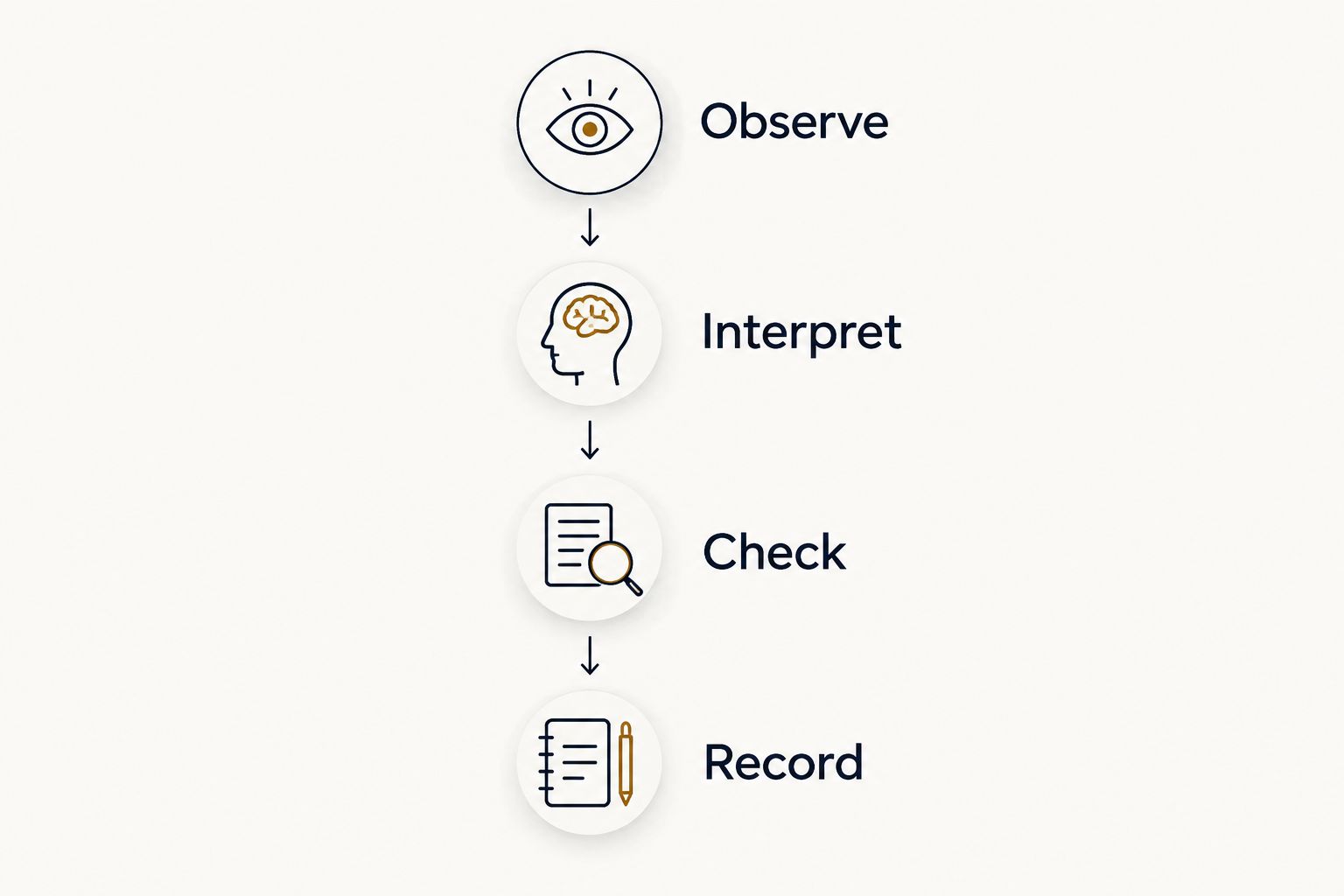
For your 2026 study plan, choose one main resource and keep the routine small. Try 10 minutes per session as a starting exercise, not a promised learning timeline.
- Observe: Describe the card’s figures, objects, and mood before consulting a meaning.
- Interpret: Connect those observations to a clear question about your own choices.
- Check: Compare your interpretation with your chosen course or book.
- Record: Write down what you learned and what remains uncertain.
A useful question is, “What should I consider before this conversation?” A less useful practice question asks the cards to establish exactly what someone else thinks. Keep your attention on interpretation and your own agency.
After single-card practice feels manageable, try a spread with 3 positions: situation, consideration, next step. Write a sentence connecting the cards rather than producing three unrelated definitions. This is where a useful course should help you move beyond memorization.
Which beginner tarot resource should you choose?
Choose Joan Bunning’s Learning the Tarot if you are undecided. Use Kitchen Table Tarot instead if an informal voice makes study more approachable, or Tarot for Your Self if exercises are what keep you engaged.
Do not start your 2026 practice by collecting every book on this list. Work with one resource until you can explain a short spread clearly, including what the cards do not establish.
Jahben tarot readings are best for people seeking personal guidance rather than a course in reading cards. A reading and a learning resource serve different goals; choose according to whether you want help exploring a question or developing the skill yourself.
FAQ
What are the best tarot courses for beginners in 2026?
Joan Bunning’s Learning the Tarot is the strongest structured starting course in this shortlist. Its lessons and exercises suit independent learners who want a clear progression rather than disconnected card meanings.
Should I start with a tarot course or a book?
Start with a course if you need a defined sequence, and a book if you prefer reading at your own pace. Kitchen Table Tarot suits an approachable introduction; Tarot for Your Self suits exercise-led study.
What is the best first tarot book for someone completely new?
Kitchen Table Tarot by Melissa Cynova is the best first-book choice here for a plainspoken introduction. Choose Joan Bunning’s Learning the Tarot instead if you want your reading organized as lessons.
Do I need to memorize all the tarot cards before reading?
No, you do not need to memorize all 78 cards before beginning practice. Start with a small spread, observe the images, and check a reference after making your own interpretation.
Is Seventy-Eight Degrees of Wisdom suitable for beginners?
Seventy-Eight Degrees of Wisdom suits beginners who already understand basic deck structure and want deeper symbolic study. It is a demanding first introduction if you still need help with suits, meanings, and spread positions.
Can a tarot course teach me to predict the future accurately?
A tarot course does not establish reliable future prediction. Judge teaching by how clearly it explains interpretation, encourages practice, and separates reflection from unsupported certainty.
Does Jahben provide tarot courses or personal readings?
Jahben provides personal tarot readings and spiritual guidance. The courses and books in this guide are separate learning resources for developing your own tarot practice.
One last thing
The most revealing practice note is not the interpretation that felt immediately right. It is the one you later revised.
Keep your original wording visible. Add what changed, which assumption you made, and what the card actually supported. A useful tarot education teaches you to revise an interpretation, not defend every first impression.
Related guides
Ready for your own reading?
Astrology, numerology, and tarot brought together into one clear, written answer about your love, career, or timing.
Book a Personal Reading Get Your Free Report