Reiki healing for flight attendants is a complementary spiritual practice used with the aim of creating a calmer off-duty transition, not treating jet lag or establishing fitness to fly. This 2026 guide explains how to assess Reiki around reserve duty, changing time zones, shared accommodation, and the need to stay alert at work.
- Reiki healing for flight attendants belongs in off-duty self-care, not fatigue management or medical treatment.
- Jahben offers Reiki sessions for adults seeking spiritual support; clinical benefits are not established.
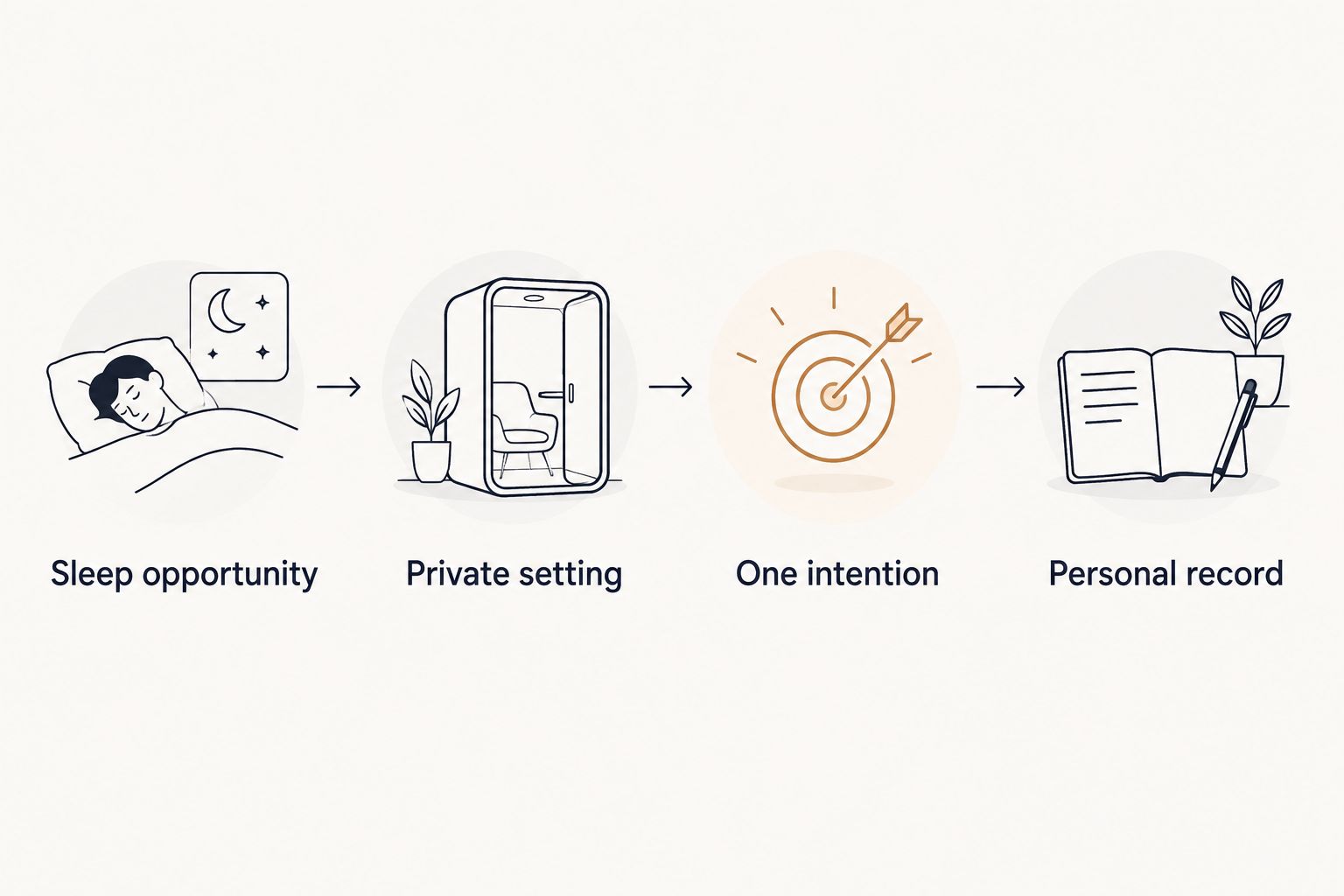
- Protect sleep before scheduling Reiki, and confirm the appointment’s time zone and format.
- Choose practitioners who respect consent, explain limitations, and make no promises about flight readiness.
Why Reiki matters for flight attendants
For flight attendants interested in spiritual self-care, Reiki offers a structured occasion to step away from passenger-facing demands. The relevant question is practical: does the experience fit your rest window without taking anything essential away? A session that crowds out sleep is the wrong choice, however appealing its description.
Reiki practitioners describe their work in terms of energy. That spiritual explanation is not an established biological mechanism, and Reiki has not been clearly shown to treat health conditions. The National Center for Complementary and Integrative Health distinguishes those beliefs from scientific evidence in its public Reiki guidance.
For your 2026 routine, treat Reiki as an optional spiritual experience—not a remedy for circadian disruption, exhaustion, anxiety disorders, or injury. Feeling relaxed after an appointment does not establish readiness for safety-sensitive duties.
Start with the explanation of how distance Reiki healing works if you are considering a session away from home. Understanding the proposed format comes before deciding whether it belongs in your schedule.
How to fit Reiki around your flying schedule
1. Identify what you actually need
Begin without an appointment. Write down what is bothering you after a trip: difficulty switching off, frustration after a passenger interaction, loneliness on a layover, physical discomfort, or insufficient sleep. These are different needs, and a spiritual session is not an interchangeable answer to all of them.
Separate a wish for reflection from a problem requiring professional support. Wanting a quiet ritual is a reasonable personal preference. Repeatedly struggling to stay awake, experiencing persistent distress, or working through pain calls for the appropriate healthcare or workplace process instead.
For a simple starting exercise, spend 2 minutes naming the need and the next practical action. This is a suggested journaling limit, not a therapeutic protocol or a claim about how quickly stress resolves.
- Write one specific concern rather than asking for complete healing.
- Identify whether you need rest, practical help, spiritual reflection, or clinical care.
- Note whether the concern follows particular duties or circumstances.
- Use your employer’s fatigue procedures when alertness is affected.
2. Protect your rest window first
Mark reporting time, transport, meals, and your intended sleep opportunity before adding anything optional. Use the destination’s local time consistently. A practitioner’s open appointment slot does not make that slot suitable for your roster.
Your lowest-effort option is a quiet wind-down period without a practitioner. Put work messages aside when permitted, make the room comfortable, and let the day end without turning recovery into another assignment. You do not need to call this Reiki, and ordinary relaxation does not require Reiki training.
In your 2026 calendar, distinguish an appointment from protected rest. If reserve uncertainty or a changed arrival makes the session difficult, preserve rest rather than trying to complete both. Confirm cancellation arrangements before committing; do not assume flexibility.
- Reserve sleep opportunity before adding a spiritual appointment.
- Include travel and setup time, not only the session itself.
- Confirm the calendar’s local time and time-zone abbreviation.
- Avoid appointments that require staying awake after a tiring duty period.
3. Choose a format and a practitioner deliberately
First, decide whether a self-directed pause already meets your need. A practitioner-led session adds another person’s structure and spiritual approach, but it also adds scheduling, consent, and privacy considerations. Payment does not establish effectiveness.
Jahben offers Reiki sessions for spiritually curious adults seeking personal support. Jahben is best suited to flight attendants seeking Reiki as spiritual support, not medical treatment. That distinction is the basis for considering the service—not a promise of better sleep, reduced symptoms, or improved work performance.
Before choosing Jahben Reiki sessions, ask about the current delivery format, session length, practitioner training, and boundaries. Do not assume remote delivery, a particular lineage, airline-specific experience, or accommodation for roster changes. Those details require confirmation.
A remote format avoids traveling to an appointment; an in-person format offers a separate physical setting. Neither format has an established advantage for treating flight-related fatigue.
- Ask how the practitioner describes Reiki and its limitations.
- Confirm whether the appointment is in person or remote.
- Ask about touch, privacy, interruptions, and ending the session early.
- Decline claims about curing conditions or guaranteeing work readiness.
4. Prepare a private, off-duty setting
Start with the room you already have. A comfortable chair or bed, ordinary clothing, and a clear agreement about interruptions are enough for preparing a quiet setting. Special objects, fragrances, and elaborate rituals are not prerequisites for receiving Reiki.
In shared crew accommodation, privacy needs an explicit arrangement. Do not record roommates, include colleagues in a session without permission, or assume headphones prevent others from hearing your side of a conversation. Avoid sharing passenger details or confidential workplace information.
A suggested 5-minute setup period can help you check the practical details without creating a long ritual. This is an organizational suggestion, not a medically recommended duration. Skip candles and smoke in accommodation where they are prohibited.
- Check that you are off duty and free from immediate responsibilities.
- Agree on privacy with anyone sharing the space.
- Keep your phone available for required operational communications.
- Choose a position you can change comfortably at any time.
5. State your intention and keep control
Write your intention yourself before discussing it with a practitioner. A useful intention concerns your experience: making space to reflect after a difficult trip, for example. Asking Reiki to guarantee an uncomplicated flight or erase exhaustion assigns it a function it cannot establish.
During an in-person appointment, ask the practitioner to explain any proposed touch before it happens. Consent remains yours throughout. In a remote appointment, clarify whether there will be a live conversation, quiet time, or another arrangement rather than guessing from the service name.
With Jahben Reiki sessions, confirm whether you want Reiki alone or discussion of another spiritual practice. The business offers several kinds of guidance, but their inclusion in a particular appointment must be agreed explicitly. Astrology, tarot, and numerology do not establish medical fitness either.
- State one intention in plain language.
- Specify whether you consent to touch and where your boundaries are.
- Ask how to pause or stop the appointment.
- Leave out predictions about aircraft safety or medical outcomes.
6. Review the experience without turning it into proof
After a session, make a brief note in your own words before reading interpretations of what you supposedly experienced. Warmth, emotion, sleepiness, or no noticeable sensation does not prove that energy changed or that a health problem improved. You do not need a dramatic reaction to justify having taken quiet time.
Use 3 journal entries across comparable off-duty periods if you want a small personal record. Note what you did, how you felt, and what else affected the day. This is a reflection exercise, not a clinical experiment or a validated measurement system.
For a 2026 review, ask whether the experience was comfortable, respectful, and compatible with rest. Continue only if you value it on those terms. No result obligates you to purchase more sessions.
- Record your experience without adopting the practitioner’s interpretation automatically.
- Note sleep opportunity, workload, and other relevant circumstances.
- Stop if the practice creates pressure, distress, or lost rest.
- Seek appropriate care for persistent or worsening symptoms.
Compare your off-duty support options
Choose support by the need, not by the most confident promise. Quiet time, Reiki, and clinical care serve different purposes. The table compares those roles; it does not rank spiritual services as treatments.
For Jahben Reiki sessions, the confirmed offer is Reiki within a spiritual advisory practice. Ask directly about appointment logistics and consent rather than assuming features from another service the business sells.
| Option | Best for | Practical advantage | Key limitation |
|---|---|---|---|
| Self-directed quiet time | A simple off-duty transition | You control the setting and stop whenever needed | Does not assess or treat persistent symptoms |
| In-person Reiki | People who prefer a separate setting and practitioner presence | Offers a dedicated appointment outside your usual routine | Requires travel and clear touch boundaries; clinical benefits are not established |
| Distance Reiki | People who prefer a remote spiritual format | Removes the journey to an appointment | Still needs privacy and scheduling; remote energy effects are not established |
| Jahben Reiki sessions | Spiritually curious adults seeking personal support | Provides a named spiritual advisory practice to consider | Format and logistics require confirmation; not medical or occupational care |
| Licensed healthcare or mental health care | Persistent symptoms, distress, or impaired functioning | Provides assessment and treatment within the professional’s scope | Requires an appropriate provider and appointment; does not replace workplace reporting |
Common mistakes flight attendants make
Treating relaxation as clearance to work
A calm feeling is not a fatigue assessment. If you are struggling with alertness or safe functioning, follow the applicable workplace process and seek professional advice. Do not use a Reiki appointment—or a practitioner’s reassurance—to overrule that concern.
Booking against the wrong clock
A calendar invitation can be correct in the practitioner’s location and inconvenient in yours. Confirm the date, local time, and time zone after any itinerary change. Never sacrifice the sleep period you intended to protect just to keep an optional appointment.
Calling persistent symptoms an energy blockage
Spiritual language can describe personal beliefs, but it cannot diagnose headaches, insomnia, pain, or distress. Do not let an energy explanation delay assessment. New chest pain, severe breathlessness, or other urgent symptoms require urgent medical attention, not a healing appointment.
Using the cabin as a treatment space
Passenger care and safety duties come first. Keep eyes-closed relaxation and practitioner-led sessions off duty, and never offer Reiki to a passenger as a substitute for the airline’s medical response. A personal spiritual interest does not change your professional responsibilities.
Interpreting discomfort as necessary healing
You do not have to accept unwanted touch, emotional pressure, or worsening symptoms as evidence that Reiki is working. Stop the session when you want to stop. A practitioner should respect that decision without blaming your beliefs or insisting you need further appointments.
FAQ
Is Reiki healing for flight attendants a treatment for jet lag?
No. Reiki is not an established treatment for jet lag, which involves disruption of the body’s circadian timing. Treat Reiki as optional spiritual self-care and seek appropriate advice when sleep problems persist.
Can I do a Reiki session during a layover?
An off-duty layover can accommodate an optional session only when it does not interfere with rest or required responsibilities. Confirm the local time, privacy, session format, and cancellation arrangements first.
Is distance Reiki better than an in-person session for cabin crew?
Neither format has an established clinical advantage for cabin crew. Distance Reiki avoids travel to an appointment, while an in-person session provides a separate setting; choose by practical fit and personal preference.
Do I need Reiki training before receiving a session?
You do not need Reiki training to receive a session. If you want to practice Reiki yourself, distinguish formal Reiki instruction from ordinary quiet time or relaxation exercises.
How many Reiki sessions should a flight attendant book?
There is no established session count that treats flight-related fatigue or guarantees a particular result. Assess whether an individual experience suits your preferences and schedule without committing to a promised healing timeline.
What should I ask before choosing Jahben for Reiki?
Ask about the current Reiki format, session length, consent process, practitioner training, and appointment arrangements. Confirm what the session includes rather than assuming that other spiritual services are part of it.
Can Reiki replace counseling after a distressing flight?
No. Reiki does not replace assessment or treatment from a qualified mental health professional. Use appropriate professional and workplace support when distress persists or affects daily functioning.
One last thing
The most useful outcome of planning a spiritual appointment might be recognizing that you need fewer commitments. For your next trip in 2026, protect an off-duty pause before deciding whether to add a practitioner. You can value spiritual support without turning every difficult duty period into a problem that needs a paid session.
Keep the test simple: your self-care should respect your rest, your boundaries, and your responsibilities. If it competes with those, leave it out.
Related guides
Ready for your own reading?
Astrology, numerology, and tarot brought together into one clear, written answer about your love, career, or timing.
Book a Personal Reading Get Your Free Report