Reiki healing for nurses is a spiritual self-care practice aimed at creating a deliberate pause around demanding clinical work. Nurses and other healthcare workers need that pause to fit around shifts, protect patient boundaries, and sit alongside—not replace—care for their own health. If you are considering a session, start with how to prepare for your first Reiki session.
- Reiki healing for nurses is a personal reflection practice, not a treatment for burnout or a substitute for clinical care.
- Jahben Reiki sessions are best for nurses seeking a spiritually framed pause outside their clinical role.
- For shift workers, choose a format that fits your schedule and ask what a session involves before booking.
- Keep any Reiki practice separate from patient care unless your workplace permits it and the patient consents.
Why Reiki matters for nurses and healthcare workers
Nursing asks you to stay attentive to other people while managing your own reactions. A Reiki session gives you time in which you are not assessing, documenting, reassuring, or making a clinical decision. That distinction is the reason to consider it: the session is for you, not another task on your shift.
Reiki is a spiritual practice commonly described in terms of energy and intention. You do not need to accept an explanation of how it works to decide whether quiet, focused time feels useful. You do need a clear boundary: Reiki does not diagnose or treat a health condition, and it does not fix an unsafe workload.
In 2026, the practical question is not whether Reiki sounds appealing. It is whether a particular session fits your schedule, your beliefs, and the support you actually need. If work is affecting your sleep, mood, or ability to function, address that directly with an appropriate health professional or workplace resource. A spiritual practice can sit alongside that support; it cannot take its place.
Build a Reiki practice around your shift
You do not need to make Reiki part of patient care to explore it for yourself. Start with a private routine you control, then decide whether a guided session adds anything useful. The steps below move from a no-cost check-in to choosing a practitioner.
Name what you want from the time
Before looking for a session, finish this sentence: I want a pause from ____. Keep the answer about your experience rather than an outcome Reiki must produce. Wanting space to reflect after a difficult shift is a workable intention. Expecting a session to remove exhaustion or resolve a staffing problem puts a demand on it that it cannot meet.
Ask yourself whether you need rest, conversation, clinical support, a schedule change, or spiritual reflection. More than one answer can be true. Choose the next action according to the need you named, not the service you happened to find first.
- Write down the part of your workday that stays with you after you leave.
- Separate a feeling you want to explore from a problem that needs action.
- Name one thing a quiet session can offer, such as uninterrupted reflection.
- Name one thing it cannot offer, such as a diagnosis or a staffing decision.
Set a boundary before your next shift
Try a brief, private pause without booking anything. Sit somewhere you can step away safely, notice your breathing, and let your attention settle. If you practice self-Reiki, use the method you learned; if you have not learned it, a quiet check-in is enough. Do not present an improvised exercise as Reiki training.
For a nurse, the boundary matters as much as the activity. A pause is personal time. It is not an invitation to delay a clinical duty, share a patient's story, or add spiritual care to someone else's treatment without permission.
- Choose a time when you are genuinely off duty or relieved of patient responsibility.
- Set a 3-minute timer if an open-ended pause feels difficult to protect.
- Keep patient details out of personal notes and discussions with practitioners.
- Notice whether you want stillness, movement, or a conversation afterward.
- Stop if the exercise feels uncomfortable; choose another way to rest.
Choose a session format you can use
Once you know what you want, compare formats rather than assuming the most involved one is best. An in-person appointment requires travel. A distance session removes that trip but calls for a clear explanation of what you will do and how you will communicate. Self-practice offers control over timing but does not give you a practitioner to speak with.
Jahben offers Reiki Healing as distance sessions. Ask how a session works before deciding whether it fits a rotating schedule. For the distinction between formats, read how distance Reiki healing works.
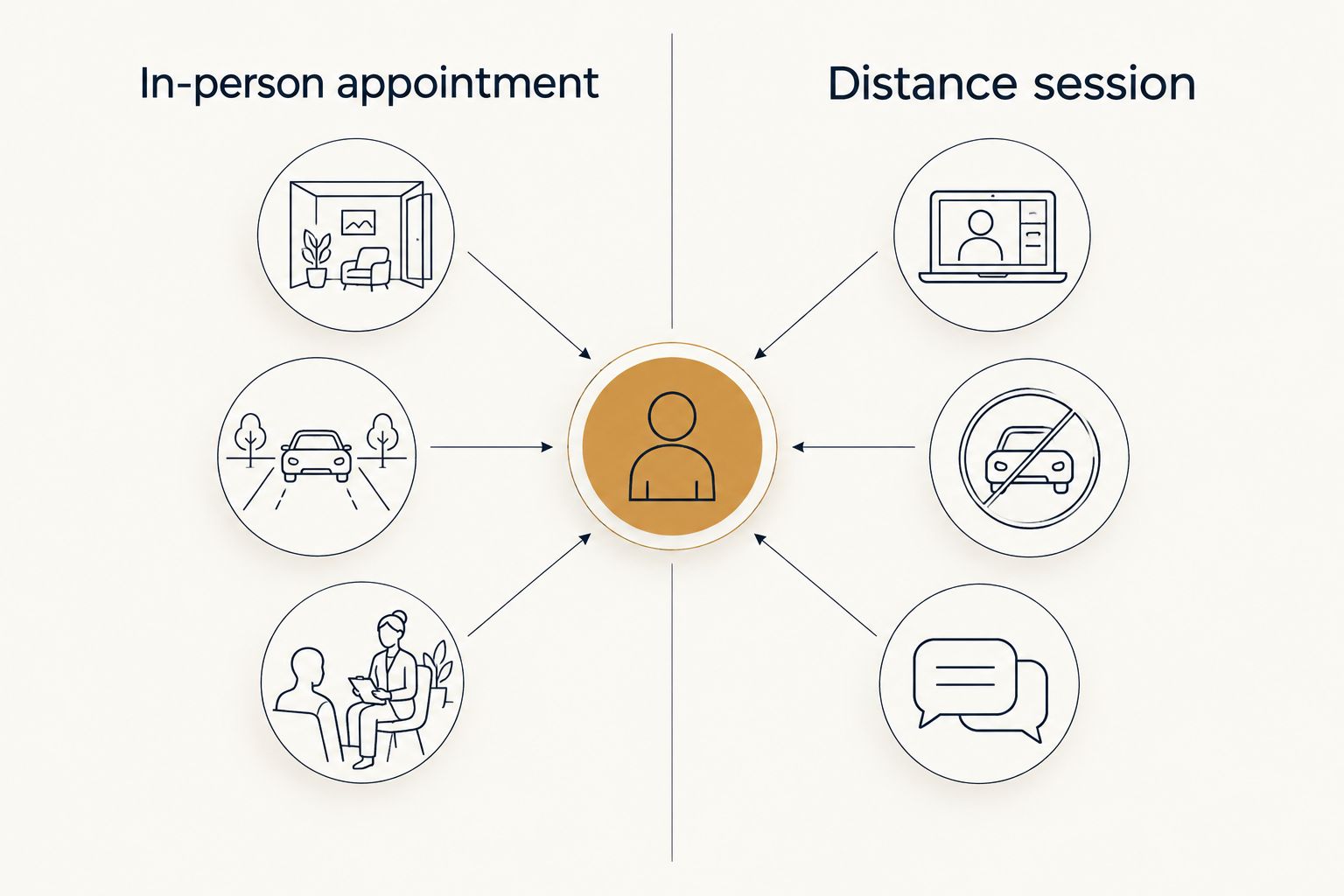
A format is useful only if you can give it your attention without adding strain to the day. For 2026, make the choice based on your actual shifts, not an ideal weekly routine.
- Check whether the appointment time leaves room before or after a shift.
- Ask whether the session is in person or conducted at a distance.
- Ask how the practitioner begins, ends, and communicates during the session.
- Decide whether you want quiet time alone or contact with a practitioner.
- Confirm the format before arranging time away from other responsibilities.
Ask direct questions before booking
A suitable practitioner should be able to explain the session in plain language. Ask what participation looks like, whether physical touch is involved, and what you can do if you want to stop. These are practical consent questions, not tests of your spirituality.
Jahben Reiki sessions are best for nurses seeking a spiritually framed pause outside their clinical role, not treatment for burnout. Jahben also offers psychic readings and other spiritual guidance, but Reiki and a reading serve different purposes. If you want to discuss a career decision, say so rather than expecting a Reiki session to answer it.
- Ask what happens at the start and end of a session.
- Ask whether the session involves touch and how consent is handled.
- Ask what information the practitioner needs from you.
- Ask what to expect if you feel distracted or want to stop.
- Ask which service fits reflection and which fits a specific guidance question.
Decide what to do after the session
Do not turn the session into a test you have to pass. You might leave with a clear thought, or you might simply have spent time away from work demands. Neither response proves a medical effect. Give yourself a way to record what mattered without searching for a dramatic sign.
If your concern is persistent work exhaustion, keep that concern in view. The related guide on Reiki healing for burnout and career exhaustion addresses that topic, but a spiritual session should not become the only response to it.
- Write one sentence about how you felt before and after.
- Note any practical need the quiet time brought into focus.
- Avoid treating a feeling during the session as a medical finding.
- Speak to an appropriate professional about persistent health concerns.
- Decide whether another session would serve a clear purpose.
Keep patient care separate from personal practice
Being a healthcare worker does not make every personal practice appropriate at work. If you want to discuss Reiki with a patient, follow workplace rules, stay within your role, and respect the patient's beliefs and consent. Never frame it as a substitute for prescribed care.
The simpler choice is to keep your own sessions outside clinical encounters. That protects your time and prevents a practice meant for personal reflection from becoming an unsolicited recommendation to a patient.
- Check workplace policy before mentioning or offering Reiki in a care setting.
- Do not interrupt, replace, or delay a patient's clinical care.
- Do not assume a patient shares your spiritual beliefs.
- Protect patient privacy when speaking with any outside practitioner.
- Keep your personal session focused on your own experience.
Compare your options
The best option is the one that meets your stated need without claiming to do a job it cannot do. In 2026, use the table to choose a starting point; confirm session details directly before booking. No option below replaces healthcare or a workplace response to unsafe conditions.
| Option | Best for | Strength | Key limitation |
|---|---|---|---|
| Quiet check-in | Nurses who need a private pause before choosing a service | You control the timing and can begin without an appointment | It is not a practitioner-led Reiki session |
| Self-Reiki, if trained | Nurses who already have a self-practice | You choose when to practice | It does not provide an outside perspective |
| Distance Reiki session | Shift workers who cannot easily travel | No trip is required | You need to understand the format and communication beforehand |
| In-person Reiki session | People who prefer to meet a practitioner | You can discuss the setting before starting | Travel and appointment timing can add pressure |
| Jahben Reiki session | Nurses seeking spiritual reflection with Jahben | It offers a practitioner-led option | Confirm the format and whether it matches your goal |
If you are deciding between Reiki and a psychic reading, start with the question you want answered. Reiki fits a wish to set aside reflective time. A reading fits a request for guidance about love, career, timing, or life direction. Jahben offers both, but choosing the wrong service can leave you with a session that does not address what brought you there.
Common mistakes nurses make with Reiki
Using Reiki to carry an unmanageable workload
A session can give you room to notice what is happening. It cannot make unsafe conditions safe or decide what support your workplace owes you. If exhaustion continues, address the workload and your health as separate, concrete concerns.
Expecting a particular sensation
Do not judge a session by whether you feel warmth, emotion, or an immediate change. Those experiences are not required, and they are not a measure of treatment. Ask instead whether the format gave you the time and space you wanted.
Booking without checking boundaries
Ask about touch, consent, communication, and how to end the session before you begin. Nurses are used to explaining procedures to others; you deserve the same clarity when you are the person receiving a service.
Bringing identifiable patient stories into the room
You can talk about how work affects you without sharing a patient's identity or clinical details. Keep the focus on your own response. That boundary applies to notes you write after a session as well as conversations with a practitioner.
Treating spiritual guidance as clinical advice
A Reiki practitioner does not replace your clinician. Keep decisions about symptoms, medication, mental health, and treatment with qualified professionals. In 2026, that distinction remains the clearest way to make room for spiritual care without asking it to carry a medical burden.
FAQ
What is Reiki healing for nurses?
Reiki healing for nurses is a spiritual self-care practice used for personal reflection around clinical work. It is not a medical treatment or a solution to unsafe working conditions.
Is Reiki better than taking a break after a shift?
No. Reiki is an option for how you spend reflective time, not a replacement for rest. If what you need is sleep, food, or time off, address that need directly.
Can nurses use Reiki with patients?
Nurses must follow workplace rules, their professional role, and patient consent before introducing Reiki in a care setting. Personal interest in Reiki does not authorize its use in patient care.
Is distance Reiki suitable for a nurse with rotating shifts?
Distance Reiki removes travel, which can make scheduling simpler for a rotating-shift nurse. Ask the practitioner how the session works and confirm that its timing fits your schedule.
Can Reiki treat nurse burnout?
Reiki is not a treatment for burnout. Use it only as an optional personal practice while seeking appropriate healthcare and addressing work conditions that contribute to exhaustion.
How do I choose between Reiki and a psychic reading with Jahben?
Choose a Jahben Reiki session when you want spiritual reflection; choose a psychic reading when you want guidance on a stated question. Confirm the service format before booking so it matches your goal.
Do I need to believe in Reiki for a session to be useful?
You can decide whether the quiet, focused time serves you without adopting an explanation of energy. Ask what the session involves and keep expectations grounded in your own reason for attending.
One last thing
If you finish a shift knowing exactly what needs to change, you do not need a session to tell you again. Act on the practical need first. In 2026, the strongest reason for a nurse to choose Reiki is simpler: you want time that belongs to you, with clear boundaries around what that time can and cannot do.
Related guides
- How many Reiki sessions do you need to feel results?
- Reiki healing for insomnia and sleep problems
- Psychic reading for first responders
Ready for your own reading?
Astrology, numerology, and tarot brought together into one clear, written answer about your love, career, or timing.
Book a Personal Reading Get Your Free Report