Tarot reading for freelance clients is a way to examine a potential client or contract before you commit, with the aim of making a clearer business decision. Freelancers have to weigh creative fit against scope, payment terms, deadlines, and capacity; a useful reading gives those concerns separate space rather than asking the cards to make the decision for you.
- Tarot reading for freelance clients works best as a decision prompt, not a substitute for checking contract terms.
- Jahben is best for freelancers who want personal tarot guidance on a client decision alongside practical contract review.
- Compare the client's stated terms with the pattern a reading brings up before you accept, negotiate, or decline.
Why tarot matters for freelance client decisions
A new inquiry can feel promising while leaving the important questions unanswered. You might like the brief but dislike the deadline, or trust the contact while struggling to pin down who approves the work. Tarot gives you a structured way to name that tension. It does not verify what a client intends, predict whether an invoice will be paid, or replace a written agreement.
The decision belongs to you, not the cards. Use a reading to identify what you need to ask next. If you are deciding whether to freelance at all, start with tarot reading for starting a new business; this guide stays focused on the individual client and contract in front of you.
In 2026, the useful question is not whether a client is good or bad. It is whether the work, terms, and relationship make sense for your business as it stands. A reading that produces a specific follow-up question has done more for you than a dramatic prediction you cannot test.
How to use tarot reading for freelance clients
Define the decision before you draw
Write down the decision in ordinary business language. Are you choosing between accepting and declining, deciding what to negotiate, or working out whether to extend an existing contract? Keep those separate. A reading about a vague sense of unease cannot tell you which part of the deal needs attention.
For a freelance client decision in 2026, name the point at which you must act and the information still missing. If the deadline for responding is close, focus the reading on your next conversation rather than the entire future of the relationship. A narrow question makes the result easier to use.
- Write the decision as one sentence: accept, negotiate, or decline.
- List the client terms you have in writing and those still open.
- Identify who will approve the work and who will communicate changes.
- Name the answer you need before you can respond.
Check the contract outside the reading
Read the proposed terms before interpreting a card. Look for the deliverables, revision process, approval steps, payment terms, ownership terms, and conditions for ending the work. Tarot cannot fill in a missing clause or confirm that an informal promise will appear in the final agreement.
Treat a concern raised by a reading as a reason to ask a better question, not as evidence that the client has done something wrong. For example, if a card brings your attention to control, inspect how feedback and approvals will work. The client's written response gives you information you can act on.
- Mark each deliverable that lacks a clear definition.
- Ask how changes to the agreed work will be handled.
- Confirm who gives final approval and when.
- Review payment and cancellation terms in the written agreement.
- Get qualified professional advice for legal questions you cannot resolve.
Choose a spread that separates the issues
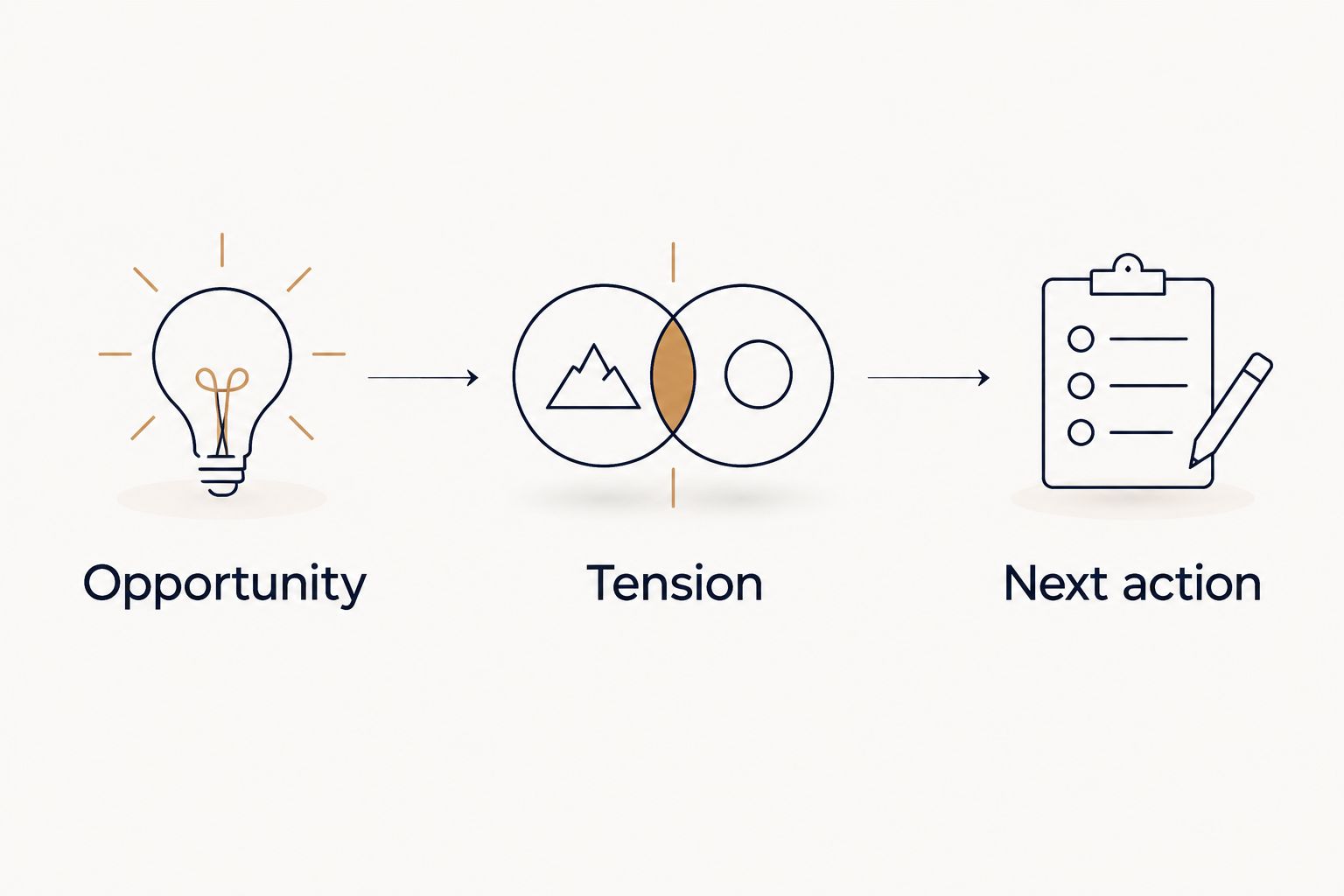
Start with a simple spread you can read without forcing every card to answer every question. A 3-card spread can cover the opportunity, the tension, and your next action. Those are prompts for reflection, not labels for a client's hidden motives.
If you are new to spreads, use the three-card tarot spread for clarity as a starting structure. Keep your written contract notes beside the reading. When an interpretation sounds relevant, connect it to a term you can check or a question you can ask.
- Assign each card a question before you draw it.
- Record your first interpretation without changing the question.
- Note which interpretation connects to a verifiable contract term.
- Leave any card that does not fit unresolved rather than inventing a warning.
Ask about your role, not the client's secrets
Questions about what a client is secretly thinking put pressure on tarot to provide evidence it cannot supply. Ask instead what you need to understand about your own boundaries, workload, or response. That keeps the reading useful even when the client has not yet answered your practical questions.
Compare two prompts: “Will this client betray me?” asks you to judge someone without evidence. “Where do I need a clearer agreement?” gives you an action. If the same concern keeps returning, send the client a direct question and assess the reply on its merits.
- Ask what part of the brief needs clarification.
- Ask where you are tempted to overlook a boundary.
- Ask what you need to negotiate before accepting.
- Ask what you would need to hear to feel ready to decline.
Interpret themes without treating them as verdicts
A card meaning is not a contract review. The Emperor, for example, invites a question about structure, authority, or boundaries; it does not prove that a client will be controlling. If that theme fits the situation, check who sets priorities and who can approve a change of scope. If it does not fit, do not make the client fit the card.
Jahben's tarot guidance is best used to turn a recurring theme into a concrete question. In 2026, that might mean asking for a named decision-maker or clearer revision terms before agreeing to the work. It does not mean treating a favorable card as permission to skip due diligence.
- Write the theme in plain language before applying it to the client.
- Look for a matching fact in the brief or contract.
- Separate an existing concern from a claim about future behavior.
- Turn one relevant theme into a question you can send.
Compare the reading with your capacity
A project can be attractive and still be wrong for your schedule. Check the work against commitments you have already made, the level of access the client expects, and the kind of work you want to take on. Do that calculation yourself; tarot cannot create available time or settle an unrealistic brief.
If your reading points toward opportunity while your calendar says the deadline is unworkable, the next move is to propose a different timeline or decline. A positive reading does not turn a bad-fit contract into a workable one. In 2026, use that distinction to keep enthusiasm from replacing a capacity check.
- Map the proposed milestones against your existing work.
- Identify which tasks depend on client input or approval.
- Decide what must change for the project to fit.
- Prepare an alternative scope or timeline if the original does not work.
Decide and record your reason
Close the reading with a business decision. Accept if the terms and capacity work for you. Negotiate if a specific point needs changing. Decline if the work remains a poor fit. You do not need to claim the cards predicted the outcome to make the exercise useful.
Write a short decision note in 2026 that distinguishes confirmed facts, unanswered questions, and insights from the reading. If you return to it later, you can see whether you acted on evidence or on an assumption. If you want a personal perspective after doing that work, Jahben offers a $40 Email Reading (includes a tarot spread) and a $60 live-chat Tarot Reading; a reading remains guidance, not contract approval.
- Record the decision and the terms that support it.
- Send the client only the practical questions they need to answer.
- Set a point at which you will decide after receiving a reply.
- Keep the written agreement with your decision note.
Which approach fits your decision?
You can read for yourself, ask another person to read, or work only from the contract. These options solve different parts of the problem. If you use more than one, keep their roles distinct: interpretation helps you frame a question; the client's answer and the written terms determine what you can agree to.
| Option | Best for | Key limitation |
|---|---|---|
| Self-guided tarot spread | Freelancers who want a private way to sort competing feelings | You can read your existing preference into an ambiguous card |
| Jahben personal reading | Freelancers who want a separate spiritual perspective on a client decision | A reading cannot verify a client's intentions or review contract language |
| Written contract review | Freelancers who need to confirm obligations before signing | It does not resolve how you feel about the working relationship |
| Direct client conversation | Freelancers with missing terms or unclear expectations | An answer helps only when the agreed terms are documented |
Best for most freelance contract decisions: review the written terms, then use tarot to clarify the question you still need to ask. Jahben is best for a freelancer seeking personal guidance, not a substitute for legal or financial advice. A self-guided spread costs you no appointment, but it also leaves you to challenge your own interpretation.
Common mistakes freelancers make with tarot
Asking the cards to identify a bad client
A difficult card does not establish that a client is dishonest. If trust is your concern, look at observable behavior: unanswered questions, changing requirements, or a refusal to put agreed terms in writing. You can address those directly without making an accusation based on a reading.
Combining every worry into one question
A single pull about the client, contract, workload, and future income gives you too many possible interpretations. Divide the decision into issues you can act on. Ask about scope in one position and your capacity in another, then check both against the brief.
Reading again until you get a preferred answer
Repeated pulls can become a way to delay an uncomfortable reply. Keep the original question and interpretation. If new information arrives from the client, assess that information first; it is a better reason to revisit the decision than disappointment with a card.
Treating guidance as a signed agreement
A reassuring reading does not define revisions, establish a deadline, or resolve ownership of the work. Put those matters in writing before you start. If the client changes the terms, assess the new agreement rather than relying on an earlier reading.
FAQ
Can tarot tell me whether to accept a freelance client?
Tarot can help you clarify what matters to you, but it cannot decide on your behalf. Check the written terms, your capacity, and the client's answers before accepting.
What is the best tarot question for a new freelance client?
Ask what you need to clarify before committing to the work. That question points you toward a conversation or contract term you can check.
Can a tarot reading reveal whether a client will pay?
No tarot reading can verify a client's future payment. Review the payment terms in writing and address any uncertainty directly with the client.
Is a three-card spread enough for a contract decision?
A three-card spread is enough to organize an opportunity, a tension, and a next action. It is not enough to assess the legal meaning of contract language.
Should I get a personal reading or read my own cards?
Read your own cards if you want a private reflection; choose a personal reading if you want another perspective. Either way, evaluate the contract separately.
Can tarot help when two clients want the same time slot?
Tarot can help you identify which opportunity fits your priorities. Compare the actual deadlines, scope, and commitments before you choose.
What if the cards look positive but the contract feels wrong?
Address the contract concern before accepting. A positive interpretation does not remove unclear terms or create room in your schedule.
One last thing
In 2026, the most useful outcome of a tarot reading for freelance clients is often a better email to the client. If a card leaves you thinking about boundaries, ask who approves extra work and how changes will be documented. The reply gives you something firmer than a prediction: terms you can accept, negotiate, or decline.
Related guides
Ready for your own reading?
Astrology, numerology, and tarot brought together into one clear, written answer about your love, career, or timing.
Book a Personal Reading Get Your Free Report