Lawsuit tarot reading is a reflective practice for people facing a legal dispute, with the aim of clarifying their questions and next steps—not predicting a court’s decision. If you are waiting on a hearing, weighing a settlement or trying to understand your own reactions, keep the legal facts separate from what the cards bring up.
- A tarot reading for lawsuit outcome cannot establish what a court will decide; use it to clarify questions and choices.
- Jahben tarot readings are best for people seeking personal guidance alongside advice from their lawyer, not a predicted verdict.
- Start with the case facts, use a focused spread, and take legal questions back to qualified counsel.
Why tarot matters when you are facing a lawsuit
A lawsuit creates two different problems. One is legal: deadlines, evidence, advice and decisions. The other is personal: fear, conflict and the pressure to make a choice before you feel ready. Tarot can help you examine the second problem. It cannot resolve the first.
That distinction matters in 2026 whether your dispute concerns work, money, family or another part of your life. A card that brings up authority, for example, can prompt you to examine how you respond to rules or negotiations. It does not tell you how a judge will rule. If that theme appears in your spread, a guide to interpreting the Emperor tarot card can help you reflect on it without treating the card as a legal finding.
Jahben tarot readings are best for people facing a lawsuit who want personal clarity alongside legal counsel, not a predicted verdict. That is the boundary to keep in place throughout a reading.
How to use tarot during a legal dispute
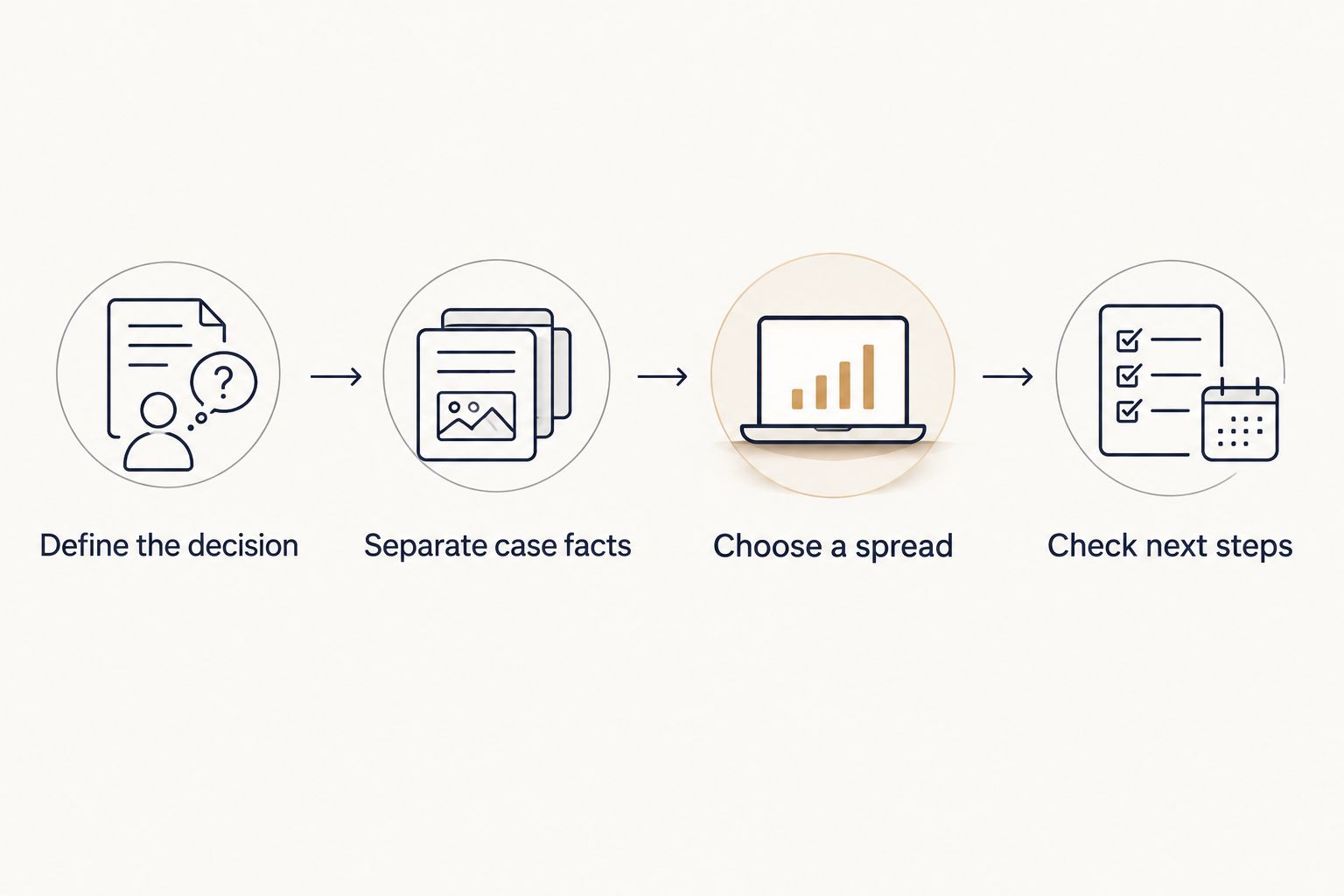
The useful question is not simply whether you will win. It is what you need to understand before your next decision. Work through the steps below in order; none requires you to share private case documents with a reader or act against your lawyer’s advice.
Define the decision you actually face
Write down the decision in plain language before you shuffle or book a reading. Are you deciding whether to ask your lawyer about settlement? Are you trying to prepare for a difficult conversation? Those are different questions, even if both sit under the same lawsuit.
A question such as “What do I need to understand before discussing settlement with my lawyer?” gives you room to reflect without asking the cards to decide a legal issue. In 2026, a specific question is still more useful than a dramatic prediction.
- Name the choice you control, rather than the verdict you do not.
- Ask what information you still need from your lawyer.
- Write one question that can lead to a practical next step.
Separate case facts from fears
Make a 1-page timeline of events using the documents and dates you already have. Then put your worries on a separate page. This simple split keeps an emotional reading from turning an assumption into an apparent fact.
If you find yourself writing “the other side will never negotiate,” mark it as a concern unless you have a direct basis for it. Tarot can help you explore why that possibility weighs on you. Your lawyer is the person to ask what the record supports.
- Record confirmed dates and actions without interpreting them.
- Put unanswered questions in a separate list for counsel.
- Label imagined outcomes as fears, not evidence.
Choose a focused spread
A 3-card spread is enough to organize reflection: your present concern, what needs your attention and the next question to ask. Assign those positions before drawing. Do not let a frightening card change the question after the fact.
For a manual reading, follow a consistent method and write your interpretation before searching for other meanings. A guide to a three-card tarot spread for clarity offers a starting structure. If you prefer another person’s perspective, Jahben offers personal tarot readings; describe the situation as a request for reflection, not legal analysis.
- Give each card a role before drawing it.
- Write what the image brings to mind before consulting a guide.
- Keep predictions about the judge or opposing party out of the spread.
Read symbols without treating them as evidence
Tarot cards use symbols, not access to a case file. A card associated with conflict can bring your attention to a conversation you are avoiding. It cannot establish another person’s motives. Likewise, a card associated with change does not confirm that a hearing will be postponed or a settlement offered.
When a meaning feels unusually certain, slow down. Ask what in your own experience gives the card that meaning, and what information would confirm or challenge your interpretation. In 2026, a reading remains a personal exercise even when the question concerns a formal legal process.
- Describe the card’s theme before applying it to the case.
- Consider more than one interpretation when the image is ambiguous.
- Check factual claims against documents or qualified advice.
Put legal questions back with your lawyer
Turn the reading into questions your lawyer can answer. If a card raises a concern about communication, ask how and when you should respond to the other side. If it highlights uncertainty, ask which facts remain disputed. Do not treat a tarot interpretation as a reason to miss a deadline or change your legal position.
You can use a reading to prepare yourself for that conversation without asking your lawyer to interpret the cards. Tell them the concern directly. This keeps the professional conversation focused on the case.
- Ask which deadlines require action.
- Ask what information is missing from your understanding.
- Confirm any proposed legal step before you take it.
Record what changes after the reading
Set aside a 10-minute journal session after your reading. Note the question you asked, the cards you drew and the action you decided to check. Recording your original interpretation helps you resist rewriting it later to fit whatever happens.
Keep the journal separate from your case records. It is a place for private reflection, not a substitute for the documents and instructions your lawyer gives you. If you need a writing structure, use this guide to journaling after a tarot reading.
- Capture your first interpretation in your own words.
- Identify one feeling the reading brought into focus.
- Note one question to verify outside the reading.
Revisit the question when circumstances change
Do not keep asking the same outcome question until a reassuring card appears. Revisit your notes when you have new information, then decide whether you have a genuinely new question. A changed filing, conversation or decision creates a different point for reflection; repetition alone does not.
A lawsuit can occupy your thoughts between formal updates. In 2026, use that time to distinguish what you can prepare from what you cannot control. If tarot increases your distress instead of helping you think clearly, put the cards down and seek support from someone equipped to help.
- Check whether new facts change the question.
- Compare your notes with what you now know.
- Pause readings that feed repeated reassurance-seeking.
Which kind of guidance fits your question?
The options serve different purposes. You can combine them, but they are not interchangeable: only qualified legal counsel should guide legal strategy.
| Option | Best for | Key limitation |
|---|---|---|
| Self-guided tarot spread | Naming feelings and forming questions in private | Your own expectations can shape the interpretation |
| Jahben tarot reading | Personal reflection with another reader’s perspective | It cannot assess evidence or predict a court decision |
| Lawyer consultation | Understanding your position, obligations and choices | It is not intended to provide a spiritual reading |
| Personal journal | Tracking concerns and questions over time | Writing alone does not resolve disputed facts |
Choose by the question in front of you. If you need to know what a document means, ask your lawyer. If you need to name why a decision feels difficult, a journal or tarot reading gives you a way to start. Jahben tarot guidance belongs in that reflective role, alongside—not in place of—the advice you rely on for your case.
Common mistakes people facing lawsuits make with tarot
Asking the cards for a court verdict
A yes-or-no pull can feel decisive while leaving the actual case untouched. A verdict depends on matters the spread cannot establish. Replace “Will I win?” with a question about your preparation, understanding or response.
Reading every difficult card as bad news
An unsettling image is not a notice from the court. Describe what it brings up for you before attaching it to an event. If you cannot separate the symbol from a feared outcome, stop the reading and return to confirmed information.
Using a reading to delay legal action
Reflection is not progress on a deadline. In 2026, keep the next required case action visible on your own calendar and confirm it with your lawyer. Do not wait for a clearer spread before sending a requested document or asking a time-sensitive question.
Sharing more case detail than necessary
A reader does not need private documents to help you reflect on your experience. Frame the emotional question without sending material you are unsure about sharing. Ask your lawyer before disclosing case information to someone outside your legal team.
FAQ
Can a tarot reading predict my lawsuit outcome?
No. A tarot reading cannot establish how a court will decide a lawsuit. Use it to examine your concerns, then take legal questions to qualified counsel.
What is the best tarot question to ask about a lawsuit?
Ask about a decision or response within your control. For example, ask what you need to understand before discussing your options with your lawyer.
Should I choose a tarot reading or a lawyer for a legal problem?
Choose a lawyer for legal advice and case strategy. A tarot reading can support personal reflection, but it does not replace counsel.
Can I ask tarot whether I should settle?
You can explore your feelings about settlement with tarot, but do not use a card to decide whether to accept an offer. Discuss the terms, risks and alternatives with your lawyer.
What spread works for a lawsuit question?
A focused 3-card spread can examine your present concern, what needs attention and your next question. Assign the card positions before you draw.
What if a tarot card frightens me during a legal dispute?
Treat the card as a prompt for reflection, not a forecast. Write down the fear it raised and check any factual or legal concern with the appropriate professional.
Is a Jahben tarot reading legal advice?
No. Jahben offers personal psychic and tarot readings, not legal counsel. Bring questions about evidence, deadlines and legal choices to your lawyer.
One last thing
Before asking for a tarot reading for lawsuit outcome, write the question you plan to ask your lawyer beside the question you plan to ask the cards. If both questions are the same, give the legal one to your lawyer first. The reading becomes more useful when it addresses what the legal answer cannot settle: how you understand your own choices.
Related guides
- Tarot reading for co-parenting and custody decisions
- Tarot reading for divorce and separation decisions
Ready for your own reading?
Astrology, numerology, and tarot brought together into one clear, written answer about your love, career, or timing.
Book a Personal Reading Get Your Free Report