Best overall: teaching and training. Best for deep one-to-one support: licensed counseling. Best low-commitment starting point: writing. The best careers for life path 11 connect communication, meaningful work, and clear boundaries; this 2026 guide compares seven paths without treating numerology as a career aptitude test.
- The best careers for life path 11 include teaching, counseling, writing, user research, mediation, nonprofit coordination, and spiritual advising.
- Teaching is the default recommendation for turning ideas into practical help within a defined role.
- Jahben offers personal numerology guidance for adults exploring career direction, not professional qualifications or employment guarantees.
- Use life path 11 symbolism for reflection; verify career fit through real tasks, training requirements, and working conditions.
Why this matters
In Pythagorean numerology, 11 is commonly treated as a master number associated with intuition, inspiration, and sensitivity. Those are symbolic associations, not measured traits you automatically possess. Start with the life path number 11 meaning and master number traits if you want that interpretive background.
A number does not qualify you for a profession, predict your earnings, or establish your personality. Use the symbolism to ask better questions about work you already enjoy, rather than accepting a job title as destiny.
For your 2026 search, separate attraction from suitability. You might love helping people but dislike constant appointments, or enjoy creative expression without wanting clients to direct it. The working conditions matter as much as the mission.
What makes the best careers for life path 11?
These five criteria turn an abstract numerology theme into a practical career shortlist:
- Meaningful contribution: You can explain who benefits from your work and how.
- Communication: The role gives you a useful outlet for explaining, listening, writing, or facilitating.
- Boundaries: Responsibilities are defined, with a clear point where your work stops.
- Entry requirements: You understand the education, experience, licensing, or portfolio expected.
- Daily fit: The actual schedule, feedback, workload, and setting suit your needs.
Do not rank an occupation highly just because its description sounds spiritual. A clear brief, supportive supervisor, and manageable workload deserve more weight than an inspiring title.
Career options at a glance
The order below reflects a decision framework, not employment-market performance or a scientifically validated match for people with life path 11.
| Career | Best for | Main trade-off |
|---|---|---|
| Teaching and training | Structured communication | Preparation and group demands |
| Licensed counseling | Deep individual support | Qualifications and emotional load |
| Writing and editing | Independent expression | Revision and deadline pressure |
| User research | Evidence-led curiosity | Analysis and stakeholder negotiation |
| Mediation | Conflict resolution | Impartiality under tension |
| Nonprofit program coordination | Mission-driven organization | Administration and competing needs |
| Spiritual advising | Symbolic guidance | Ethical limits and business duties |
1. Teaching: best for structured communication
Teaching turns knowledge into something another person can understand and use. Depending on your background, explore school teaching, adult education, tutoring, or workplace training; each has different entry requirements and responsibilities.
The life path 11 connection is interpretive: inspiration becomes useful when you can explain an idea clearly. Enjoying a subject is only the beginning—you also need patience with repetition and different learning speeds.
Teaching pros:
- Gives communication a defined purpose.
- Connects preparation with visible learning tasks.
- Offers several settings to investigate.
Teaching cons:
- Preparation extends beyond the lesson itself.
- Group management can compete with individual attention.
Best for: You enjoy explaining the same concept in different ways without becoming impatient.
Before committing, prepare a 20-minute lesson on something you know well. Ask a learner to apply it, rather than simply tell you whether the presentation was enjoyable.
Verdict: Buy into teaching if helping someone understand is more satisfying than being the person with the answers.
2. Licensed counseling: best for deep individual support
Licensed counselors support clients through structured professional practice. This is not interchangeable with being a sympathetic friend, a coach, or a spiritual advisor; check the requirements for the specific profession and jurisdiction where you intend to work.
If you identify with life path 11 themes of sensitivity, counseling deserves consideration only alongside your willingness to train, accept supervision, and maintain professional boundaries. Emotional intensity alone is not evidence of suitability.
Licensed counseling pros:
- Centers sustained listening and careful communication.
- Gives helping work a professional framework.
- Offers a path toward focused areas of practice.
Licensed counseling cons:
- Requires the relevant qualifications and authorization.
- Involves documentation and emotionally demanding material.
Best for: You want formal training in supporting others and can resist trying to rescue every person you meet.
Review a relevant licensing board's requirements before selecting a course. Speak with practicing counselors about ordinary workdays, not just the moments they find meaningful.
Verdict: Hold until you understand the qualification route and the responsibilities attached to it.
3. Writing and editing: best for independent expression
Writers develop ideas for readers; editors improve their clarity, structure, and accuracy. Explore educational writing, essays, organizational communications, or editing according to your interests and existing skills.
This option fits the symbolic life path 11 theme of communicating insight without requiring constant face-to-face interaction. It still demands audience awareness: a strong feeling is a starting point, not a finished piece.
Writing and editing pros:
- Gives complex ideas room to develop.
- Lets you build samples before changing careers.
- Combines creative judgment with practical revision.
Writing and editing cons:
- Feedback can require substantial rewriting.
- Independent work still involves deadlines and coordination.
Best for: You think clearly on the page and remain willing to revise after the initial inspiration fades.
Create 3 writing samples for the kind of reader you want to serve. Include an explanatory piece, a personal argument, and an edited before-and-after example.
Verdict: Buy into writing as a practical first experiment, especially if you want to investigate a new direction without immediately leaving your current role.
Your Life Path number is one piece. A reading shows how it is playing out for you right now.
Book a Reading4. User research: best for evidence-led curiosity
User researchers investigate how people use a product or service and where they encounter problems. The work includes planning research, asking questions, analyzing material, and explaining findings to people making decisions.
For someone drawn to life path 11's intuitive symbolism, the useful challenge is learning to test impressions. Listening closely matters, but a hunch must remain separate from what participants actually said or did.
User research pros:
- Uses attentive listening for practical decisions.
- Combines human stories with structured analysis.
- Rewards clear explanations of complicated findings.
User research cons:
- Requires methodological skills, not intuition alone.
- Findings must compete with organizational constraints.
Best for: You enjoy understanding people and are comfortable discovering that your first interpretation was wrong.
Practice with a familiar service: ask someone to describe a recent difficulty, then separate your notes into observations and interpretations. Do not present a practice exercise as professional research experience.
Verdict: Buy into user research if you want curiosity disciplined by evidence rather than treated as certainty.
5. Mediation: best for conflict resolution
Mediators facilitate discussion between parties working through a dispute. The role requires impartiality and process skills; it is different from giving legal advice, delivering therapy, or deciding who deserves to win.
The symbolic connection to life path 11 is the ability to hold different perspectives without losing your grounding. Feeling everyone's emotions is not the goal. Helping people communicate within an agreed process is.
Mediation pros:
- Makes careful listening central to the work.
- Uses communication toward a specific practical purpose.
- Demands fairness rather than personal persuasion.
Mediation cons:
- Conflict remains present even when you facilitate well.
- Training and eligibility depend on the setting.
Best for: You can stay impartial when someone presents an emotionally persuasive story.
Investigate the requirements of the mediation setting that interests you. Ask how practitioners handle stalled discussions, unequal participation, and situations outside their competence.
Verdict: Hold until you have explored training and tested your comfort with sustained disagreement.
6. Nonprofit coordination: best for mission-driven organization
Nonprofit program coordinators help turn an organization's purpose into scheduled activities, communication, records, and follow-through. Read the actual job description: the balance of direct service and administration differs by role.
For life path 11 reflection, this is the route from an inspiring idea to dependable action. Choose it because you like organizing meaningful work, not because a charitable mission makes every task enjoyable.
Nonprofit coordination pros:
- Connects practical tasks with a stated mission.
- Uses communication across different groups.
- Suits people who enjoy making plans happen.
Nonprofit coordination cons:
- Administrative work can dominate the schedule.
- Competing needs require uncomfortable priorities.
Best for: You want service-oriented work and genuinely enjoy calendars, documentation, and coordination.
Ask a prospective employer what a normal week contains and how priorities are set. A mission statement does not tell you whether the role has clear responsibilities or adequate support.
Verdict: Buy into nonprofit coordination if execution interests you as much as the cause.
7. Spiritual advising: best for symbolic guidance
Spiritual advisors help clients explore questions through a stated spiritual or interpretive practice. Jahben offers personal readings combining western astrology, Pythagorean numerology, tarot, and 12 Tribes astrology; that is an example of spiritual advisory work, not a qualification pathway.
Life path 11 does not establish psychic ability or authorize professional advice. Responsible practice requires honesty about methods, clear limits, and respect for a client's independent decisions.
Spiritual advising pros:
- Makes symbolic interpretation part of the work.
- Offers space for questions about meaning and direction.
- Combines communication with a defined personal practice.
Spiritual advising cons:
- Requires business administration alongside client sessions.
- Interpretations do not establish factual predictions.
Best for: You have a developed spiritual practice and can discuss uncertainty without manufacturing certainty.
Do not diagnose conditions, promise outcomes, or replace qualified medical, legal, or financial support. A responsible advisor leaves room for disagreement and never makes a client dependent on repeated reassurance.
Verdict: Hold until your scope, boundaries, and business responsibilities are clear.
How these careers are ranked
Teaching leads because it translates the article's communication theme into a defined learning task. Counseling serves readers seeking formal helping work; writing offers a direct way to test expression through samples.
The remaining paths separate distinct interests: research tests assumptions, mediation supports discussion, nonprofit coordination organizes service, and spiritual advising explores symbolism. None is ranked by salary, hiring demand, or a promised numerological advantage.
For a 2026 decision, use the ranking to select an experiment—not to override your experience.
Which career should you choose?
Start with teaching if you are undecided. Try explaining a familiar subject before assuming you need a completely new identity or qualification.
If teaching drains you but writing energizes you, move writing to the top. If individual support attracts you, investigate counseling requirements before investing in training. Your response to the real work should change the ranking.
Jahben's numerology guidance is best for adults seeking spiritual reflection alongside practical career research. A personal reading can provide an interpretive conversation; it cannot establish your competence or guarantee an offer.
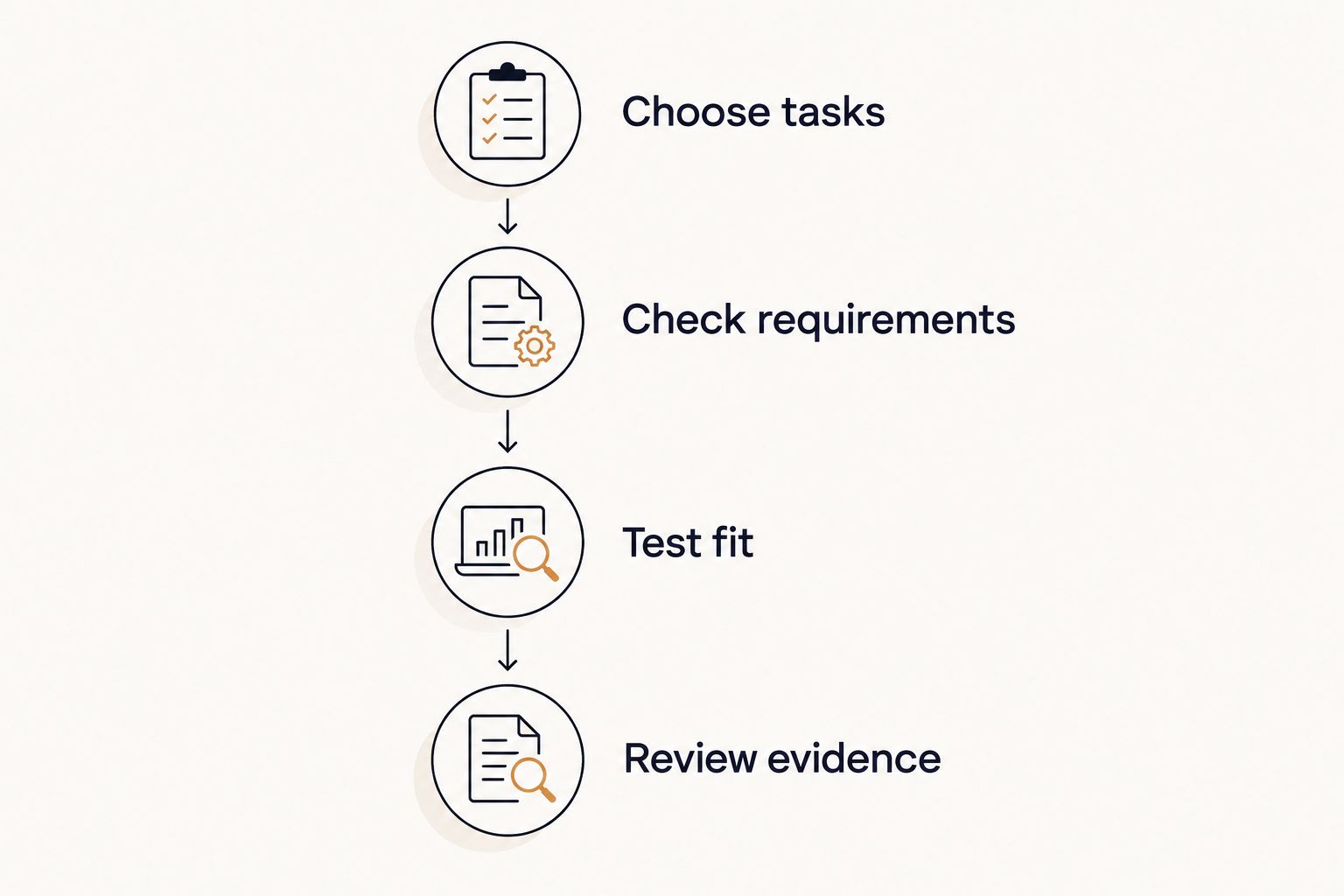
Use this process for your 2026 shortlist:
- Choose tasks: Name what you want to do, not just the title you want.
- Check requirements: Verify qualifications directly with the relevant authority or employer.
- Test fit: Complete a small sample task or arrange an appropriate observation opportunity.
- Review evidence: Compare your interest, feedback, and tolerance for the difficult parts.
Give yourself 30 days to investigate your leading option, without treating that period as a deadline to resign. Arrange 2 informational interviews and ask each person what newcomers misunderstand about the job.
FAQ
What's the best career for life path 11?
Teaching is this guide's default recommendation for life path 11 because it gives communication and service a defined task. That is an interpretive recommendation, not a scientifically validated career match; your skills and working preferences take priority.
Is counseling a good career for life path 11?
Counseling deserves consideration if you want formal helping work and are prepared for the required qualifications. Life path 11 does not establish clinical aptitude, and professional boundaries matter more than identifying as highly sensitive.
Does life path 11 mean I should become a spiritual advisor?
No, life path 11 does not require you to become a spiritual advisor or prove that you have psychic abilities. Explore spiritual advisory work only if the practice itself, its ethical limits, and its business responsibilities suit you.
Can life path 11 succeed in business or a corporate job?
A life path number does not determine whether you succeed in business or a corporate role. Evaluate the actual responsibilities, management, workload, and opportunities to use your skills rather than rejecting an entire setting.
Should I change careers because I am life path 11?
No, a numerology interpretation alone is not a sufficient reason to change careers. Identify the specific problem with your current work, investigate alternatives, and test a realistic next step before making a major commitment.
Does my life path number change in 2026?
Your life path number does not change in 2026 because its calculation uses your birth date. A Personal Year is a different numerology concept and should not be confused with your Life Path.
Can Jahben help me explore career direction through numerology?
Jahben offers personal numerology and psychic guidance for questions about career and life direction. Treat a reading as spiritual reflection alongside practical research, not as an employment assessment or a guarantee of future results.
One last thing
Before choosing a career you admire, identify its least appealing recurring task. Teaching includes preparation; writing includes revision; helping professions include boundaries and records.
For your 2026 decision, ask a sharper question: Which difficult part am I willing to get good at? That answer gives you a stronger starting point than a flattering description of life path 11.
Related guides
Ready for your own reading?
Astrology, numerology, and tarot brought together into one clear, written answer about your love, career, or timing.
Book a Personal Reading Get Your Free Report