Best overall: teaching. Best for one-to-one emotional support: licensed counseling. Best for applying existing professional experience: learning and development. The best careers for life path 33 in 2026 connect service with practical skills, clear responsibilities, and boundaries—not a duty to rescue everyone.
- The best careers for life path 33 start with teaching when you enjoy explaining, mentoring, and helping others learn.
- Licensed counseling suits emotional-support interests, but numerology never replaces professional education, supervision, or licensing.
- Learning and development suits experienced professionals who want to teach without moving into classroom education.
- Jahben offers numerology guidance for spiritual reflection; use qualifications and real work experience to make career decisions.
Why this matters
In numerology, life path 33 is commonly called the Master Teacher and associated with compassion, responsibility, and service. These are symbolic interpretations, not established measurements of your abilities. Your birth date does not qualify you for a profession or determine your future.
The life path 33 traits and destiny guide explains that interpretive background. For a career decision, the more useful question is practical: do you enjoy the actual tasks involved in helping people, including repetition, documentation, disagreement, and limits?
Use life path 33 to explore your priorities, not to override evidence about your skills. A meaningful role still needs to support your life outside work.
What makes the best careers for life path 33?
These recommendations use five criteria. Apply them to the actual position, not just its title.
- Useful service: You help someone learn, access support, or solve a defined problem.
- Teachable skills: You can identify what to learn and how to demonstrate competence.
- Clear boundaries: Your responsibilities have limits; caring does not mean constant access.
- Suitable work rhythm: The balance of conversation, preparation, administration, and independent work fits you.
- Realistic entry: Required qualifications and responsibilities fit your circumstances.
For your 2026 shortlist, reject any role whose appeal depends entirely on being needed. Look for work you would still respect when nobody thanks you that day.
Life path 33 careers at a glance
The ranking below compares types of work, not employment prospects or guaranteed outcomes. Each career has a different use-case slot.
| Career | Best for | Main trade-off |
|---|---|---|
| Teaching | Structured mentoring | Repetition and administration |
| Licensed counseling | Emotional support | Regulated preparation |
| Social services | Practical advocacy | Resource constraints |
| Learning and development | Workplace teaching | Organizational priorities |
| Creative education | Artistic instruction | Teaching beyond creating |
| Coaching and facilitation | Goal-focused groups | Strict scope boundaries |
1. Teaching: best overall for structured mentoring
Teaching turns the Master Teacher theme into concrete work: explain a subject, plan practice, notice confusion, and help learners improve. Consider classroom education, adult education, or subject tutoring according to your qualifications and interests.
Choose teaching because you enjoy learning processes, not because you like giving advice. Much of the work involves explaining the same idea differently and checking whether someone actually understands it.
Teaching pros:
- Gives your support a defined learning objective.
- Combines subject knowledge with human connection.
- Lets you observe progress through learners' work.
Teaching cons:
- Includes preparation, assessment, and administrative work.
- Requires patience with repetition and uneven progress.
Best for: You enjoy explaining things and can stay respectful when a learner struggles.
Before committing, try a 20-minute practice lesson on a subject you already know. Ask the learner to explain the idea back; that reveals more than whether they enjoyed your presentation.
Verdict: Buy into teaching as your first direction to explore—not as a destiny you must fulfill.
2. Licensed counseling: best for one-to-one emotional support
Licensed counseling involves professional support for mental health and emotional concerns within a defined clinical scope. It requires the relevant education, supervised experience, and licensing for the profession and jurisdiction.
Empathy alone is not preparation. If this field interests you, investigate its actual training requirements and daily responsibilities before treating a spiritual interest in helping as evidence of career fit.
Licensed counseling pros:
- Centers sustained, attentive conversation.
- Uses professional boundaries and ethical standards.
- Provides a structured route for developing clinical skills.
Licensed counseling cons:
- Requires formal preparation and ongoing professional responsibilities.
- Involves emotionally demanding material and documentation.
Best for: You want to develop professional clinical competence, not simply be the person friends confide in.
For a 2026 transition, begin with the licensing authority and accredited training options relevant to your location. Keep spiritual interpretation separate from clinical assessment.
Verdict: Hold until you understand—and accept—the full professional pathway.
3. Social services: best for practical advocacy
Social services work connects people with support, programs, and resources. Depending on the position, tasks include outreach, referrals, coordination, recordkeeping, and helping people understand available processes.
This direction suits a service interest expressed through action rather than advice alone. Distinguish support roles from licensed social work positions; the titles and qualification requirements are not interchangeable.
Social services pros:
- Focuses on concrete needs and next steps.
- Combines communication with coordination.
- Offers service work beyond classroom or clinical settings.
Social services cons:
- Available resources limit what you can resolve.
- Documentation and difficult conversations are part of the work.
Best for: You can remain helpful without promising an outcome you do not control.
Arrange 2 informational conversations with people doing the specific job you are considering. Ask what takes most of their time, what authority they have, and what they must leave unresolved.
Verdict: Buy into this direction if practical advocacy appeals more than being someone's personal rescuer.
Your Life Path number is one piece. A reading shows how it is playing out for you right now.
Book a Reading4. Learning and development: best for workplace teaching
Learning and development helps employees build job-related knowledge and skills. Roles include training delivery, onboarding, instructional design, and learning-program coordination.
This is a strong option when you already know a profession and enjoy helping colleagues understand it. Your subject experience matters, but you also need to learn how to design instruction rather than simply present information.
Learning and development pros:
- Builds on existing professional knowledge.
- Combines teaching with writing and planning.
- Connects learning to defined workplace tasks.
Learning and development cons:
- Organizational priorities shape the training agenda.
- Some positions involve more production and coordination than live teaching.
Best for: You want to teach adults while staying connected to workplace problems.
For your 2026 search, read the responsibilities closely. A facilitation role and an instructional-design role can sit in the same department while involving very different days.
Verdict: Buy into this path if explaining your existing field energizes you more than leaving it entirely.
5. Creative education: best for artistic instruction
Creative education combines an artistic practice with teaching. Examples include music instruction, writing workshops, visual-art classes, and community arts programs, subject to the requirements of each setting.
The distinction is important: being absorbed in your own creative work is different from helping a beginner develop theirs. Choose this path when you enjoy both the medium and the teaching relationship.
Creative education pros:
- Gives creative knowledge a practical teaching purpose.
- Allows demonstrations, exercises, and constructive feedback.
- Supports different approaches to expressing an idea.
Creative education cons:
- Requires planning and administration alongside creative work.
- Demands patience with beginners and differing tastes.
Best for: You like helping someone find their own expression, rather than reproduce yours.
Start by designing 1 workshop around a narrow outcome, such as revising a short scene or learning a basic drawing technique. Keep the promise educational; an arts workshop is not mental health treatment.
Verdict: Buy into creative education if you enjoy the learner's process as much as your own craft.
6. Coaching and facilitation: best for goal-focused groups
Coaching supports goal clarification and action; facilitation helps a group work through a discussion or process. Neither title, by itself, establishes competence to diagnose or treat mental health conditions.
This direction suits people who can ask focused questions without taking control of another person's choices. Define the audience, the problem, and your scope before offering a service.
Coaching and facilitation pros:
- Centers questions, reflection, and participant decisions.
- Can draw on relevant professional experience.
- Gives group discussion a defined purpose.
Coaching and facilitation cons:
- Requires clear boundaries around clinical and specialist advice.
- Includes preparation, agreements, and business administration.
Best for: You can support decisions without claiming special authority over someone else's life.
Tools such as archetype quizzes for coaches belong in a reflective conversation, not in hiring screens or clinical assessments. The same boundary applies to numerology: a symbolic label can prompt discussion, but it cannot establish a person's competence or needs.
Verdict: Hold until you can clearly explain your scope, methods, and referral boundaries.
How this ranking works
Teaching ranks first because instruction closely matches the Master Teacher symbolism while making the work easy to define. The remaining options separate different preferences: clinical support, practical advocacy, workplace learning, creative instruction, and goal-focused discussion.
This is an interpretive shortlist, not a psychometric assessment or labor-market ranking. No position earns a place because life path 33 supposedly guarantees talent, success, or a particular outcome.
The strongest match is the work whose ordinary tasks suit you—not the title with the most spiritual appeal.
Test the work before changing your career
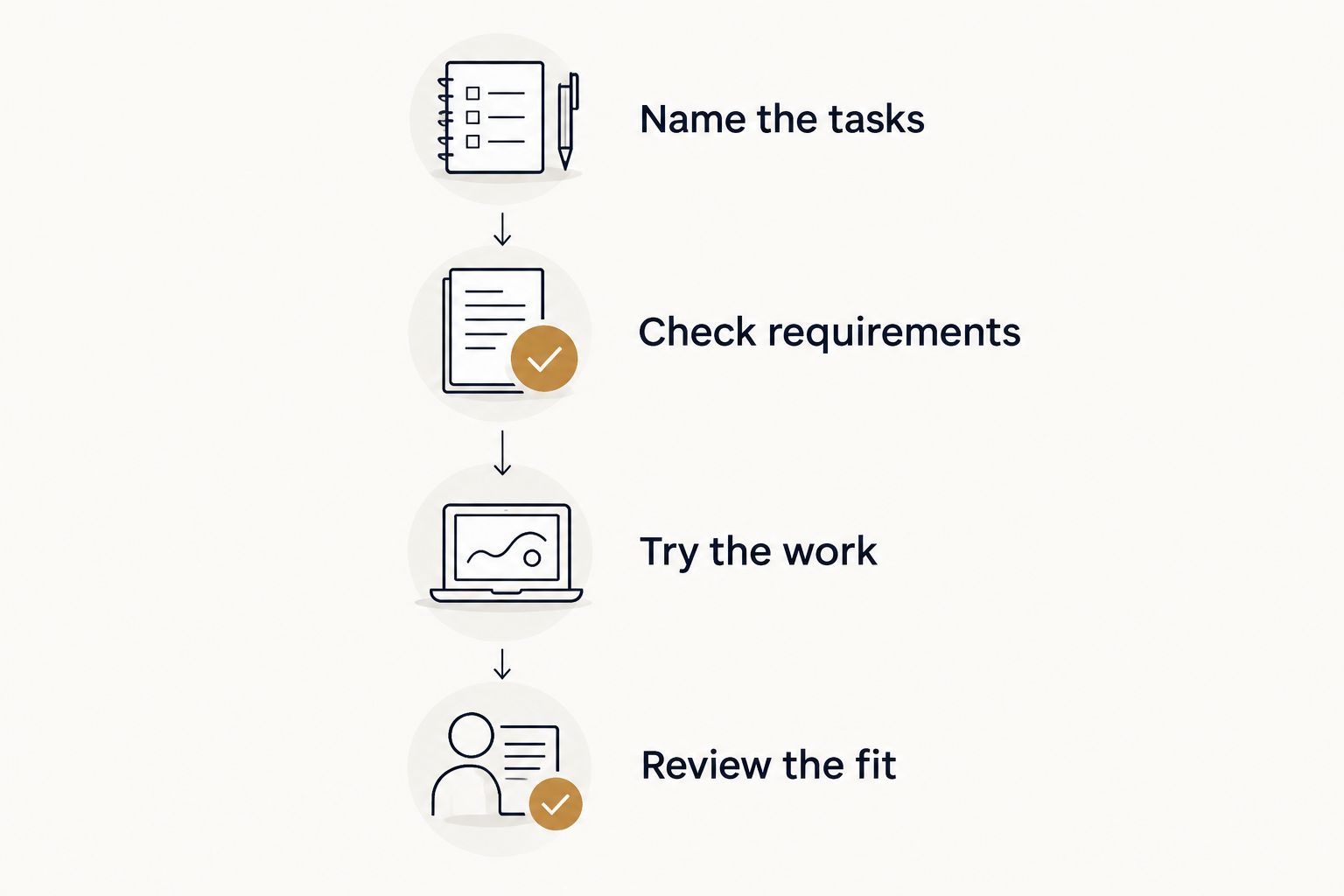
A useful 2026 career plan turns reflection into observable experience. Follow this sequence before making a major commitment.
- Name the tasks. Write down what you would actually do: explain, document, coordinate, design, or facilitate. Separate appealing tasks from duties you hope to avoid.
- Check requirements. Confirm qualifications, legal scope, and employer expectations for the specific role. Do not assume a broad career label tells you enough.
- Try the work. Use an appropriate introductory activity, observation opportunity, or practice project. Stay within your competence and obtain permission where needed.
- Review the fit. Compare how the activity felt with what it required. Notice your response to preparation, repetition, feedback, and finishing—not just the meaningful moment.
A conversation about a profession is not the same as doing its work. Use both, and let direct experience challenge your initial preference.
After the trial, write what you learned without using numerology terms. If you cannot explain the fit through skills, interests, responsibilities, and working conditions, you need more evidence.
Where a personal numerology reading fits
Jahben numerology guidance is best for spiritually curious adults seeking reflection on career direction, not a professional aptitude assessment. Jahben offers personal readings that draw on astrology, Pythagorean numerology, tarot, and 12 Tribes astrology.
Bring a defined decision rather than asking for a predetermined career. For example, compare teaching in your current field with retraining for a helping profession, and identify what attracts you to each.
Treat Jahben's guidance as one reflective input. Verify qualifications, assess your practical circumstances, and make the final decision yourself; a reading does not establish employability or guarantee career timing.
Which career should you choose?
Start with teaching if you remain undecided. Explore whether explaining, preparing, listening, and adapting feel satisfying before choosing a setting or qualification route.
Choose learning and development when your existing professional knowledge is the clearest asset. Investigate licensed counseling only when you want the clinical work and its full training pathway—not because the Master Teacher label sounds like a calling.
For 2026, your next move is a small, relevant test of the work. You do not need to resign or retrain to begin gathering evidence.
FAQ
What's the best career for life path 33?
Teaching is the first career to explore in this numerology-based shortlist because it connects mentoring with defined learning goals. Your skills, qualifications, and experience—not your number—determine whether it fits.
Does life path 33 mean I have to become a healer?
No, life path 33 does not require you to become a healer or enter a helping profession. Numerology assigns symbolic meanings; it does not create professional duties or qualifications.
Is counseling better than teaching for life path 33?
Counseling is the better direction only if clinical support and the required professional preparation genuinely interest you. Teaching suits an interest in learning and instruction; neither follows automatically from life path 33.
Can life path 33 work in business?
Yes, life path 33 does not restrict you to spiritual or public-service work. Workplace training, management, and other business roles can include teaching and service, but assess each job on its actual responsibilities.
Should I change careers in 2026 because I'm life path 33?
No, a life path number alone is not a sound reason to change careers in 2026. Test relevant tasks, confirm entry requirements, and assess your circumstances before making a major commitment.
Can a numerology reading tell me exactly which job to take?
A numerology reading cannot reliably establish the exact job you should take. It can support spiritual reflection, while qualifications, direct experience, and practical constraints remain essential to the decision.
One last thing
You do not have to turn every caring instinct into a job. Keep the work you enjoy, mentor someone within clear limits, or contribute outside employment if that fits your life better.
Service is a choice, not a debt attached to your birth date. Choose a career you can practice responsibly and sustain.
Related guides
Ready for your own reading?
Astrology, numerology, and tarot brought together into one clear, written answer about your love, career, or timing.
Book a Personal Reading Get Your Free Report