Best overall for private reflection: an email psychic reading. Best for follow-up questions: a live psychic reading. Best for exploring several spiritual perspectives: a layered reading. This 2026 guide compares formats for grief and loss, not promises of contact with the dead or treatment for grief.
- The best psychic reading for grief and loss matches your boundaries, not a promise of guaranteed closure.
- Jahben offers email and live psychic readings for adults seeking spiritual guidance.
- Choose email for private reflection, live conversation for clarification, and layered readings for multiple spiritual perspectives.
- Psychic readings and mediumship are not evidence-based grief treatment or proof of communication with someone who died.
Why this matters
Grief can leave you with unfinished conversations, practical decisions, and questions that have no certain answer. A spiritual reading is an optional place to explore meaning; it is not a way to establish what a deceased person thinks or to determine when your grief should end.
Jahben psychic readings are best suited to spiritually curious adults seeking personal guidance rather than clinical grief care. The practice offers email, live, tarot, and layered sessions. Choose the format around how you want to communicate, not around an expectation that a reader can remove the pain of loss.
For this 2026 comparison, the central question is simple: which format lets you reflect without surrendering your judgment? You do not need to accept a spiritual interpretation to honor someone you love.
What makes the best psychic reading for grief and loss?
A useful buying decision starts with boundaries. Before choosing a reader, assess these criteria:
- Clear scope: The reader distinguishes spiritual interpretation from counseling, diagnosis, and factual knowledge about the deceased.
- Communication fit: Written reflection and live conversation serve different needs. Choose the format you can comfortably engage with.
- Consent: You decide which subjects are discussed and whether to continue.
- Honest uncertainty: No guaranteed contact, guaranteed closure, or deadline for recovery.
- Independence: The reading leaves decisions with you rather than making another session feel necessary.
- Relevant focus: Your question concerns your experience, values, or next step—not an unverifiable verdict about someone else.
Apply the same checks in 2026 whether you choose an independent advisor or a larger service. A reassuring delivery does not turn an interpretation into evidence.
Psychic reading formats at a glance
The order below reflects communication fit for personal reflection, not measured accuracy or grief outcomes. Each option serves a distinct purpose.
| Reading format | Best for | Standout feature | Key limitation |
|---|---|---|---|
| Email psychic reading | Reflecting privately before responding | Written guidance you can revisit | No immediate clarification |
| Live psychic reading | Asking follow-up questions during a conversation | Real-time exchange | Speaking about loss can feel demanding |
| Tarot reading | Exploring a specific present-day question | Card symbolism provides a discussion structure | Symbols do not establish facts about a death |
| Layered reading for grief and major life loss | Considering several spiritual perspectives | Combines interpretive systems | More interpretations can complicate a simple question |
| Mediumship reading | Exploring beliefs about connection after death | Focuses on claimed communication with the deceased | Contact cannot be guaranteed or treated as verified |
1. Email psychic reading: best for private grief reflection
An email psychic reading gives you a written response to your questions. You can read it when you choose, stop when you need to, and return to the wording without having to speak about your loss in the moment.
Jahben offers email psychic readings. The format is a reasonable starting point if you want spiritual guidance but do not want a live conversation. Its value is the written exchange—not proof that an interpretation is true.
Email psychic reading pros:
- You can compose your question without speaking aloud.
- You can pause while reading the response.
- The written text remains available for reflection.
- You can separate the reader's interpretation from your own observations.
Email psychic reading cons:
- An unclear sentence cannot be clarified immediately.
- Written tone can be difficult to interpret when a subject is painful.
- Repeated rereading can become a search for certainty rather than reflection.
Best for: Someone who wants privacy and time to consider spiritual guidance.
Before sending your question, identify what you want from the response. Asking how to approach an anniversary is more grounded than asking for certainty about whether a loved one approves of your choices.
Verdict: Buy only if written reflection fits your needs and the reader's scope is clear.
2. Live psychic reading: best for immediate clarification
A live psychic reading lets you respond during the session. You can ask what an interpretation means, correct a misunderstanding, or say that a topic is not something you want to discuss.
Jahben offers live sessions. For someone who prefers conversation, the practical advantage is the ability to clarify wording—not a stronger claim to psychic accuracy than email.
Live psychic reading pros:
- You can ask follow-up questions as they arise.
- You can explain relevant context in your own words.
- You can state a boundary during the exchange.
- You can distinguish a suggestion from a prediction immediately.
Live psychic reading cons:
- Speaking about loss can feel emotionally demanding.
- You have less time to consider each statement before responding.
- A confident delivery can make an unsupported claim sound authoritative.
Best for: Someone who wants dialogue and feels comfortable discussing the loss aloud.
For a live reading in 2026, prepare a short boundary statement: you want reflection about your own life, not predictions about another death. Ask how pauses and ending the conversation work before the session begins.
Verdict: Buy if real-time clarification matters more to you than private pacing.
3. Tarot reading: best for a focused present-day question
A tarot reading uses cards and their interpreted symbolism to structure a conversation. For grief-related reflection, keep the question centered on your present experience: asking for support, managing an anniversary, or deciding what a meaningful remembrance looks like.
Tarot does not verify a deceased person's wishes, identify the cause of a death, or diagnose your emotional state. Treat a card interpretation as a prompt to consider—not an instruction you must follow.
Tarot reading pros:
- A specific question gives the discussion a clear focus.
- Symbols offer language for exploring difficult feelings.
- You can consider several interpretations without accepting one as fact.
Tarot reading cons:
- Symbolic language can remain ambiguous.
- A frightening interpretation can add distress.
- Repeating the same question can encourage reassurance-seeking.
Best for: Someone who likes symbolic reflection and has a specific question about their own next step.
Ask the reader to explain the interpretation in plain language. If a card is presented as proof that something terrible will happen, reject that claim. A card draw is not evidence of a future event.
Verdict: Buy for symbolic reflection; skip tarot as a source of factual answers about death.
4. Layered reading: best for several spiritual perspectives
A layered reading combines interpretive systems rather than relying on a single method. Jahben offers layered sessions, and the practice uses western astrology, Pythagorean numerology, tarot, and 12 Tribes astrology in its spiritual advisory work.
Confirm which systems a particular session includes before choosing it. Combining methods does not make a claim more reliable; several interpretations agreeing is not independent evidence of a message from the deceased.
Layered reading pros:
- Different systems offer different ways to frame a question.
- You can explore identity and life direction alongside a loss.
- You can compare interpretations with your own lived experience.
Layered reading cons:
- Several interpretations can feel overwhelming.
- Agreement between systems can create unwarranted certainty.
- A broad session can distract from the concern you wanted to address.
Best for: Someone already comfortable with spiritual systems who wants to explore life direction after a major loss.
Keep 1 central topic for the session. For example, focus on rebuilding daily structure rather than combining grief, relationships, work, and every future decision into a single discussion. More material is not automatically more useful.
Verdict: Hold until you know which systems you want and why a single format is insufficient.
5. Mediumship reading: best for exploring afterlife beliefs
Mediumship is a distinct service centered on claimed communication with people who have died. It is not interchangeable with a psychic reading about your present life, and no reader can responsibly guarantee contact with a particular deceased person.
This option requires especially clear boundaries. There is no established scientific evidence that a medium can reliably communicate with the dead, so a meaningful experience should not be presented as verified contact.
Mediumship reading pros:
- Its stated focus matches questions about afterlife beliefs.
- It provides a setting to discuss spiritual ideas about connection.
- You can establish beforehand that you do not want predictions or instructions.
Mediumship reading cons:
- Claimed messages cannot be treated as verified communication.
- An upsetting statement can add to an already painful experience.
- Promised contact can encourage dependence on further sessions.
Best for: Someone who consciously wants to explore afterlife beliefs and accepts the lack of verification.
Do not let a claimed message decide whether you stop treatment, change a will, sell property, or cut off family. Those decisions require appropriate evidence and professional advice.
Verdict: Wait if you need certainty; skip any service that guarantees contact or pressures you to continue.
How these options are ranked
The ranking prioritizes communication fit, manageable scope, and your ability to retain control. Email comes first because you can choose when to engage with the response; live conversation comes next because it allows immediate clarification.
Tarot serves a focused symbolic question. Layered readings serve broader spiritual exploration, while mediumship carries a different expectation that needs explicit limits. This is a format comparison, not an accuracy ranking or a claim that any reading improves grief outcomes.
No option wins on guaranteed closure. That is not a credible service promise.
How to prepare without making the reading your lifeline
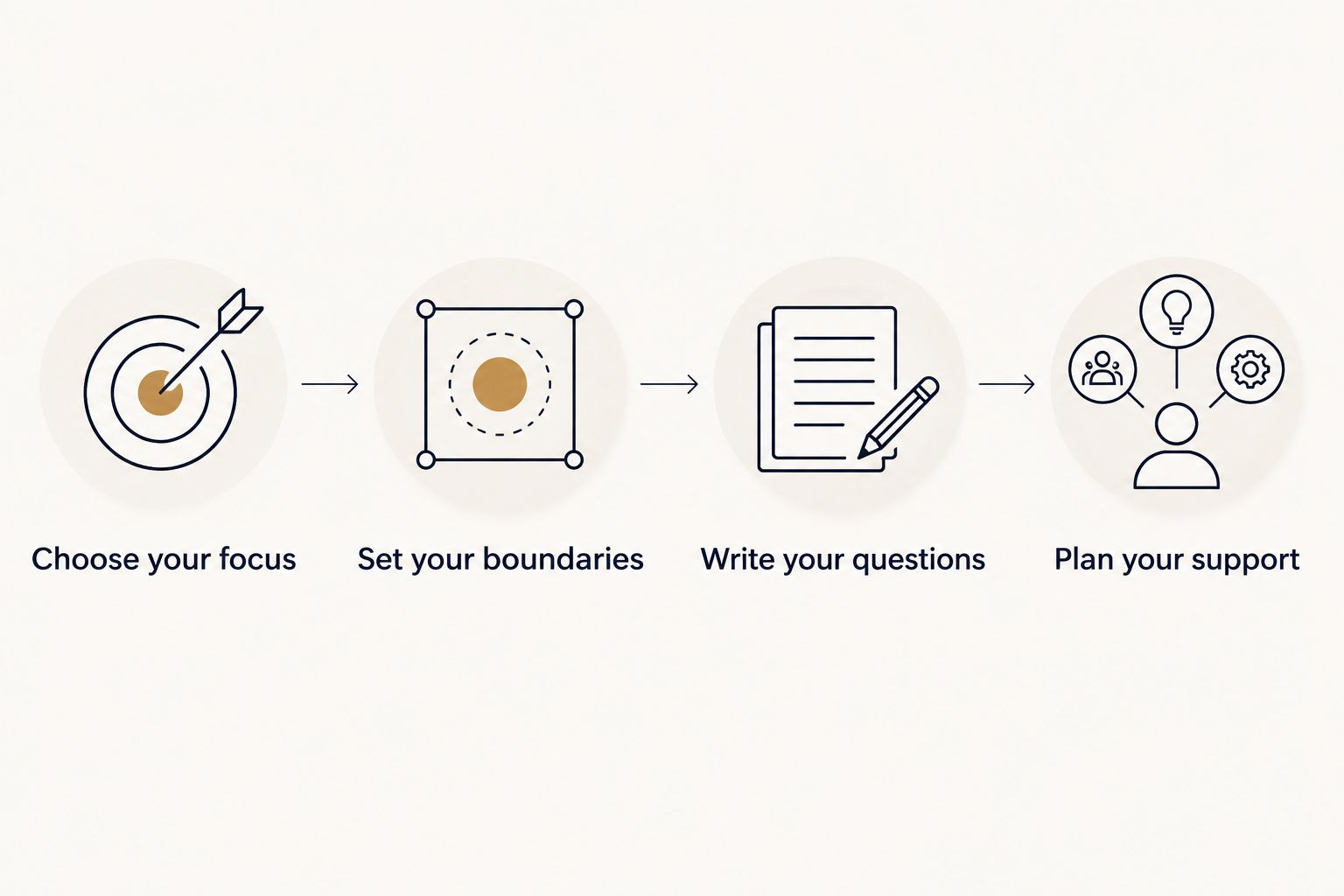
Use this preparation sequence for any grief-related reading in 2026. It keeps the session focused on what you control rather than on claims you cannot verify.
- Choose your focus. Write 1 topic, such as an anniversary, a changed family role, or returning to a familiar routine.
- Set your boundaries. Decide which subjects are off limits, including predictions about death or claims of blame.
- Write your questions. Prepare up to 3 questions about your own choices and needs. You do not have to tell your entire story.
- Plan your support. Decide who you can talk to afterward if the reading leaves you unsettled.
A useful question asks what you can consider or do. An unsafe expectation asks the reader to deliver certainty about another person's thoughts, an afterlife message, or the date your pain will end.
Afterward, set aside 10 minutes to distinguish the reading's claims from your own observations. Write down what felt useful, what felt uncomfortable, and what you do not accept. This is a reflection exercise, not a test of psychic ability.
You owe no interpretation your agreement. You can find a sentence meaningful without accepting every claim around it.
Red flags that outweigh any ranking
Reject a reader who says your loved one is trapped, that you caused the death through your thoughts, or that a further payment is necessary to protect your family. These claims create fear and do not provide evidence.
Other reasons to stop include:
- A guarantee that a particular deceased person will appear.
- Instructions to stop medication, therapy, or medical care.
- Pressure to keep the reading secret from trusted people.
- Claims that only this reader can help you.
- A fixed deadline by which you should finish grieving.
A spiritual service does not replace practical or clinical support. If grief is disrupting sleep, eating, safety, or daily functioning, contact a qualified healthcare professional or grief counselor. You do not need to wait until a reading feels unsuccessful to seek help.
Which psychic reading should you choose?
Choose email as the default if you want optional spiritual reflection with private pacing. Choose live conversation if you need to clarify statements as they arise. Choose tarot for a symbolic question and a layered session only when several systems genuinely interest you.
For a 2026 decision, start with the smallest scope that answers your actual need. If you want proof of contact, a diagnosis, or certainty about recovery, none of these formats can responsibly supply it.
Jahben is an option for personal spiritual guidance. Ask whether the proposed format fits your boundaries before committing, and keep grief counseling, trusted relationships, and practical help separate from the reading.
FAQ
What's the best psychic reading for grief and loss?
An email psychic reading is the default choice for private spiritual reflection, while a live reading suits people who want immediate clarification. Neither format is established grief treatment or proof of communication with someone who died.
Is a psychic reading the same as a mediumship reading?
No. A psychic reading generally concerns personal guidance, while mediumship centers on claimed communication with the deceased. Confirm the service's scope rather than assuming one includes the other.
Can a reading prove my loved one is at peace?
No reading can establish that claim as a verified fact. You can explore spiritual beliefs about peace without treating an interpretation as evidence of your loved one's condition.
Is email better than a live reading when I'm grieving?
Email is better for private pacing; live conversation is better for asking questions during the exchange. Choose based on how you want to communicate, not an assumption that either format is more accurate.
What should I ask during a grief-related psychic reading?
Ask about your own reflection and next steps, such as how to honor a memory or approach an anniversary. Avoid questions that require certainty about the deceased person's thoughts or a deadline for your grief.
Should I choose a layered reading after a major loss?
Choose a layered reading only if several spiritual systems interest you and the scope feels manageable. Multiple interpretations do not provide stronger evidence of supernatural claims.
Can a psychic reading replace grief counseling?
No. Psychic readings are spiritual services, not evidence-based grief treatment. A qualified grief counselor or healthcare professional is the appropriate source for clinical support.
One last thing
Not booking a reading is also a valid choice. You can honor someone through a letter, a familiar meal, a shared memory, or a quiet ritual without asking another person to interpret the connection.
If you choose a reading, keep that same freedom afterward. A spiritual interpretation does not outrank your memory of the person you lost.
Related guides
Ready for your own reading?
Astrology, numerology, and tarot brought together into one clear, written answer about your love, career, or timing.
Book a Personal Reading Get Your Free Report