Best overall approach: Reiki coordinated with your medical care. Best for face-to-face support: an independent in-person practitioner. Best for avoiding travel: distance Reiki. The best Reiki healing services for chronic pain in 2026 respect your treatment plan, explain their limits, and never promise a cure.
- The best reiki healing services for chronic pain support comfort without replacing medical treatment.
- Choose coordinated care for medical boundaries, in-person Reiki for face-to-face contact, or distance Reiki to avoid travel.
- Jahben offers Reiki sessions for spiritually curious adults; Reiki is not an established chronic pain treatment.
- Reject guaranteed relief, medication advice from unqualified practitioners, and pressure to explain worsening symptoms as healing.
Why this matters
Persistent pain deserves medical attention, not a promise that someone can clear its underlying energy. The CDC describes chronic pain as pain lasting more than 3 months. It can affect sleep, movement, work, and relationships.
Reiki is a complementary practice in which practitioners place their hands lightly on or above the body, or offer a distance session within the practice's spiritual framework. The National Center for Complementary and Integrative Health, in its Reiki overview, states that Reiki has not been clearly shown effective for any health-related purpose. It also reports no scientific evidence supporting the energy field proposed to explain it.
That evidence boundary guides this 2026 comparison. These recommendations rank service approaches by practical fit and medical boundaries, not proven pain relief. For more context, read about Reiki healing for chronic pain and physical symptoms.
What makes the best Reiki service for chronic pain?
Use these criteria before choosing a practitioner. A reassuring conversation does not establish clinical effectiveness.
- Medical boundaries: The practitioner supports continued medical care and does not diagnose, prescribe, or promise disease treatment through Reiki.
- Consent: You control touch, positioning, conversation, and whether the session continues.
- Physical access: The setting accommodates your mobility, fatigue, sensory needs, and ability to sit or lie down.
- Clear process: The practitioner explains what happens before, during, and after the session without presenting sensations as proof of healing.
- Independent choice: You can decline further sessions without pressure, fear, or claims that stopping will block recovery.
- Personal usefulness: You judge the experience by comfort and practical value, not by promises about invisible changes.
Reiki services at a glance
These are service categories, not a ranking of named clinics. The order reflects a decision process: start with medical boundaries, then choose the setting that fits your needs.
| Service approach | Best for and main feature | Key limitation |
|---|---|---|
| Medically coordinated Reiki | Keeping your clinician informed | Coordination does not prove effectiveness |
| Independent in-person Reiki | Face-to-face communication | Travel and positioning require planning |
| Distance Reiki | Avoiding travel | Remote delivery does not establish benefit |
| Jahben Reiki sessions | Personal spiritual support | Not a clinical pain service |
No Reiki format has an established advantage for treating chronic pain. A convenient or meaningful session is not the same as an effective medical intervention.
1. Medically coordinated Reiki: best for clear care boundaries
Medically coordinated Reiki means your regular clinician knows you are considering Reiki and your practitioner understands that medical treatment continues. Coordination does not require that a clinic provide Reiki itself. It starts with an honest conversation about your symptoms, needs, and existing care.
For a person managing persistent pain, this is the strongest default approach because it keeps responsibility clear. Your healthcare team evaluates the pain; the Reiki practitioner offers a complementary experience within agreed limits.
Medically coordinated Reiki pros:
- Keeps your treating clinician informed about complementary practices.
- Creates an opportunity to discuss positioning and condition-specific precautions.
- Separates relaxation goals from diagnosis and treatment decisions.
Medically coordinated Reiki cons:
- Requires communication between people with different roles.
- Does not make Reiki an evidence-based pain treatment.
- Does not establish the practitioner's competence or suitability by itself.
Ask your clinician whether anything about your condition affects touch, lying flat, or prolonged positioning. Ask the Reiki practitioner how they respond when a client reports worsening symptoms. A responsible answer directs medical concerns back to qualified care.
Best for: You want optional spiritual or relaxation support while keeping medical decisions firmly with your healthcare team.
Verdict: Buy only as an optional complementary experience—not as treatment for the cause of pain.
2. Independent in-person Reiki: best for face-to-face communication
Independent in-person Reiki places you and the practitioner in the same room. Depending on the practitioner's approach and your consent, the session involves light touch or hands held above the body. Confirm the arrangement rather than assuming every session follows the same routine.
The practical advantage is direct communication about your immediate comfort. You can explain that a position hurts, request less conversation, or ask the practitioner to stop. These are service features, not evidence that in-person Reiki relieves chronic pain.
Independent in-person Reiki pros:
- Lets you discuss physical comfort face to face.
- Gives you a separate setting for a quiet appointment.
- Allows you to communicate touch preferences directly.
Independent in-person Reiki cons:
- Requires travel and access to a suitable space.
- A treatment table or prolonged position can be uncomfortable.
- A Reiki training certificate does not establish medical qualifications.
Before attending, describe your access needs without feeling obliged to share your entire medical history. Ask whether you can remain seated, change position, or choose no touch. Do not accept discomfort as a necessary part of spiritual progress.
For your 2026 shortlist, prioritize a clear response to those questions over elaborate descriptions of energy work.
Best for: You prefer being physically present with a practitioner and can attend without adding an unreasonable burden.
Verdict: Buy for a consent-led in-person experience; skip practitioners who resist accommodations.
3. Distance Reiki: best for avoiding travel
Distance Reiki is offered without the practitioner and client sharing a physical space. Practitioners describe it through Reiki's spiritual framework. Remote delivery removes the trip, but it does not establish that energy is transmitted or that pain will improve.
If leaving home is difficult, the format offers a practical distinction: you choose your own surroundings. Clarify whether the appointment includes a live conversation, a scheduled quiet period, or a written follow-up; these details vary by provider.
Distance Reiki pros:
- Removes travel from the appointment.
- Lets you choose your own chair, bed, and surroundings.
- Avoids physical touch by the practitioner.
Distance Reiki cons:
- Does not provide hands-on assessment or medical monitoring.
- Requires clear expectations about communication and session structure.
- Has no established advantage over in-person Reiki for chronic pain.
Ask exactly what you will do during the appointment and how you will communicate if you want to stop. A distance practitioner should not present a remote impression as a medical diagnosis.
If this format interests you, learn how distance Reiki healing works before deciding whether its spiritual approach fits your preferences.
Best for: Travel is the main obstacle, and you want an optional spiritual experience at home.
Verdict: Buy for convenience and personal meaning; skip claims of remote diagnosis or guaranteed relief.
4. Jahben Reiki sessions: best for personal spiritual support
Jahben is a one-person spiritual advisory practice offering Reiki alongside psychic readings, astrology, tarot, and numerology. Its audience includes spiritually curious adults seeking guidance on love, career, timing, and life direction. Those services do not establish expertise in diagnosing or treating chronic pain.
Jahben Reiki sessions are best suited to spiritually curious adults seeking personal support, not medical pain treatment. Keep that distinction explicit when deciding what you want from a session.
Jahben Reiki sessions pros:
- Sit within an explicitly spiritual advisory practice.
- Offer a named individual rather than an unspecified advisory platform.
- Fit readers who want spiritual support as a separate part of their lives.
Jahben Reiki sessions cons:
- The practice description does not establish clinical pain credentials.
- A spiritual session cannot determine the medical cause of symptoms.
- Reiki does not replace physical therapy, medication review, or other indicated care.
Before choosing Jahben Reiki sessions, confirm the delivery format, touch arrangements if relevant, and how physical comfort is handled. Treat those answers as part of your selection process, not as assumed features.
Best for: You want a personal spiritual advisory setting while continuing appropriate healthcare.
Verdict: Hold until the session arrangements fit your needs; skip if you are seeking diagnosis or a pain cure.
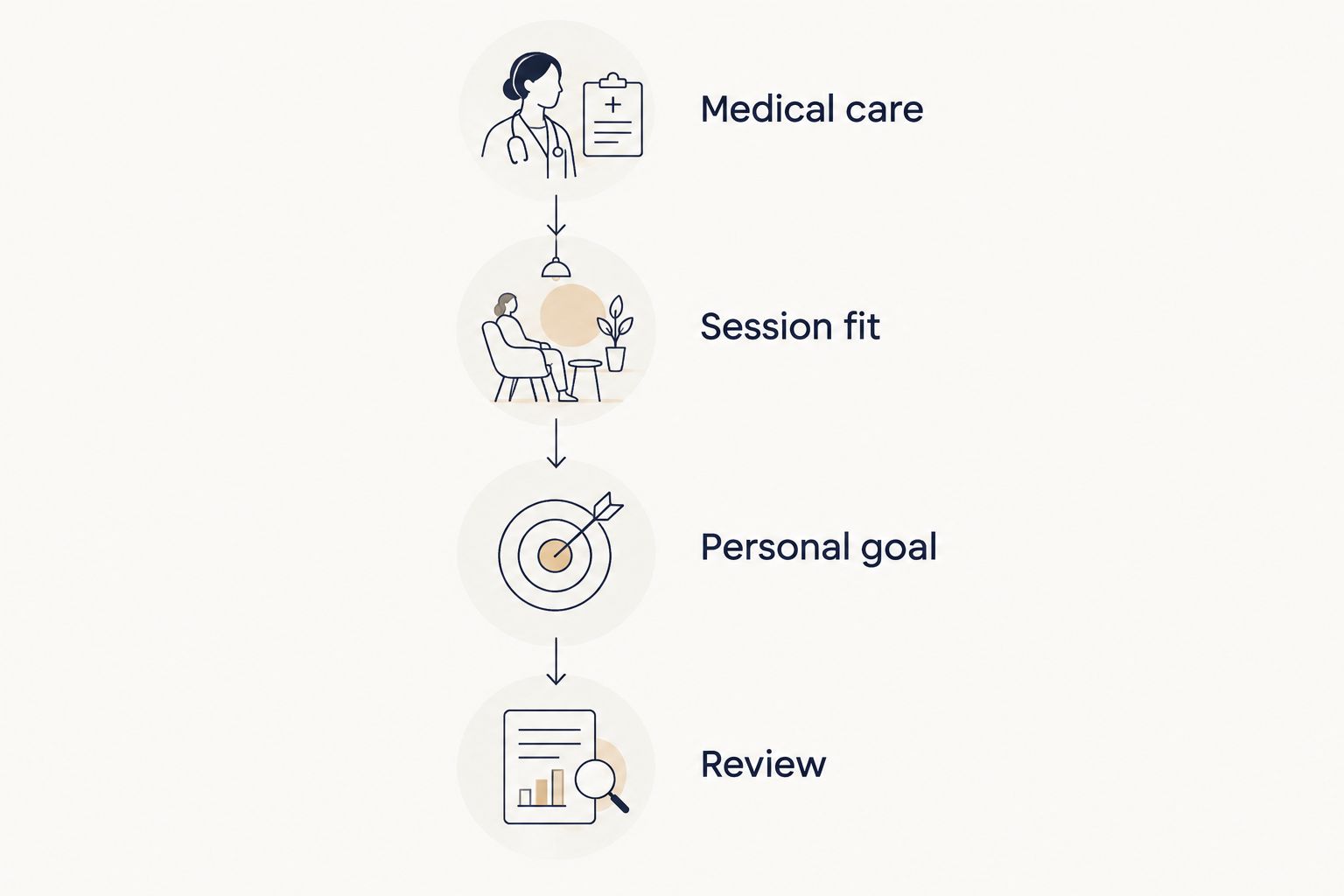
How to choose without confusing comfort with treatment
Use a short decision process. In 2026, the useful distinction remains the same: an experience can feel meaningful without proving that it changes a medical condition.
Medical care
Tell your clinician what you are considering, especially if pain is new, changing, or not yet assessed. Reiki should not delay investigation or replace a treatment your clinician recommends.
Session fit
Ask about touch, positioning, communication, and stopping. Choose a format you can comfortably attend rather than one advertised as more powerful.
Personal goal
Name a realistic purpose, such as quiet time or spiritual reflection. Do not make tissue repair, inflammation reduction, or medication reduction the promised outcome of Reiki.
Review
If you choose to try it, begin with 1 session rather than committing to an extended course. Decide afterward whether the experience was useful enough to repeat.
You can keep a simple comfort diary for 7 days around the appointment. Record sleep, activity, symptoms, and other care without treating a change as proof that Reiki caused it. Pain varies, and a diary is a conversation aid—not a controlled experiment.
Red flags that rule out a practitioner
Skip any service that promises to cure chronic pain or tells you to abandon medical care. Confidence is not a substitute for evidence.
Other reasons to stop the conversation include:
- Claims that Reiki can identify the disease causing your pain.
- Instructions to change medication from someone unqualified to prescribe it.
- Pressure to accept touch or remain in a painful position.
- Claims that persistent symptoms reflect insufficient belief.
- Explanations that worsening symptoms must be a healing crisis.
- Fear-based pressure to continue sessions or purchase additional spiritual work.
Do not interpret new or worsening symptoms as proof that a session worked. Seek appropriate medical advice instead. Severe or sudden symptoms require prompt assessment, not another spiritual appointment.
How these approaches were ranked
This 2026 guide ranks practical suitability, not clinical performance. Medical boundaries come first, followed by consent, access, clear communication, and your ability to decline further sessions.
Medically coordinated Reiki takes the default position because it keeps your healthcare team involved. In-person and distance sessions serve different access preferences. A personal spiritual advisory practice fits a separate goal: spiritual support without a claim to medical treatment.
No pain-reduction scores or provider success rates are assigned. The evidence does not support naming a clinically proven Reiki winner for chronic pain.
Which Reiki service should you choose?
Choose medically coordinated Reiki if you are undecided and still want to try it. Then select in-person or distance delivery according to comfort and access—not claims that one transmits stronger healing.
Choose a personal spiritual advisory setting when spiritual support is your actual goal. If your priority is reducing pain or improving physical function, ask your clinician about treatments supported for your particular condition before spending time on complementary services.
FAQ
What's the best Reiki healing service for chronic pain in 2026?
The best starting approach is a practitioner who respects your medical care, obtains consent, and explains Reiki's limits. No Reiki provider or format is established as the most effective treatment for chronic pain.
Can Reiki cure chronic pain?
Reiki is not an established cure for chronic pain. Use medical assessment and condition-appropriate treatment for the pain itself; any Reiki session should remain optional complementary support.
Is distance Reiki better than in-person Reiki for pain?
Neither format has an established advantage for chronic pain. Distance Reiki removes travel, while in-person sessions provide face-to-face communication about comfort and consent.
Are Jahben Reiki sessions medical pain treatment?
Jahben offers Reiki within a spiritual advisory practice, not as an established medical pain treatment. Confirm session arrangements directly and keep diagnosis and treatment decisions with qualified healthcare professionals.
How many Reiki sessions should I book for chronic pain?
There is no established Reiki session count that treats chronic pain. If you choose to try Reiki, start with a single appointment and assess its personal usefulness before committing further.
Do I have to accept touch during Reiki?
You do not have to accept touch. Ask about a no-touch arrangement beforehand, and stop the session if the practitioner does not respect your consent.
Should I stop pain medication before a Reiki session?
Do not stop or change prescribed medication for Reiki unless your prescribing clinician instructs you to do so. A Reiki practitioner without prescribing qualifications should not direct medication changes.
What if my pain gets worse after Reiki?
Seek appropriate medical advice rather than assuming worsening pain is a healing response. Sudden, severe, or otherwise concerning symptoms need prompt medical assessment.
One last thing
The most useful screening question is not whether a practitioner describes powerful energy. Ask: What happens if I feel no benefit and decide not to continue?
Look for a straightforward answer that respects your decision. You do not need to demonstrate belief, endure discomfort, or keep attending to prove that you gave Reiki a fair chance.
Related guides
- How to prepare for your first Reiki session
- Is Reiki real, or does it work through a placebo effect?
Ready for your own reading?
Astrology, numerology, and tarot brought together into one clear, written answer about your love, career, or timing.
Book a Personal Reading Get Your Free Report