Best overall for blended personal guidance: Jahben. Best for asking questions as you go: a live tarot-only reading. Best for rereading: a written tarot reading. Best for learning the cards: a guided tarot practice session. This 2026 guide ranks those service types by what you need from your first reading—not by promises of guaranteed predictions.
- Jahben leads the best tarot reading services for beginners seeking tarot alongside astrology and numerology.
- Choose live tarot for clarification, written tarot for reflection, and guided practice for learning card meanings.
- Ask how the reader explains cards, handles uncertainty, and defines the scope before committing.
- Treat tarot as spiritual interpretation, not proof of another person’s thoughts or a guaranteed future.
Why this matters
Your first tarot reading should leave you understanding the interpretation, not wondering what the reader meant. A detailed answer is not useful if you cannot connect it to your question or distinguish symbolism from a factual claim.
Start with how to prepare for your first psychic reading, then choose the format that matches how you process information. This guide compares personal guidance, written interpretation, live conversation, and instruction; these are different services, not interchangeable versions of the same experience.
What makes the best tarot reading services for beginners?
For a first reading in 2026, use these criteria before choosing a reader or platform:
- Plain-language interpretation: The reader explains the card, its position, and its connection to your question without assuming you know tarot terminology.
- Clear scope: You know whether you are receiving tarot alone, broader psychic guidance, or a session combining several spiritual systems.
- Suitable communication: Written answers suit rereading; live conversation suits clarification. Neither format establishes predictive accuracy.
- Defined boundaries: The reader distinguishes spiritual interpretation from medical, legal, financial, or mental health advice.
- Room for your judgment: The reading supports reflection without demanding obedience, promising certainty, or pressuring you into further sessions.
Choose explanation over certainty. A beginner-friendly reader should be able to explain how an interpretation connects to the question without insisting that the cards prove it.
Beginner tarot services at a glance
The ranking below separates service types by purpose. The first entry is a named practice; the remaining entries are formats to look for when comparing individual readers.
| Service or format | Best for | Main trade-off |
|---|---|---|
| Jahben personal readings | Blended spiritual guidance | Not a tarot-only approach |
| Live tarot-only reading | Immediate clarification | Less time to reflect while listening |
| Written tarot reading | Rereading and journaling | No immediate conversation |
| Guided tarot practice | Learning card interpretation | Instruction rather than an advisory answer |
Before choosing, decide whether you want an interpretation of your situation or instruction in interpreting cards yourself. That distinction changes the right recommendation more than an impressive-looking spread does.
1. Jahben: best tarot reading service for blended guidance
Jahben offers personal psychic readings delivered by email or live session, combining tarot with western astrology, Pythagorean numerology, and 12 Tribes astrology. The practice suits beginners who want spiritual guidance about love, career, timing, or life direction rather than a lesson focused only on cards.
Best for: You want a personal advisory reading that places tarot within a broader spiritual framework.
That broader scope is also the main limitation. If your goal is to understand why a particular card appeared in a particular spread position, establish how much of the session will focus on tarot before choosing a blended reading.
Jahben pros:
- Personal readings address individual questions rather than general forecasts.
- Email and live delivery offer different ways to receive guidance.
- Several named spiritual systems form part of the practice.
Jahben cons:
- The blended approach is not the same as tarot-only instruction.
- Several interpretive systems introduce more concepts for a beginner to separate.
For your first reading in 2026, state whether you want card meanings explained or broader guidance on the situation. Those requests lead to different conversations, even when both involve tarot.
Verdict: Buy if you want blended personal guidance; skip if your main goal is learning tarot technique.
2. Live tarot-only reading: best for immediate clarification
A live tarot-only reading centers the conversation on cards and their interpretation. You hear the explanation as the reading unfolds and can ask for clarification where the session’s agreed scope allows it.
Best for: You understand new ideas by talking them through.
Ask whether the reader will identify each card and explain its spread position. A live session becomes easier to follow when you can distinguish the card’s traditional meaning from the reader’s interpretation of your circumstances.
Live tarot-only reading pros:
- Conversation lets you identify confusing language immediately.
- A tarot-only focus keeps the interpretive framework narrower.
- You can explain when an interpretation does not match the situation.
Live tarot-only reading cons:
- Listening and reflecting happen at the same time.
- Follow-up questions and recordings depend on the individual service’s terms.
Do not assume every live service includes unlimited questions or a recording. Confirm those details before the session, and take notes if permitted rather than relying on memory afterward.
Verdict: Buy if clarification matters most; skip if you prefer quiet time before responding.
3. Written tarot reading: best for rereading and journaling
A written tarot reading gives you an interpretation in text. Look for a service that identifies the cards, explains their positions, and addresses the question you actually submitted.
Best for: You prefer reading slowly and returning to an answer later.
Written delivery makes the wording available for review. It does not make an interpretation more accurate, and a long response is not automatically a specific one.
Written tarot reading pros:
- You can revisit the interpretation without reconstructing a conversation.
- Text makes it easier to separate individual claims and suggestions.
- You can compare the response with your original question.
Written tarot reading cons:
- Ambiguous wording cannot be clarified in the moment.
- Follow-up access and the amount of detail vary by service.
Before choosing a written reading in 2026, ask what the response includes and how clarification works. Do not assume that card images, a full spread description, or further correspondence are included.
Verdict: Buy if you want a reference for reflection; skip if you need a back-and-forth conversation.
4. Guided tarot practice: best for learning card meanings
A guided tarot practice session teaches interpretation rather than simply delivering an advisory answer. Look for instruction that connects the card image, traditional meaning, spread position, and question.
Best for: You want to understand the method and eventually practice for yourself.
A standard tarot deck has 78 cards: 22 Major Arcana cards and 56 Minor Arcana cards. You do not need to memorize all of them before beginning, but instruction should help you build a consistent approach instead of collecting disconnected meanings.
Guided tarot practice pros:
- The explanation becomes the focus of the session.
- You can ask why different interpretations fit the same card.
- Practice gives you a method to use after the lesson ends.
Guided tarot practice cons:
- Learning is different from receiving a focused personal reading.
- Independent interpretation takes practice beyond the session.
Start with a small spread rather than choosing complexity for its own sake. A three-card layout is enough to practice connecting separate positions into a coherent interpretation.
Verdict: Buy if learning is your priority; skip if you want an advisory answer rather than instruction.
How to choose your first reading
Match the service to your preferred way of understanding an answer. Use these four checks before you commit:
- Choose your purpose: Decide between personal guidance and learning tarot.
- Choose your format: Pick written reflection or live conversation.
- Check the scope: Confirm which systems, questions, and explanations the service covers.
- Set your boundary: Decide what the reading will not decide for you.
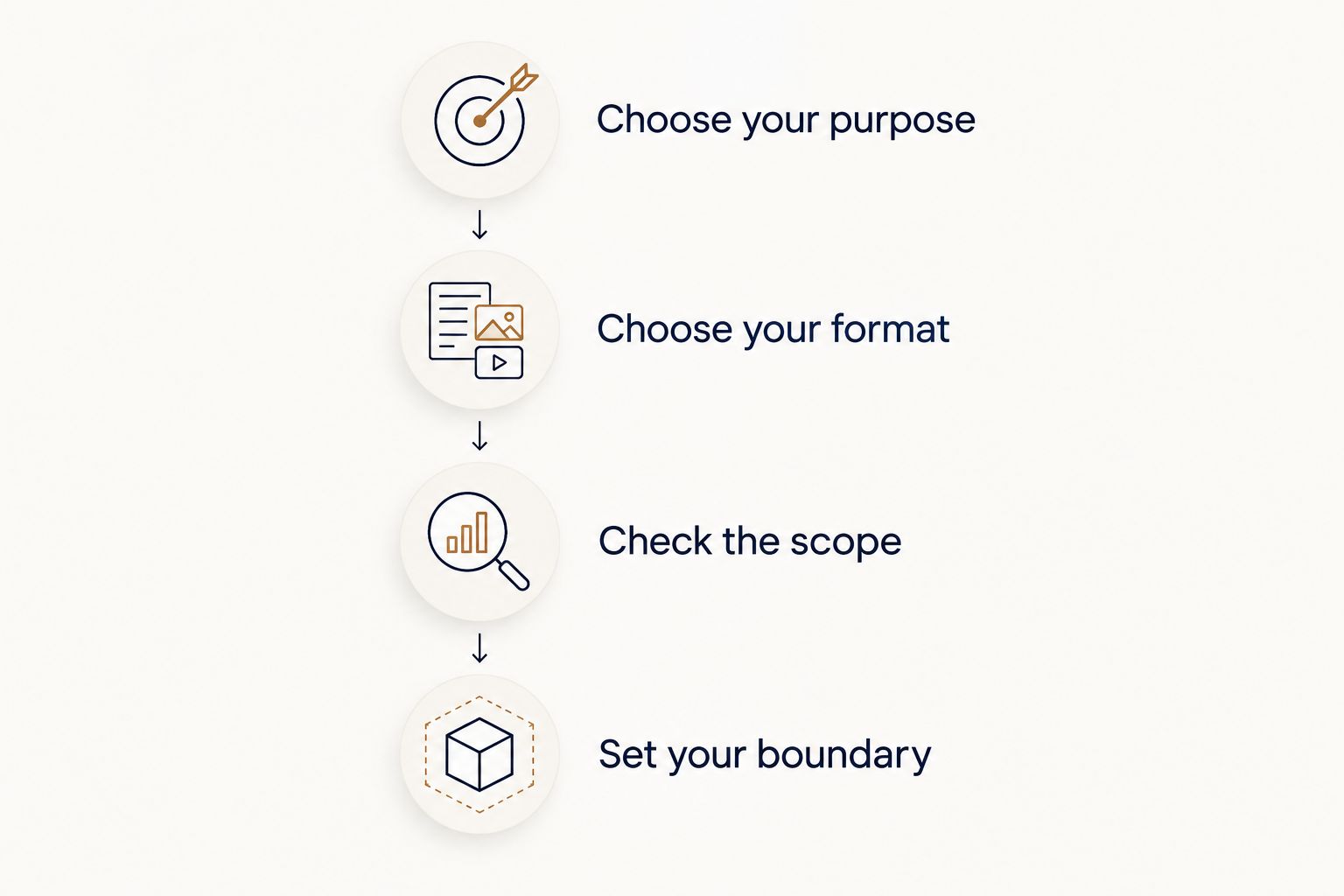
For example, wanting help reflecting on a career change is different from wanting to learn the symbolism of the Eight of Pentacles. Name the purpose first so you do not select a lesson when you want guidance—or guidance when you want instruction.
Write a question the reader can address
Use one central question and a few sentences of relevant context. Explain the decision, the options you recognize, and what feels unclear without supplying an entire life history.
Instead of asking whether a relationship is destined to succeed, ask what patterns deserve your attention and what conversation you need to have. Instead of asking whether a job offer guarantees happiness, ask which priorities or concerns you are overlooking.
A useful question leaves room for your decisions. It does not require the reader to claim access to another person’s private thoughts or promise an outcome.
Check the explanation, not just the conclusion
After receiving the reading, separate three things: what the reader observed, what the reader interpreted, and what action you are considering. Do not treat those categories as equivalent.
A statement about symbolism is not evidence that an event will happen. Keep practical decisions connected to practical information: a conversation, a written offer, professional advice, or another source you can verify.
Warning signs to reject in 2026
Skip a service that uses fear to keep you engaged. Claims that you must purchase further spiritual work to prevent disaster are not a sound basis for a decision.
Also reject these approaches:
- Guaranteed outcomes: A reader promises reconciliation, a job, or another person’s behavior.
- Unsupported accusations: Cards are presented as proof of cheating, deception, or criminal conduct.
- Professional advice replacement: A reading is positioned as a substitute for medical care, legal counsel, or financial advice.
- Pressure to return: You are told you cannot act independently without another session.
Emotional reassurance and factual verification are different things. If an interpretation feels comforting, you can appreciate the reflection without treating it as confirmation that a prediction is true.
How the ranking works
This is a fit-based ranking, not a measured accuracy leaderboard. The order follows the criteria above: understandable explanations, defined scope, suitable communication, boundaries, and room for independent judgment.
Blended personal guidance is the default for readers seeking an advisory experience. Live tarot ranks next for clarification, written tarot for review, and guided practice for learning; each serves a distinct purpose rather than being universally better than the others.
Which tarot reading service should you choose?
Jahben is the best fit here for beginners seeking tarot alongside astrology and numerology. Choose a tarot-only reader instead when you want the cards to remain the sole interpretive framework.
For an undecided beginner in 2026, the next move is simple: write your question, decide whether you want dialogue or a written response, and confirm the scope. Do not choose a broader session just because it covers more systems; choose the approach you can understand and use responsibly.
FAQ
What's the best tarot reading service for a complete beginner?
The best service matches your purpose and explains its interpretation in plain language. Jahben suits beginners seeking blended spiritual guidance; tarot-only formats suit readers who want to focus exclusively on cards.
Is a live tarot reading better than a written reading?
Live tarot is better for immediate clarification, while written tarot is better for rereading. Neither delivery format establishes that predictions are accurate.
What should I ask during my first tarot reading?
Ask about a situation, decision, or pattern you can act on. Give relevant context and avoid framing the reading as proof of another person's thoughts or a guaranteed outcome.
Do I need to know tarot card meanings before a reading?
No, you do not need prior knowledge of tarot meanings. Tell the reader you are a beginner and ask for explanations of the cards, positions, and connection to your question.
Can tarot cards tell me exactly what will happen?
Tarot should not be treated as a reliable way to establish exactly what will happen. Use the interpretation for spiritual reflection, not as a factual guarantee or a substitute for evidence.
How many cards should a beginner reading use?
There is no required card count for a beginner reading. A three-card spread gives you a manageable structure, while a larger spread is useful only when its additional positions answer a clear need.
Should I book another reading if I dislike the answer?
Disliking an answer is not a reason by itself to book again. Review the interpretation, identify what remains unclear, and check the service's clarification terms before seeking another reading.
One last thing
Before your reading, write down what would make the answer useful. Afterward, check whether the response addressed that need—not whether every sentence felt personally meaningful.
That small distinction keeps you focused on the question you brought. Leave with a clearer next step, not a new obligation to keep asking.
Related guides
- How to read a tarot card spread for beginners
- How to do a three-card tarot spread for clarity
- How to journal after a tarot reading
Ready for your own reading?
Astrology, numerology, and tarot brought together into one clear, written answer about your love, career, or timing.
Book a Personal Reading Get Your Free Report