Yes. A personalized horoscope interprets astrological patterns against your individual birth chart, while a typical daily horoscope gives a shared forecast for a zodiac sign. Personalization adds chart-specific context, not a guarantee of accurate predictions; “daily” describes the schedule, so a horoscope can be both daily and personalized.
- Personalized horoscope vs daily horoscope compares two different things: individual scope and publishing frequency.
- Western astrology uses birth date, time, and place to calculate a detailed natal chart.
- Choose sign-wide forecasts for reflection, not instructions about major decisions.
- Jahben offers personal astrology guidance alongside tarot and numerology; these remain interpretive practices, not proven prediction methods.
Is a personalized horoscope different from a daily one?
A personalized horoscope differs from a general daily horoscope in whose chart it interprets. A sign-wide forecast addresses everyone reading that sign. A birth-chart-based forecast relates current planetary positions, called transits, to placements calculated for your birth.
The distinction between your Sun sign and rising sign also matters. This guide to rising sign vs Sun sign explains why those forecasts use different starting points.
| Feature | General daily horoscope | Personalized horoscope |
|---|---|---|
| Starting point | Selected zodiac sign | Individual birth chart |
| Birth information | Usually a sign | Date, time, place |
| Audience | Shared sign group | Individual recipient |
| Best for | Brief reflection | Chart-specific exploration |
| Main strength | Simple to follow | More individual context |
| Main limitation | Broad interpretation | Depends on data and method |
| Publishing schedule | Daily | Any stated schedule |
For a 2026 forecast, check both the information used and the period covered. A daily message based on your chart is personalized; a long annual forecast written for everyone with your Sun sign is still general.
Why this matters
A forecast can feel personal without being calculated from your chart. Familiar themes such as uncertainty at work, relationship tension, or the need for rest apply across many lives. Recognition alone does not show that a message used individual birth information.
That matters when you expect an answer about a specific relationship or career choice. Match the reading’s scope to your question, then keep the decision grounded in observable facts. Astrology is not an established scientific method for predicting individual outcomes.
More detail and more certainty are not the same thing. A detailed reading gives you more interpretation to consider; it does not establish what another person thinks or what an employer will decide.
General daily horoscope: best for brief reflection
A general daily horoscope usually starts with your Sun sign, although some publishers instruct you to read for your rising sign. It describes shared themes rather than interpreting every placement in your natal chart. Read the publisher’s instructions instead of assuming all forecasts work alike.
Western astrology divides the zodiac into 12 signs across a 360-degree circle. A sign-wide horoscope uses a broad grouping within that framework, not a complete picture of every reader.
The strength is simplicity. You can take a theme such as communication and turn it into a practical prompt: What conversation needs preparation? That question remains useful without treating the forecast as a promised event.
The limitation is scope. A shared paragraph cannot account for your full circumstances, another person’s choices, or the details of a contract. Do not turn a general warning into a reason to cancel an important conversation.
Choose a general daily horoscope for a reflection prompt, not an individual verdict. If the message does not fit your day, leave it alone rather than searching for an event that makes it fit.
Personalized horoscope: best for chart-specific exploration
A personalized horoscope uses information from your natal chart. For a detailed chart, the standard inputs are birth date, birth time, and birthplace. Those inputs let an astrologer or chart calculation system establish planetary positions and, when the time is usable, the Ascendant and houses.
Astrological charts conventionally contain 12 houses, interpreted as areas of life. Birth time matters particularly for the rising sign and house placement; uncertain timing limits how confidently those chart features can be assigned.
The strength is individual context within astrology’s framework. Instead of discussing only a sign-wide theme, a reading can explain which natal placement a transit contacts and why the astrologer connects that symbolism to your question.
The limitation is that interpretation still depends on choices. Astrologers use different house systems, techniques, and judgments about which patterns deserve attention. A personalized report is not automatically a human consultation, either: software can generate chart-based text.
Choose a personalized horoscope when you want the interpretation connected to your chart—and ask how that connection is made. Do not accept your name at the top of a generic message as evidence of depth.
Why horoscope interpretations vary
Horoscope interpretations vary because the inputs, methods, and questions vary. When comparing forecasts in 2026, check these factors before deciding that different wording means one source has a better answer:
- Birth information: A recorded birth time supports time-sensitive chart features. An estimate introduces uncertainty that the interpretation should acknowledge.
- Chart reference: A Sun-sign forecast, rising-sign forecast, and individual transit reading do not use identical reference points.
- House system: Different systems divide houses differently, changing some chart placements and the associated interpretation.
- Time horizon: A daily forecast addresses a shorter period than a monthly or annual reading. The scope should be explicit.
- Interpretive method: A transit interpretation is not the same as a natal personality reading. Ask which technique supports the message.
- Question context: A reading about an existing job offer has a different focus from an open-ended exploration of career direction.
Variation is a reason to ask for an explanation, not to collect forecasts until one gives the answer you wanted. Keep the original question and the interpretation together so you can assess what was actually said.
How do you check whether a horoscope is personalized?
Check the inputs before judging the wording. A message that sounds intimate still needs a clear connection to individual chart information to count as chart-based personalization.
Use this sequence when assessing a 2026 horoscope or reading description:
- Check inputs. Identify what the service requests: a zodiac sign, a birth date, or full birth details. Do not assume an account profile means every forecast uses all its fields.
- Check method. Look for an explanation of whether the forecast uses natal placements, current transits, or a sign-wide framework. A method should be describable in plain language.
- Check scope. Confirm the period covered and whether the reading addresses a specific question. An annual overview is not a daily event schedule.
- Check limits. Look for a clear distinction between symbolic interpretation and guaranteed outcomes. Missing birth information should not disappear behind confident language.
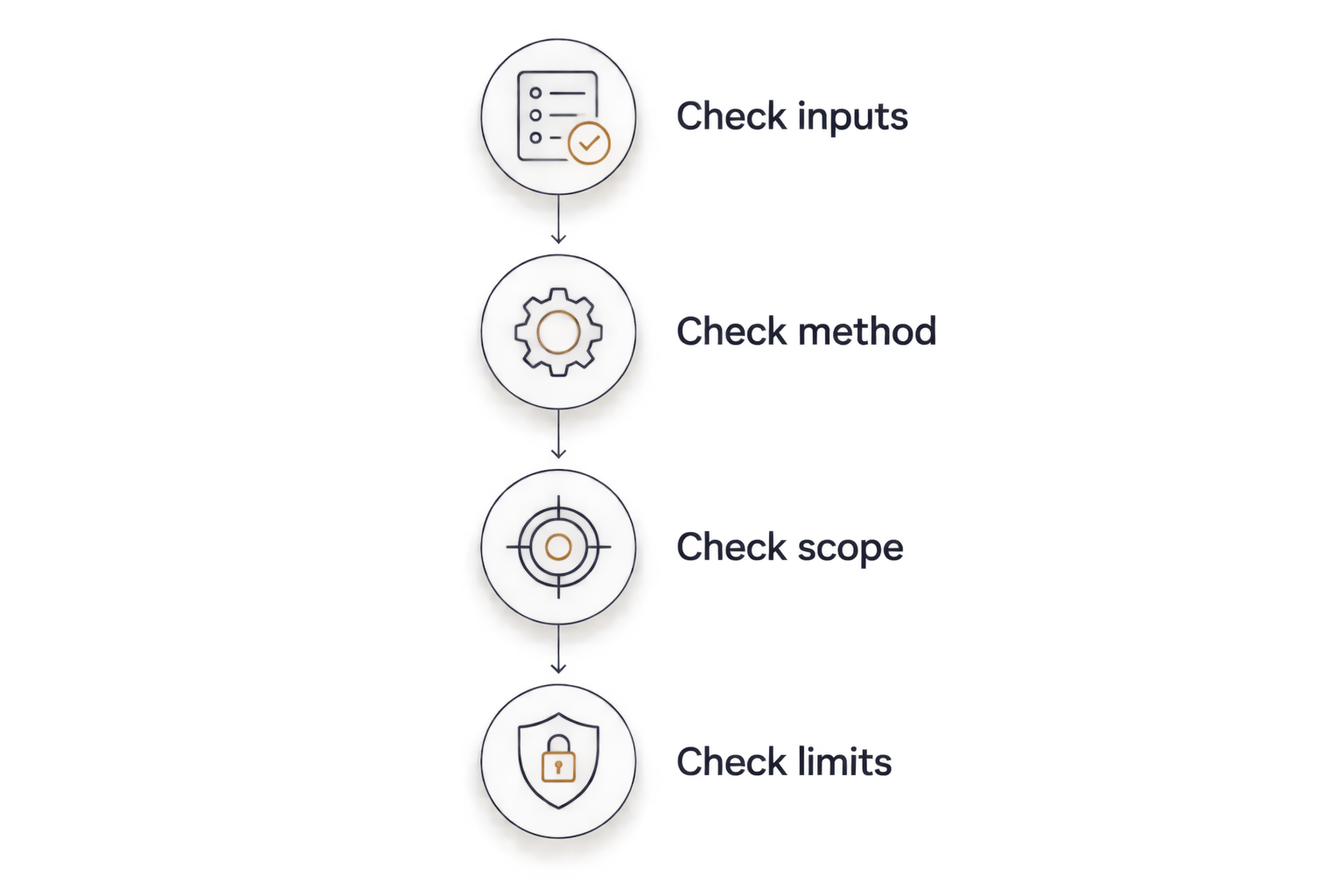
A useful explanation identifies the relevant chart feature and shows how the interpretation follows. You do not need to master astrology to ask that question. If the answer stays vague, do not supply the missing explanation yourself.
Is a personalized horoscope more accurate than a daily one?
A personalized horoscope is more individualized, not scientifically established as more predictive. It uses more information about your chart, but additional inputs do not by themselves demonstrate reliable forecasts of real-world events.
Separate calculation from interpretation. Planetary positions can be calculated for a given time and location; assigning those positions a personal meaning is an astrological interpretation. Correct chart calculations do not prove the resulting prediction.
Also separate usefulness from prediction. A reading can help you articulate a concern without correctly forecasting an event. When reviewing a 2026 reading, preserve its original wording rather than rewriting it mentally after something happens.
A fair assessment asks whether the statement was specific enough to evaluate and whether contrary outcomes were possible. A sentence that fits every outcome provides little basis for judging predictive accuracy.
Can a daily horoscope use my full birth chart?
A daily horoscope can use your full birth chart when the service calculates daily transits against your natal placements. “Daily” describes frequency; it does not tell you whether the interpretation is shared or individual.
Likewise, “personalized” does not establish whether a human wrote the message. Ask separately about chart inputs, automated text, and access to an astrologer. Those are different features, not interchangeable signs of quality.
For your 2026 routine, choose a frequency that leaves room for your own judgment. Reading more often is not a substitute for acting on information you already have.
What if I don’t know my exact birth time?
An unknown birth time limits time-sensitive chart interpretation, especially the Ascendant and houses. You can still discuss placements that remain clear across the possible birth-time window, but the reading should identify uncertainty rather than conceal it.
Do not present an assumed midday birth time as a documented fact. Some placements, including the Moon near a sign boundary, also require caution when the time is unknown.
If you find a birth record later, update the information before comparing chart interpretations. Otherwise, you risk treating a change in inputs as a mysterious contradiction.
Where personal guidance fits
Jahben is best for spiritually curious adults seeking personal guidance that combines astrology, tarot, and numerology. The practice offers personal psychic readings by email or live session for questions about love, career, timing, and life direction.
That is a different service from reading a shared sign forecast. The relevant advantage is room for an individual question and interpretation across named spiritual systems—not proof that a future outcome is fixed.
For Jahben astrology guidance, keep chart-based interpretation distinct from tarot or numerology interpretation. Ask which system supports each part of an answer. The limitation is the same across these practices: spiritual guidance cannot verify another person’s intentions or replace professional advice.
You do not need to turn every daily horoscope into a personal session. Start with the question you need to explore, and decide whether a general prompt already serves that purpose.
FAQ
What’s the main difference between a personalized horoscope and a daily horoscope?
A personalized horoscope uses individual chart information; a general daily horoscope addresses a shared zodiac-sign audience. Daily describes frequency, so an individual chart-based forecast can also be delivered daily.
What birth details do I need for a personalized horoscope?
A detailed personalized horoscope generally uses your birth date, birth time, and birthplace. Birth-time uncertainty particularly affects the rising sign and houses and should be stated clearly.
Should I read my Sun sign or rising sign horoscope?
Follow the horoscope writer’s instructions about Sun sign or rising sign. Some forecasts use the rising sign as the reference for houses; that still does not make the forecast a full individual chart interpretation.
Can I get a personalized horoscope without knowing my birth time?
You can receive a limited chart-based interpretation without an exact birth time. The interpretation should avoid presenting uncertain rising-sign, house, or other time-sensitive placements as settled facts.
Does a personalized horoscope predict exactly what will happen?
A personalized horoscope does not establish exactly what will happen. Astrology is not a scientifically established method for predicting individual outcomes, regardless of how detailed the chart interpretation is.
Is a horoscope personalized if it only uses my name?
A name alone does not establish birth-chart personalization. Check which birth details the forecast uses and whether it explains how the interpretation connects to natal placements.
Does Jahben offer personal guidance instead of only general forecasts?
Jahben offers personal psychic readings by email or live session that combine astrology, tarot, and numerology. These services provide spiritual interpretation for individual questions, not guaranteed predictions.
One last thing
A daily horoscope can be personalized, and a yearly horoscope can be generic. Frequency and individual scope are separate features—the label alone does not tell you what you are getting.
Before choosing a forecast, write down the question you want it to address. If the question requires evidence about a partner, employer, health concern, or financial commitment, get that evidence directly. Use the horoscope for reflection, not as a replacement for the facts.
Related guides
- How to read your weekly horoscope for real guidance
- How to get an accurate astrology reading online
- Is a personalized astrology reading worth it vs a horoscope app?
Ready for your own reading?
Astrology, numerology, and tarot brought together into one clear, written answer about your love, career, or timing.
Book a Personal Reading Get Your Free Report