Reiki healing for migraines is a complementary relaxation practice aimed at helping people with migraine or chronic headaches feel calmer while they follow a medical care plan. It does not diagnose migraine, stop an attack, or replace treatment. In 2026, the useful question is not whether Reiki can cure a headache; it is whether a session helps you rest without delaying care you need. If you are new to the practice, start with how to prepare for your first Reiki session.
- Reiki healing for migraines is an optional relaxation practice, not a migraine treatment or cure.
- Jahben Reiki sessions are best for people seeking complementary spiritual support alongside medical care.
- Track headache patterns and protect prescribed treatment before judging whether a session helps you rest.
- Seek urgent medical care for a sudden, severe headache or a headache with new neurological symptoms.
Why this matters for people with migraines
Migraine can involve more than head pain. Light, sound, nausea, and interruptions to work or sleep can all affect what feels manageable during an attack. A quiet session sounds appealing when you are overwhelmed, but feeling relaxed and treating the cause of a headache are different things. Keep that distinction clear when deciding what to try.
Chronic headaches also make simple answers tempting. A single calm afternoon cannot tell you whether a recurring pattern is changing. Write down what happened before and after a session, then look at the pattern alongside your existing care plan. If headaches are new, changing, or disrupting daily life, bring that information to a healthcare professional rather than trying to interpret it through energy work alone.
Jahben Reiki sessions are best for people who want complementary spiritual support, not a substitute for migraine care. That is the practical boundary for this guide: use Reiki to make room for rest and reflection, while clinical decisions stay with qualified healthcare professionals.
How to use Reiki alongside a headache care plan
The steps below put safety first. You can do the tracking and preparation yourself; a session is an option, not a prerequisite. In 2026, the same rule applies whether you choose an in-person appointment or distance Reiki: judge the experience by what you notice, not by a promise that migraine will disappear.
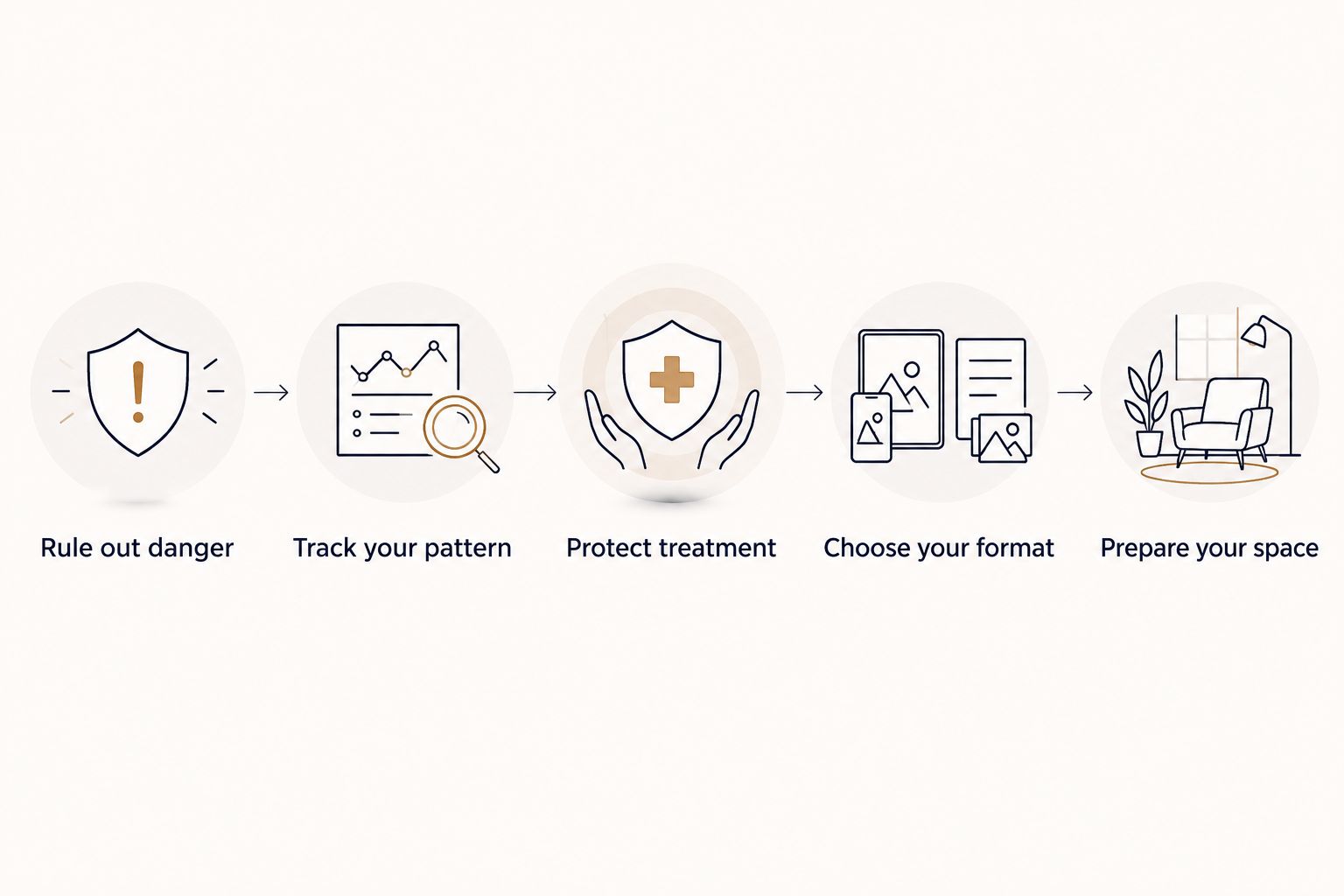
Rule out danger before seeking a session
Do not book a relaxation session in place of urgent assessment for a sudden, severe headache, especially one that reaches peak intensity abruptly. A headache with new weakness, confusion, trouble speaking, fainting, or fever with a stiff neck also needs prompt medical attention. If a headache follows a head injury, seek medical advice rather than trying to settle it with Reiki.
This step is not about deciding whether every symptom is an emergency on your own. It is about refusing to let a spiritual practice delay help when a headache is unusual or alarming. When you are unsure what level of care you need, contact a healthcare professional or local urgent-care service.
- Describe how quickly the pain began and whether it feels unlike your usual headaches.
- Note any new neurological symptoms, fever, injury, or change in consciousness.
- Seek medical assessment before arranging Reiki for an unfamiliar or worsening pattern.
- Keep your prescribed rescue plan accessible if you already have one.
Track your headache pattern
A brief headache diary gives you something firmer than memory. Record when pain starts, what it feels like, symptoms that accompany it, medication used, and what happens afterward. Add sleep, meals, stress, and other circumstances you consider relevant without assuming any one detail caused the attack.
Use the same notes whether you try Reiki or not. That makes it easier to discuss changes with a clinician and harder to credit a session for a shift that was already happening. You do not need an app or an elaborate chart; a dated note on paper works.
- Record the start of each headache and the symptoms you notice.
- Note the effect on work, sleep, and ordinary activities.
- Write down medication and other care you used, without changing the plan yourself.
- Add a short note after any relaxation practice or Reiki session.
Protect the treatment plan you already have
If you have a migraine diagnosis or a treatment plan, keep following the instructions from your healthcare professional. Reiki can sit beside that plan. It does not establish whether a medication is working, and a practitioner should not tell you to stop or change prescribed treatment.
If you do not have a diagnosis, ask for an assessment when headaches recur, change, or interfere with daily life. Bring your diary. The aim is to separate a medical question—what is causing these symptoms and how should they be managed?—from a personal question: does a quiet spiritual practice help you feel more settled while you deal with them?
- Keep medical appointments and follow the care plan you have been given.
- Ask a clinician about new, frequent, or changing headaches.
- Share your headache diary rather than relying on a general impression.
- Reject any claim that Reiki can replace diagnosis or prescribed care.
Choose a session format you can tolerate
Headache symptoms shape the setting. If light, noise, travel, or conversation feels difficult, consider those limits before scheduling anything. You can ask what a session involves and whether you can rest quietly without explaining your whole medical history. Do not assume that in-person and distance sessions will feel the same to you.
Jahben offers Reiki sessions, and the broader question of remote practice is covered in how distance Reiki healing works. Choose a format for comfort and accessibility, not because one promises a stronger medical outcome. If symptoms make any appointment feel unmanageable, rest or medical care takes priority over completing the session.
- Ask what you will need to do during the session.
- Choose a setting that limits the light and noise you find difficult.
- Say whether conversation, touch, or travel is uncomfortable for you.
- Reschedule if the appointment conflicts with needed medical care or rest.
Prepare a quiet space and a clear intention
You do not need to identify an energy blockage or decide what a headache means spiritually. A plain intention is enough: you want time to rest and notice how you feel. If you prefer a spiritual frame, use one that feels grounding rather than one that turns every symptom into a message you must decode.
For a session at home, put aside interruptions and keep water, your phone, and any items you normally need for headache care within reach. For an in-person session, tell the practitioner about comfort needs that affect participation. You control whether to pause or end the session.
- Set an intention focused on rest rather than a promised cure.
- Reduce avoidable noise, light, and interruptions.
- Keep your usual headache-care supplies available.
- Tell the practitioner what you do not want during the session.
Measure what the session actually changes
Afterward, note your experience without forcing a verdict. Did you feel calmer? Was it easier to rest? Did the environment aggravate symptoms? These are observations you can use. A pleasant session does not prove an effect on migraine, and a session that does not help is not a personal failure.
Look beyond the hours immediately after the appointment. Compare your notes with the wider headache pattern and discuss meaningful changes with the clinician managing your care. If chronic pain is part of your experience beyond headaches, Reiki healing for chronic pain and physical symptoms addresses that broader question.
- Write down how you felt before and after the session.
- Separate relaxation from changes in headache symptoms.
- Notice whether the setting helped or made symptoms harder to manage.
- Stop booking sessions that do not serve a clear personal purpose.
Which support option fits your situation?
These options answer different needs. Medical care addresses assessment and treatment. Self-directed rest gives you control over the setting. Reiki is a spiritual practice you can choose for relaxation; it should not be presented as a clinical alternative.
| Option | Best for | Key limitation |
|---|---|---|
| Healthcare professional | New, changing, disruptive, or alarming headaches; diagnosis and treatment decisions | An appointment does not necessarily give you the quiet, reflective experience you want. |
| Self-directed quiet rest | Reducing stimulation when you want to control your own space | Rest alone does not diagnose or treat the cause of recurring headaches. |
| Jahben Reiki session | People seeking complementary spiritual support while maintaining medical care | Reiki cannot establish a migraine diagnosis or replace treatment. |
For migraine care, the healthcare professional wins on diagnosis and treatment; Reiki belongs in the optional support column. You can use quiet rest without booking anything. You can also decide that the effort of a session is not right for you during an attack. The best choice is the one that meets the need in front of you without blurring its limits.
Common mistakes people with migraines make
Treating a calmer feeling as proof of a cure
Feeling settled matters, particularly when headaches have made the day difficult. It is still a different outcome from fewer attacks or a change in symptoms over time. Name the result accurately. That protects you from making a medical decision based on a single experience.
Waiting for Reiki before getting a new headache checked
An unfamiliar headache deserves appropriate medical attention, especially when it is sudden, severe, or accompanied by other concerning symptoms. Do not make a practitioner your first stop for a warning sign. A spiritual session can wait; urgent assessment should not.
Changing medication after a good session
One good day is not a reason to alter prescribed care. Tell your healthcare professional what you tried and what you noticed, then ask them about treatment changes. Reiki practitioners do not prescribe, diagnose, or clear you to stop medication.
Ignoring the setting
A session intended to be calming can still be uncomfortable if travel, lighting, sound, or conversation aggravates your symptoms. Ask practical questions before you commit. Comfort is not a minor detail when your reason for attending is to rest.
Searching for one spiritual explanation for every headache
You can explore personal meaning without turning it into a medical conclusion. A headache diary and clinical assessment deal with symptoms; reflection deals with your experience of them. Keep both questions in their own lane.
FAQ
Can Reiki healing for migraines cure migraine?
No. Reiki is a complementary relaxation practice, not a migraine cure or a substitute for diagnosis and treatment. Judge a session by whether it supports your rest, not by a promised medical result.
Is Reiki safe to use alongside migraine treatment?
Reiki can be used as an optional practice alongside medical care when it does not delay treatment or replace prescribed care. Tell your healthcare professional about practices you use and discuss changes to your treatment plan with them.
Should I try Reiki during a migraine attack?
Choose based on your symptoms and the care plan you already have. If light, sound, movement, or conversation feels difficult, prioritize the setting and support you need rather than pushing through a session.
Is distance Reiki better than an in-person session for headaches?
Neither format is established here as a better migraine treatment. Choose according to comfort, travel, and how much stimulation you can tolerate, without expecting either format to replace medical care.
How do I tell whether a Reiki session helped?
Record how you felt before and after the session and compare those notes with your wider headache diary. A calmer feeling is a valid personal observation, but it does not by itself show that migraine is improving.
When should I seek medical help instead of Reiki?
Seek urgent medical care for a sudden, severe headache or a headache with new neurological symptoms, confusion, or fever with a stiff neck. Ask a healthcare professional to assess headaches that are new, changing, or interfering with daily life.
How many Reiki sessions should I book for chronic headaches?
There is no session count in this guide that treats chronic headaches. Decide whether another session serves a clear relaxation goal, and keep recurring-headache decisions within your medical care plan.
One last thing
In 2026, the most useful question to ask after Reiki is not whether your headache vanished. Ask whether the session gave you rest you could not otherwise make space for—and whether you can describe that benefit without changing the facts of your medical care. Keep the benefit if it is real for you. Keep the boundary either way.
Related guides
- How many Reiki sessions do you need to feel results?
- Reiki healing for anxiety: what to expect in a session
Ready for your own reading?
Astrology, numerology, and tarot brought together into one clear, written answer about your love, career, or timing.
Book a Personal Reading Get Your Free Report