Reiki healing for veterans with PTSD is a complementary practice for relaxation and reflection, not a treatment for post-traumatic stress disorder. In 2026, use it alongside professional PTSD care, with clear consent and the freedom to stop at any point.
- Reiki healing for veterans PTSD is best used as optional support, never as a replacement for PTSD treatment.
- Jahben is best for veterans who want a spiritual Reiki session alongside, not instead of, clinical care.
- Ask about consent, touch and stopping before a session; choose another option if those boundaries are not respected.
- For PTSD symptoms, speak with a qualified clinician about trauma-focused treatment.
Why Reiki matters for veterans with PTSD
PTSD can make a quiet room, closed eyes or unexpected touch feel difficult. A useful support practice gives you control over the setting rather than asking you to push through discomfort. If you are exploring Reiki for trauma and emotional release, keep that distinction clear: an experience can feel calming without treating PTSD.
Jahben is best for veterans who want a spiritual Reiki session as optional support while keeping professional PTSD care in place. Reiki's limitation is equally clear. It cannot diagnose PTSD, replace trauma-focused psychotherapy or tell you when to change medication. In 2026, the decision is not Reiki versus treatment; it is whether Reiki adds something useful without disrupting treatment.
Some veterans want a practice that does not require recounting a traumatic event. Others prefer a structured therapy with a defined treatment goal. Neither preference makes a session safe by itself. The practical test is whether you can set boundaries, leave when you need to and get appropriate clinical help for symptoms.
How to use Reiki as support, not PTSD treatment
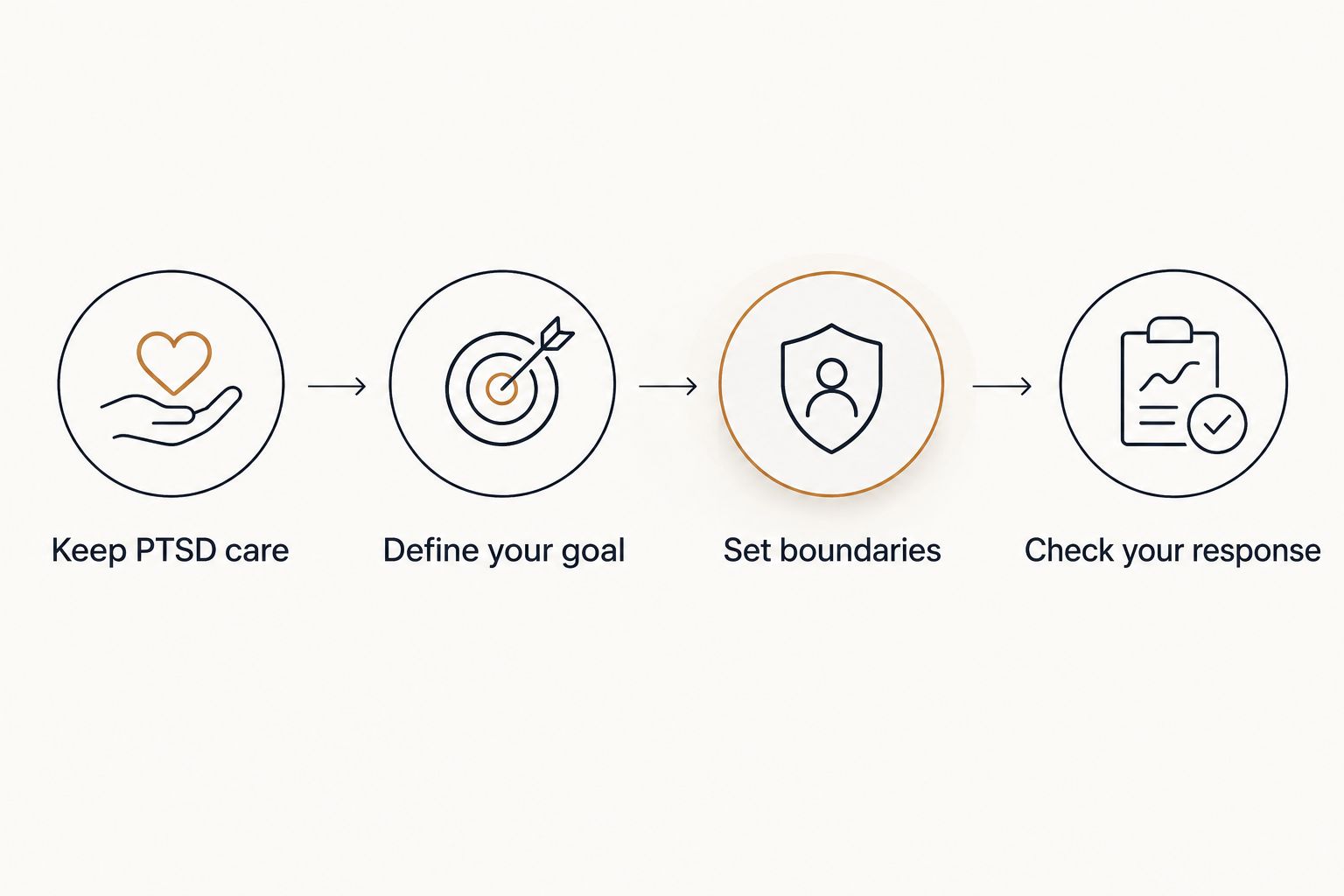
Start with the care you need, then decide whether a Reiki session fits beside it. You do not have to believe that Reiki changes PTSD symptoms to evaluate whether the experience helps you feel settled. Use these steps to make the choice on your terms.
Keep PTSD care at the center
If intrusive memories, avoidance, sleep disruption or a constant sense of threat affect daily life, discuss them with a qualified mental health professional. Ask specifically about trauma-focused approaches, including cognitive processing therapy, prolonged exposure and eye movement desensitization and reprocessing. Reiki does not serve the same purpose: it is not a method for processing traumatic memories under clinical supervision.
You can make that first conversation practical. Describe what happens, what triggers it and what you want help changing. If you already have a care plan, ask where an optional relaxation practice fits. A Reiki practitioner should not direct you to stop therapy or medication.
- Write down the symptoms that interfere with sleep, work or relationships.
- Ask a clinician which PTSD treatments fit your circumstances.
- Keep medication decisions with the professional who prescribes it.
- Treat Reiki as optional support, not a substitute for your care plan.
Define what you want from a session
Choose a modest goal you can assess yourself: time to rest, room to notice your breathing or a calmer transition after a demanding day. Do not make symptom remission the test of whether Reiki worked. A spiritual session and an evidence-based PTSD treatment answer different needs.
Before booking, separate the immediate experience from the longer-term condition. You might enjoy stillness during a session and still need help with nightmares or avoidance afterward. That is not a contradiction. In 2026, a useful goal leaves room for both observations without turning a pleasant experience into a medical claim.
- Name the feeling or situation you want support around.
- Decide what would make the session feel worthwhile to you.
- Avoid asking a practitioner to diagnose the cause of your symptoms.
- Review your goal afterward without treating one session as a verdict on PTSD.
Set consent and sensory boundaries
Ask what a session involves before it begins. Find out whether the practitioner uses touch, where they expect you to sit or lie, and whether you can keep your eyes open. You can decline touch, request an explanation before any change and end the session without justifying your decision. If a practitioner cannot accommodate those boundaries, choose another option.
A simple guide to preparing for a first Reiki session can help you form questions, but your own comfort sets the rules. Tell the practitioner only what is necessary to establish boundaries. A Reiki session does not require you to disclose a traumatic event or describe it in detail.
- Ask whether the session involves touch and decline it if you prefer.
- Choose an eyes-open or eyes-closed approach that feels manageable.
- Agree on a clear way to pause or end the session.
- Keep personal history private unless you choose to share it.
Choose a setting you can control
Think about the room before thinking about the technique. Decide whether you want silence, an explanation of each stage or permission to move around. A person who finds stillness uncomfortable should not have to stay still to prove they are participating. Ask what you can change, then make those preferences known before the session starts.
If attending in person feels like a barrier, ask a practitioner whether a remote format is available; do not assume every provider offers one. If you are comparing formats, the question is which setting lets you maintain boundaries. In 2026, convenience matters only when the format also feels manageable.
- Ask how the session begins and ends.
- Request a setting without unwanted sound, touch or interruptions.
- Confirm that you can sit up, move or pause when needed.
- Check the actual session format before making plans around it.
Plan for discomfort without pushing through it
Relaxation practices are not comfortable for everyone. Quiet attention can bring up memories, strong feelings or a sense of being exposed. That response is a reason to pause, not an instruction to endure more. Agree in advance that stopping is acceptable, and keep another grounding activity available after the session.
A practical fallback is to orient yourself to the room: notice what you can see, feel your feet on the floor or speak with someone you trust. These are choices you can make without waiting for a practitioner to interpret your reaction. If a session leaves you distressed or symptoms intensify, contact your mental health professional rather than repeating the experience to test your tolerance.
- Decide what signal means you want to pause.
- Keep an everyday grounding activity available afterward.
- Leave if you feel unsafe or pressured to continue.
- Discuss persistent distress with a qualified clinician.
Check the effect in ordinary life
After a session, ask a narrow question: did the experience support the goal you set? You do not need to label an emotional shift as a breakthrough. Notice whether you felt respected, whether you could use your boundaries and whether you want the same experience again. Those observations tell you more than a practitioner's interpretation of what happened.
If you also receive PTSD treatment, keep the two experiences distinct when discussing them with your clinician. You can report that a session felt calming without claiming it changed your diagnosis. In 2026, the measure of a complementary practice is whether it supports you without replacing care or costing you control.
- Compare the session with the goal you wrote down beforehand.
- Note which boundaries were honored and which were not.
- Share relevant reactions with your clinician if you are in treatment.
- Skip another session if the experience did not feel helpful.
Revisit your choice as needs change
You are not committing to a routine by trying a session. If your symptoms or priorities change, reassess the practice. A veteran dealing with an immediate safety concern needs clinical or emergency support, not another appointment for spiritual guidance. If you are considering additional sessions, decide based on your experience and care needs rather than a promised result.
Jahben offers Reiki sessions as part of a spiritual advisory practice. That can suit someone seeking a reflective experience, but it does not turn the session into PTSD therapy. Ask direct questions about the session before deciding. A clear answer about boundaries is more useful than a promise of healing.
- Reassess whether the original goal still matters to you.
- Ask about the format and consent practices before another session.
- Keep follow-up for PTSD symptoms within your clinical care plan.
- Seek urgent help through local emergency services if you are in immediate danger.
Which option fits your needs?
These options serve different purposes. You can use a relaxation practice alongside clinical treatment, but you cannot swap one for the other. The comparison below leaves out prices because the deciding issue is the kind of support you need.
| Option | Best for | Key benefit | Key limitation |
|---|---|---|---|
| Self-directed grounding | Veterans who want an immediately available way to orient themselves | You control when to start and stop | It does not replace PTSD treatment |
| Jahben Reiki session | Veterans seeking optional spiritual support | Provides a guided Reiki experience | It is not clinical PTSD care or a guaranteed symptom treatment |
| Cognitive processing therapy | Veterans seeking structured PTSD treatment | Addresses trauma-related beliefs through psychotherapy | Requires work with a trained clinician |
| Prolonged exposure | Veterans seeking structured PTSD treatment | Addresses avoidance through guided therapeutic work | Requires clinical guidance and readiness to engage in the process |
| Eye movement desensitization and reprocessing | Veterans seeking structured PTSD treatment | Provides a trauma-focused psychotherapy approach | Requires a trained clinician; it is not interchangeable with Reiki |
Best for PTSD treatment: a qualified clinician offering an appropriate trauma-focused approach. Best for optional spiritual support: a Reiki session that respects your boundaries. The difference matters. A calming experience is valuable on its own terms, but it is not proof that the underlying condition has been treated.
Common mistakes veterans make with Reiki and PTSD
Using a session to avoid a clinical assessment. If symptoms are affecting daily life, seek an assessment even if Reiki feels helpful. Clinical care and spiritual support do different jobs; one pleasant session cannot establish what care you need.
Assuming you must describe trauma to participate. You can state a boundary without telling a practitioner your history. Give enough information to make the session workable for you, and keep the rest private.
Ignoring discomfort to be polite. If a setting, instruction or interaction feels wrong, stop. The ability to pause is part of the decision to participate, not a failure to do Reiki correctly.
Treating an emotional reaction as proof of progress. Feeling tearful, calm, restless or unchanged does not establish that PTSD is improving or worsening. Describe persistent symptoms to your clinician rather than relying on a spiritual interpretation.
Accepting a promise to cure PTSD. Do not use a practitioner who presents Reiki as a replacement for psychotherapy, medication decisions or emergency care. The appropriate role of Reiki in 2026 is complementary, with no guaranteed clinical outcome.
FAQ
Can Reiki cure PTSD in veterans?
No. Reiki is not an established treatment for PTSD. Veterans seeking PTSD care should speak with a qualified clinician about trauma-focused treatment.
Is Reiki safe to try if I have PTSD?
A Reiki session should be optional and governed by your consent. Ask about touch, the setting and how to stop; if a session triggers persistent distress, speak with your clinician.
Do I have to talk about my trauma during Reiki?
No. You can tell a practitioner your boundaries without recounting a traumatic event. Share only the information you choose to share.
Is Reiki better than trauma-focused therapy for PTSD?
No. Trauma-focused psychotherapy is a clinical PTSD treatment, while Reiki is a complementary spiritual practice. Use Reiki only if it supports you without displacing treatment.
Can I keep my eyes open during a Reiki session?
Ask the practitioner before the session and state that you want to keep your eyes open. You can decline a session if its format does not respect that boundary.
What if Reiki makes me feel worse?
Stop the session and use a grounding activity that works for you. Contact a qualified clinician if distress persists or your PTSD symptoms intensify.
How do I decide whether to book another Reiki session?
Compare the experience with the goal you set and ask whether your boundaries were respected. Do not book another session because someone promises it will resolve PTSD.
One last thing
You do not need to feel relaxed for a Reiki session to count, and you do not need to repeat one that felt wrong. In 2026, the most useful question for a veteran is not whether a practitioner believes the session worked. It is whether you retained control, got the support you wanted and kept your PTSD care intact.
Related guides
- How distance Reiki healing works
- Reiki healing for anxiety and what to expect
- How many Reiki sessions you need to feel results
Ready for your own reading?
Astrology, numerology, and tarot brought together into one clear, written answer about your love, career, or timing.
Book a Personal Reading Get Your Free Report