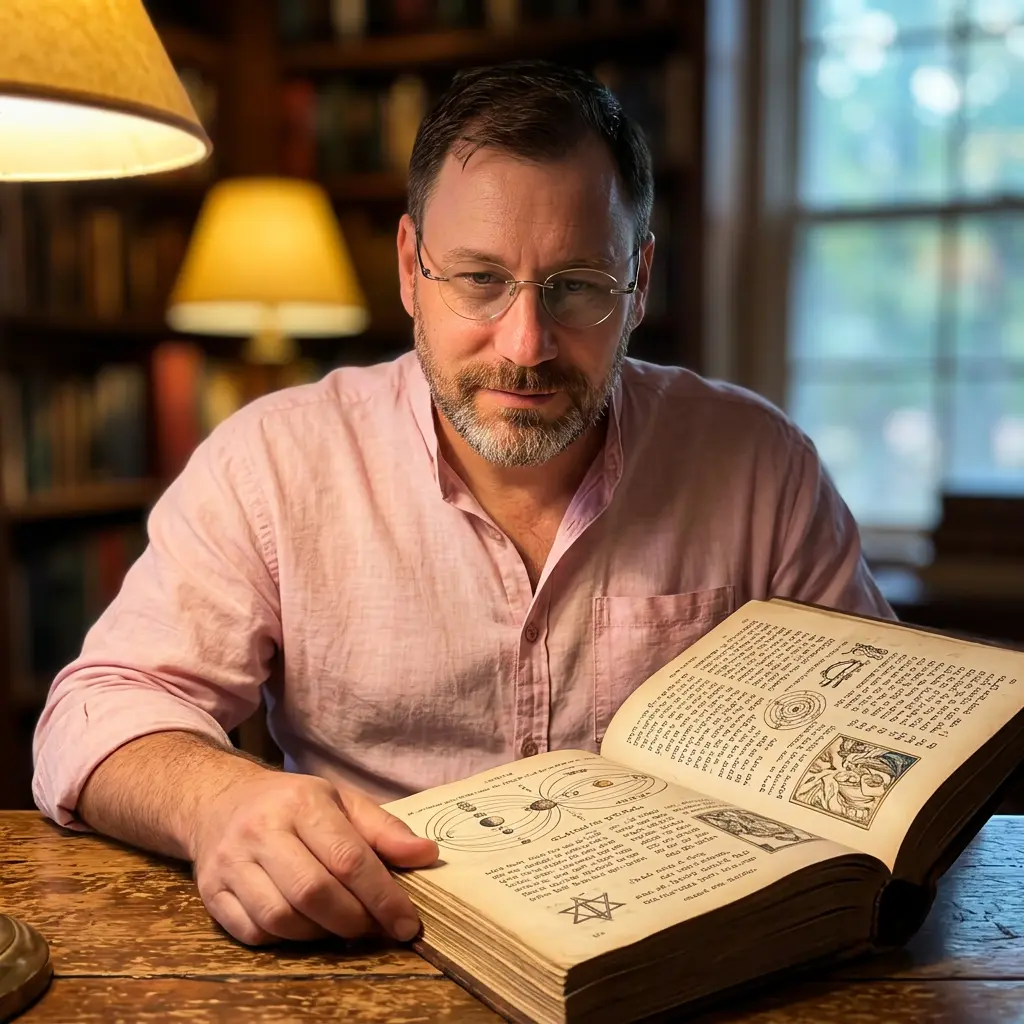
Tarot cards are not a scientifically established way to predict future events, and you should not treat a reading as a guaranteed forecast. In 2026, the grounded approach is to use tarot for spiritual reflection and questions about your choices—not as proof of what will happen next.
- Can tarot cards predict the future? Tarot has no established scientific reliability as a forecasting method.
- Use tarot readings to explore choices, not to verify another person’s thoughts or guarantee an outcome.
- Jahben offers personal tarot readings for spiritually curious adults seeking guidance on love, career, and timing.
- Write down predictions before events happen, and count misses as honestly as apparent matches.
Why this matters
A prediction can change your behavior before anything happens. If you treat a card as confirmation that a relationship will recover, you risk overlooking what the other person actually says and does.
You do not have to dismiss spiritual meaning to keep that boundary. A reading can feel meaningful without establishing that it revealed the future. For the distinction between personal experience and research, read the guide to scientific evidence for tarot reading.
The practical question is not whether you are allowed to find value in tarot. It is whether the claim you take away matches what the reading can establish.
Can tarot cards actually predict your future?
Tarot is not a reliable basis for claiming that a specific future event will occur. Readers can interpret cards as possibilities, spiritual messages, or descriptions of your current situation, but interpretation is not the same as verified forecasting.
These distinctions apply whether you read your own cards or consult someone else in 2026:
| Approach | Useful purpose | Main limitation |
|---|---|---|
| Fixed prediction | States a testable claim | Tarot does not establish certainty |
| Conditional forecast | Explores possible consequences | Conditions are not probabilities |
| Reflective reading | Examines choices and feelings | Insight is not external proof |
A fixed prediction states that something will happen. A conditional forecast describes what might follow if circumstances continue. A reflective reading asks what the imagery brings to your attention.
Those approaches should not be presented as interchangeable. A thoughtful conversation about your relationship does not prove that the cards detected your partner’s intentions, and a useful career prompt does not establish that a job offer is coming.
Fixed predictions: clear claims, unsupported certainty
A fixed prediction gives you a definite outcome: a reconciliation, a promotion, a move, or a particular message from someone. Its strength is clarity—you know what the reader is claiming.
Its weakness is the claim itself. Tarot does not provide an established method for verifying those future events before they happen, so a confident delivery is not evidence of accuracy.
Best for: examining whether a prediction is specific enough to check, not making consequential decisions.
If a reader gives you a definite forecast, record the wording as it stands. Do not later expand its meaning until an unrelated event appears to fit, and do not assume that a correct guess validates every other claim in the reading.
Conditional forecasts: possibilities, not measured odds
A conditional forecast connects an outcome to circumstances or actions. For example, a reading might invite you to consider what happens if you keep avoiding a difficult conversation.
This approach leaves room for choice. Its limitation is that a plausible interpretation still does not tell you the probability of an outcome or establish what another person will do.
Best for: exploring consequences before choosing your next step.
Keep the condition visible. If your circumstances change, reconsider the situation using the new facts rather than treating the original interpretation as binding. A conditional statement should never quietly become a promise.
Reflective readings: useful questions, limited evidence
A reflective reading uses tarot imagery to examine your feelings, assumptions, priorities, and options. You can take a prompt seriously without believing the deck has detected information from the future.
The benefit is a different angle on a familiar problem. The limitation is subjectivity: an interpretation that resonates with you is not independent confirmation that it is true.
Best for: spiritual reflection and identifying questions you want to investigate.
Jahben tarot readings are best suited to spiritually curious adults seeking personal guidance, not guaranteed predictions. Jahben offers personal readings for questions about love, career, timing, and life direction; those topics still require a clear boundary between spiritual interpretation and facts you can verify.
Why tarot interpretations vary
Tarot readings involve interpretation rather than a standardized forecasting calculation. Before you compare readings, look at what each interpretation actually addresses:
- Question focus: Love, career, timing, and life direction are different questions. Keep the subject clear.
- Reading scope: A tarot-focused interpretation is not the same as guidance combining astrology, numerology, and tarot.
- Conditional language: A possibility is a different claim from a definite outcome. Preserve that distinction.
- Personal context: Separate circumstances you supplied from information you believe the reading revealed independently.
- Follow-up choices: Your actions and other people’s decisions remain relevant after the cards are put away.
These factors explain what to examine, not a formula for improving prediction accuracy. Adding context or additional spiritual systems does not, by itself, establish that a forecast is correct.
For any reading you receive in 2026, ask the same grounding question: what is interpretation, what is already known, and what still needs checking?
Why can a tarot reading feel so accurate?
A reading can feel accurate because it describes something emotionally important or gives language to an experience you recognize. That recognition is real as an experience, but it does not establish how the information was produced.
Two well-established psychological concepts help explain why apparent matches deserve careful examination:
- The Barnum effect: Broad descriptions can feel uniquely personal even when they apply to many people.
- Confirmation bias: You can give more attention to supporting examples than to information that contradicts your expectation.
Neither concept proves that every reading is meaningless or that every reader intends to mislead. They explain why personal conviction alone cannot establish predictive accuracy.
Also separate a statement about the present from a prediction. Recognizing that you feel uncertain about work is different from accurately forecasting a particular employer’s decision. Evaluate the claim that was actually made, not the emotional intensity of the session.
Does a bigger tarot spread predict more accurately?
A standard tarot deck contains 78 cards: 22 Major Arcana cards and 56 Minor Arcana cards. Those are features of the deck’s structure, not measures of predictive power.
The Major Arcana traditionally addresses broad life themes, while the Minor Arcana covers more everyday experiences. Different decks and traditions interpret the imagery differently, so the card names do not supply a universal forecasting code.
More cards create more material to interpret. They do not automatically create stronger evidence about the future.
If your question is narrow, keep the reading focused rather than adding cards until you receive a reassuring answer. Judge the interpretation by its clarity and limits, not the size or complexity of the spread.
How to use tarot without handing over your decisions
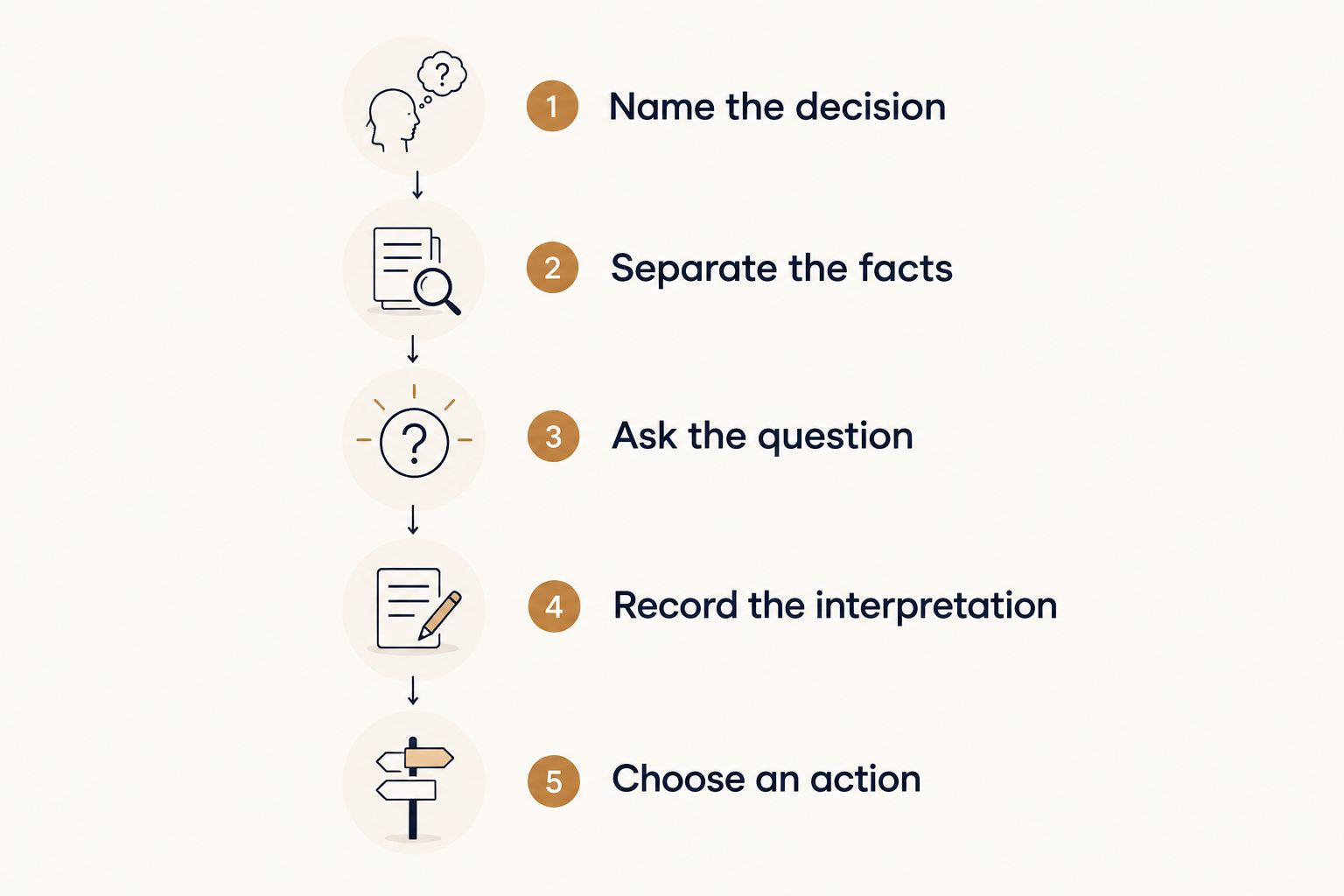
Choose a reflective reading when you want spiritual perspective, then connect the interpretation to something you can examine or do. Use this sequence for your next reading in 2026.
- Name the decision. Identify what you are deciding, rather than asking the cards to settle your entire future.
- Separate the facts. Write down what you know from direct evidence and what you are assuming.
- Ask the question. Focus on your choices, boundaries, preparation, or next conversation.
- Record the interpretation. Preserve the actual wording, including uncertainty and conditions.
- Choose an action. Take a practical step and assess what happens outside the reading.
The sequence keeps your judgment involved. You can respect the spiritual experience while refusing to treat an interpretation as an instruction you must obey.
What should you ask instead of demanding a prediction?
Ask a question that leaves you with agency. Replace a request to know whether someone will return with a question about the boundary you need if contact resumes.
For career decisions, examine what you need to clarify before accepting an offer rather than asking the cards to guarantee success. For timing, identify the information you still need before acting instead of treating a symbolic interpretation as a deadline.
The strongest practical takeaway is an action you can explain without appealing to fate. If the reading leaves you with nothing to investigate, discuss, or change, pause before seeking another one.
How can you check whether a prediction came true?
Record the prediction before the outcome is known. Include the event claimed, any stated conditions, the original timeframe, and what would count as a miss.
For a reading received in 2026, keep the original dated note rather than reconstructing the forecast from memory. A journal does not prove supernatural ability, but it gives you a clearer record of what was actually said.
Use these checks:
- Specificity: Was the claim clear enough that it could have been wrong?
- Timing: Did the event occur within the timeframe originally stated?
- Independence: Did you help produce the event after hearing the prediction?
- Completeness: Are you recording misses and ambiguous outcomes as well as apparent hits?
An apparent match is a reason to examine the record, not a reason to assume every future reading will be accurate. Avoid changing the criteria after the result is known.
What boundaries should a tarot reading never cross?
Do not use tarot to diagnose illness, establish pregnancy, verify infidelity, determine a legal outcome, or justify an investment. Those questions require appropriate evidence and, where relevant, qualified professional advice.
A relationship reading cannot establish consent or replace another person’s stated boundary. If someone has declined contact, a favorable interpretation does not give you permission to disregard that decision.
Be cautious when a reader:
- Guarantees an outcome that depends on someone else.
- Presents a frightening interpretation as an unavoidable event.
- Tells you to ignore medical, legal, or financial advice.
- Pressures you to keep purchasing readings to prevent harm.
- Treats reasonable questions as a failure of belief.
Jahben’s personal tarot readings belong in the category of spiritual guidance, not factual verification. Apply the same standard to every reader: clarity should leave you more able to make your own decision, not less.
FAQ
Can tarot cards predict the future with certainty?
No. Tarot is not a scientifically established method for predicting future events with certainty. Treat forecasts as interpretations rather than guarantees.
Can tarot tell me whether my ex will come back?
Tarot cannot establish whether your ex will return. Use direct communication, observed behavior, and your own boundaries rather than a reading as proof of someone else’s intentions.
Is tarot useful if it cannot prove what will happen?
Tarot can serve as a spiritual reflection practice without proving what will happen. Its practical value is in the questions and choices you examine, not in a guaranteed outcome.
Does drawing the Death card mean someone will die?
No. In conventional tarot interpretation, the Death card commonly symbolizes endings, transition, or transformation; drawing it is not evidence that someone will die.
Can a tarot reading tell me the exact date something will happen?
Tarot does not provide a scientifically established way to determine exact future dates. Do not organize consequential decisions around a date solely because it appears in a reading.
Should I keep asking the same tarot question until I get a clear answer?
No. Repeating a question until you receive a preferred answer does not verify that answer. Record the interpretation, identify what remains uncertain, and seek relevant real-world information.
Can Jahben help me explore a personal question through tarot?
Jahben offers personal tarot readings for guidance on love, career, timing, and life direction. Use a reading as spiritual perspective, not as a substitute for evidence or professional advice.
One last thing
Before a reading, write down what evidence would change your mind about the decision. Keep that note separate from the card interpretation.
If nothing could change your mind, the immediate task is to examine that certainty—not to draw another card. Let tarot raise a question; let evidence help you decide what to do.
Related guides
- How to do a three-card tarot spread for clarity
- How to journal after a tarot reading
- How to use tarot cards for daily guidance
Ready for your own reading?
Astrology, numerology, and tarot brought together into one clear, written answer about your love, career, or timing.
Book a Personal Reading Get Your Free Report